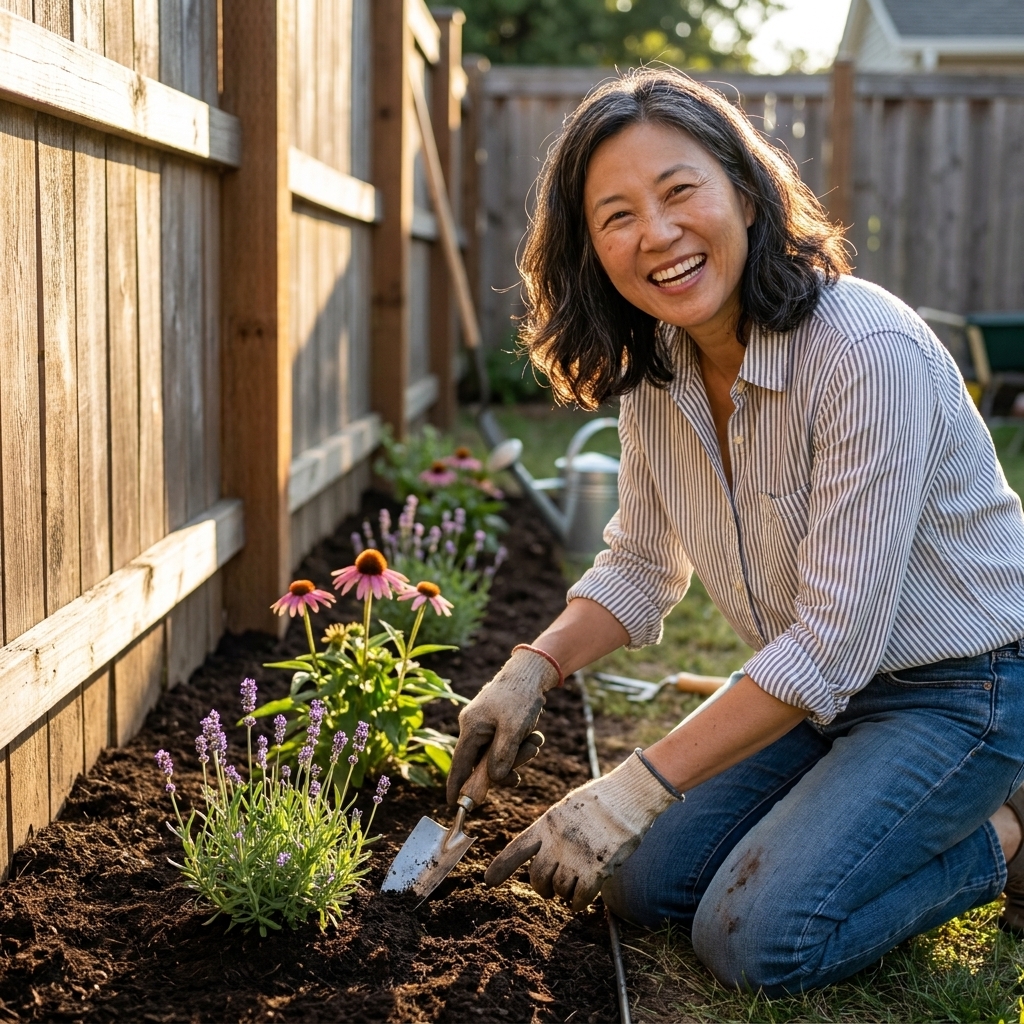
There is a special kind of satisfaction in making a backyard feel like a “real garden” without dropping a small fortune at the garden center. The secret is not cutting corners. It is choosing projects that give you the biggest visual payoff per dollar, and letting time and plants do some of the heavy lifting.
Below are 10 budget-friendly design ideas I recommend constantly, especially for newer gardeners. You can tackle one per weekend, or pick three that work together and call it your seasonal glow-up.
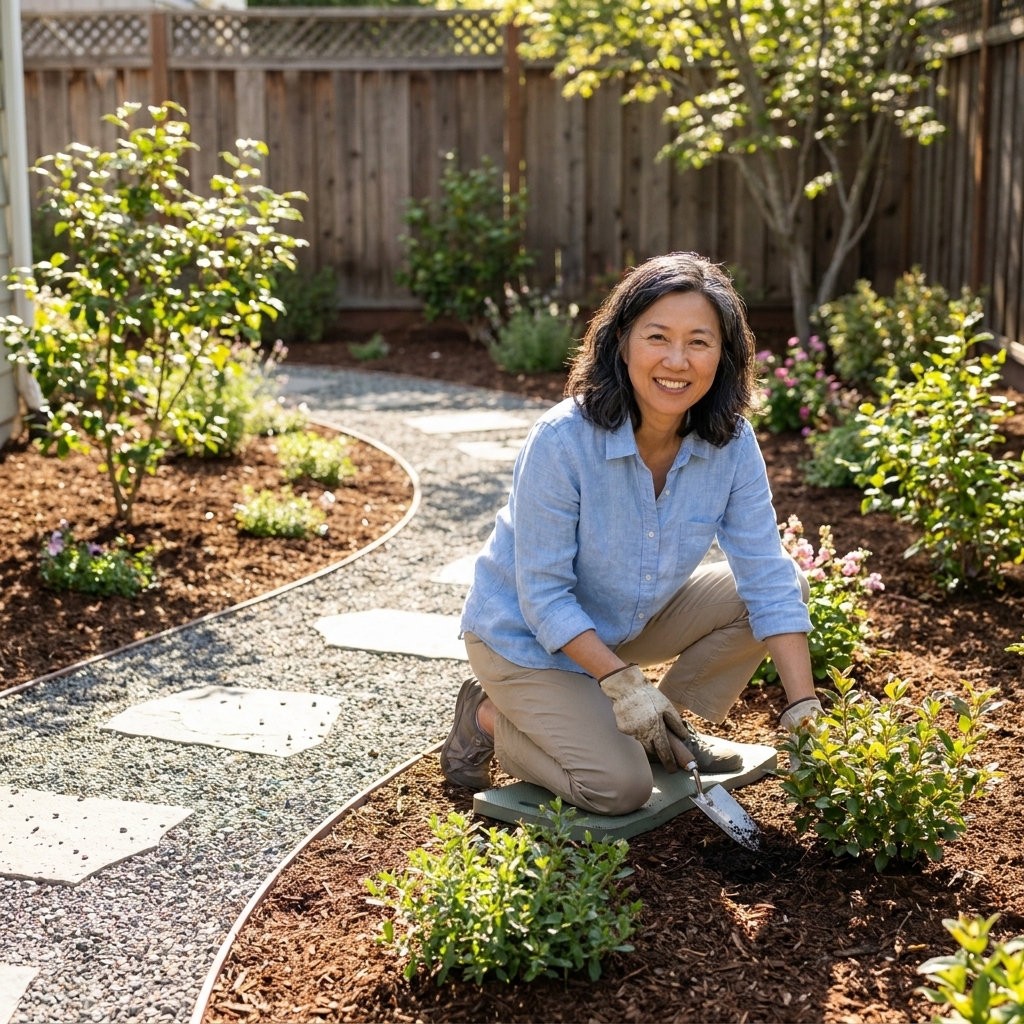
1) Start with a simple, drawn layout
Before you buy anything, give yourself 30 minutes with a tape measure and a scrap of paper. A basic sketch prevents expensive “oops” moments like buying too many pavers or placing a bed where water always pools.
Two quick beginner checks before you commit:
- Sun: note where you get full sun (6+ hours), part sun, and shade. It determines what will actually thrive.
- Drainage: after a rain, look for puddles that linger. Those spots want water-loving plants or a different plan.
Budget win
- Use what you already own: a tape measure, stakes, string, and a hose to test curves.
- Design trick: one or two bigger beds look more intentional than several tiny ones scattered around.
If you get stuck, pick a focal point you can see from your most-used window. That is your anchor. Everything else can radiate out from there.
One more unglamorous but important step: call before you dig and double-check irrigation lines. Budget projects get expensive fast when you slice a wire or a pipe.
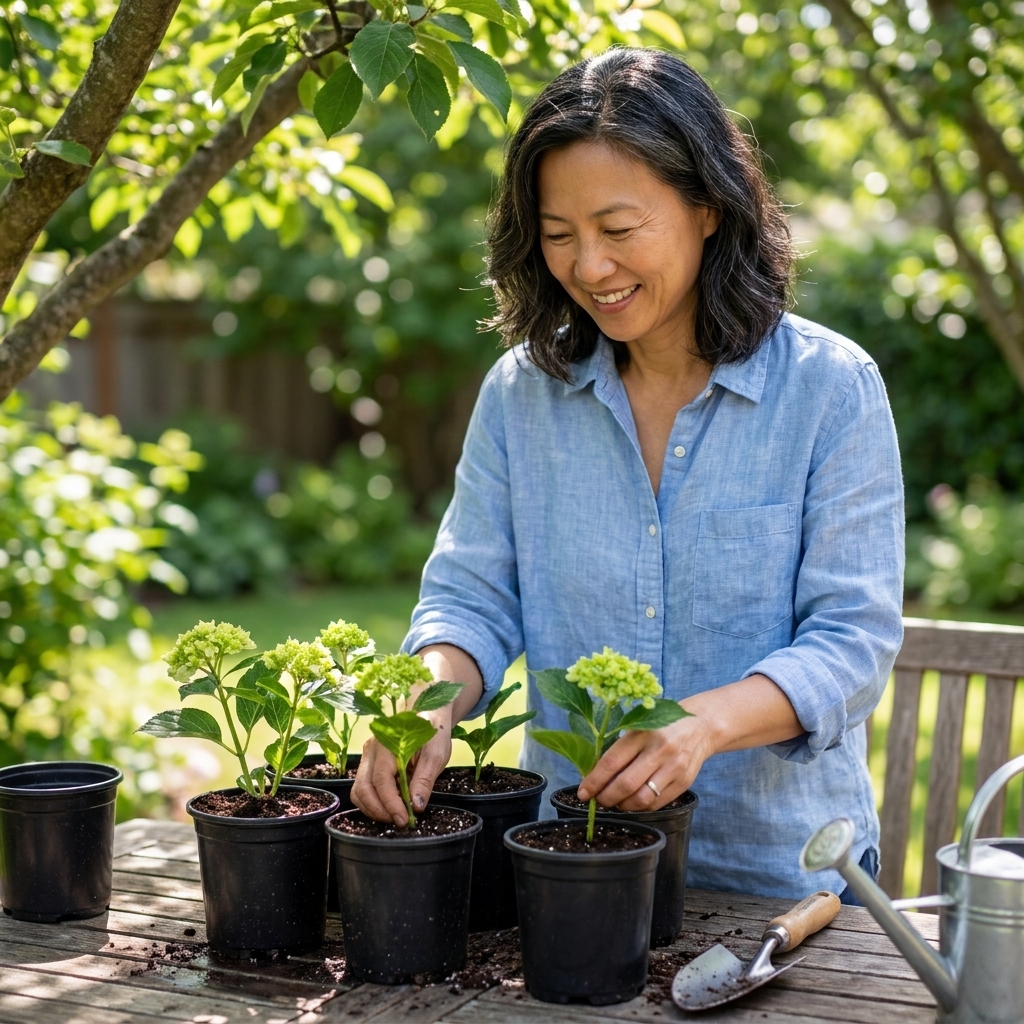
2) Propagate shrubs and perennials you already have
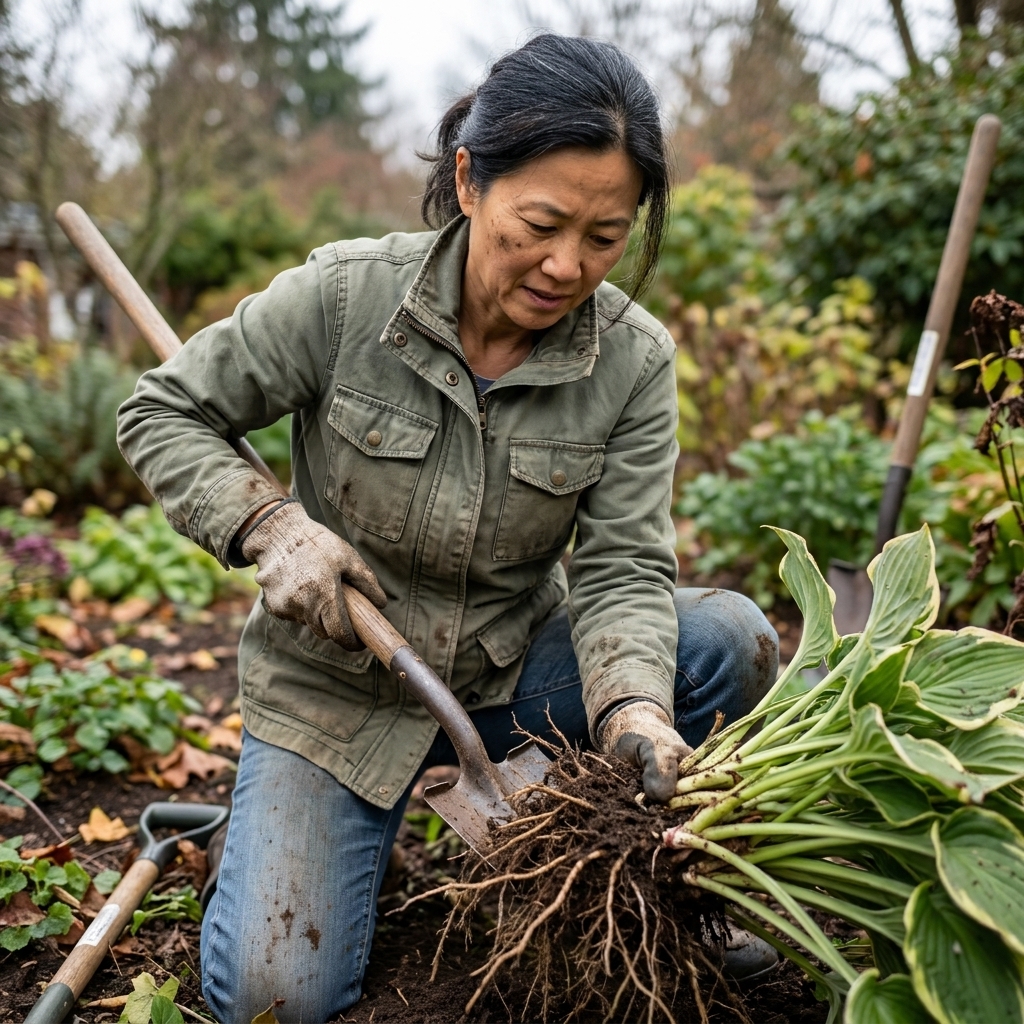
If you have one healthy shrub or perennial you love, you can often multiply it over a season or two. Many common landscape plants root readily from softwood cuttings, layering, or division, but results depend on the plant and your timing.
Easy methods that work
- Division: split clumping perennials like daylilies, hostas, ornamental grasses, yarrow, and bee balm.
- Layering: bend a flexible stem to the ground, pin it under soil, and wait for roots to form. Great for many groundcovers and some shrubs.
- Cuttings: try shrubs like hydrangea (softwood cuttings in late spring to early summer) and herbs like rosemary (often easy) plus some lavenders, depending on the type and timing.
A gentle warning from my own compost-bin-of-life: label your baby plants. “Mystery green stick” is not a helpful planting plan in three months.
3) Use plant swaps and neighborhood divisions
Gardeners love to share, especially when a plant is multiplying faster than their available bed space. Plant swaps, community garden groups, and local “buy nothing” circles can stock an entire border for the cost of a few pots and a coffee.
How to swap like a pro
- Bring divisions in sturdy containers with moist roots and a simple plant name.
- Ask about sun needs, mature size, and whether it spreads aggressively.
- Choose plants that match your conditions, not your wishful thinking.
If you are starting from scratch, swapping for “reliable workhorses” like coneflower, black-eyed Susan, salvia, sedum, and herbs is a smart first move.
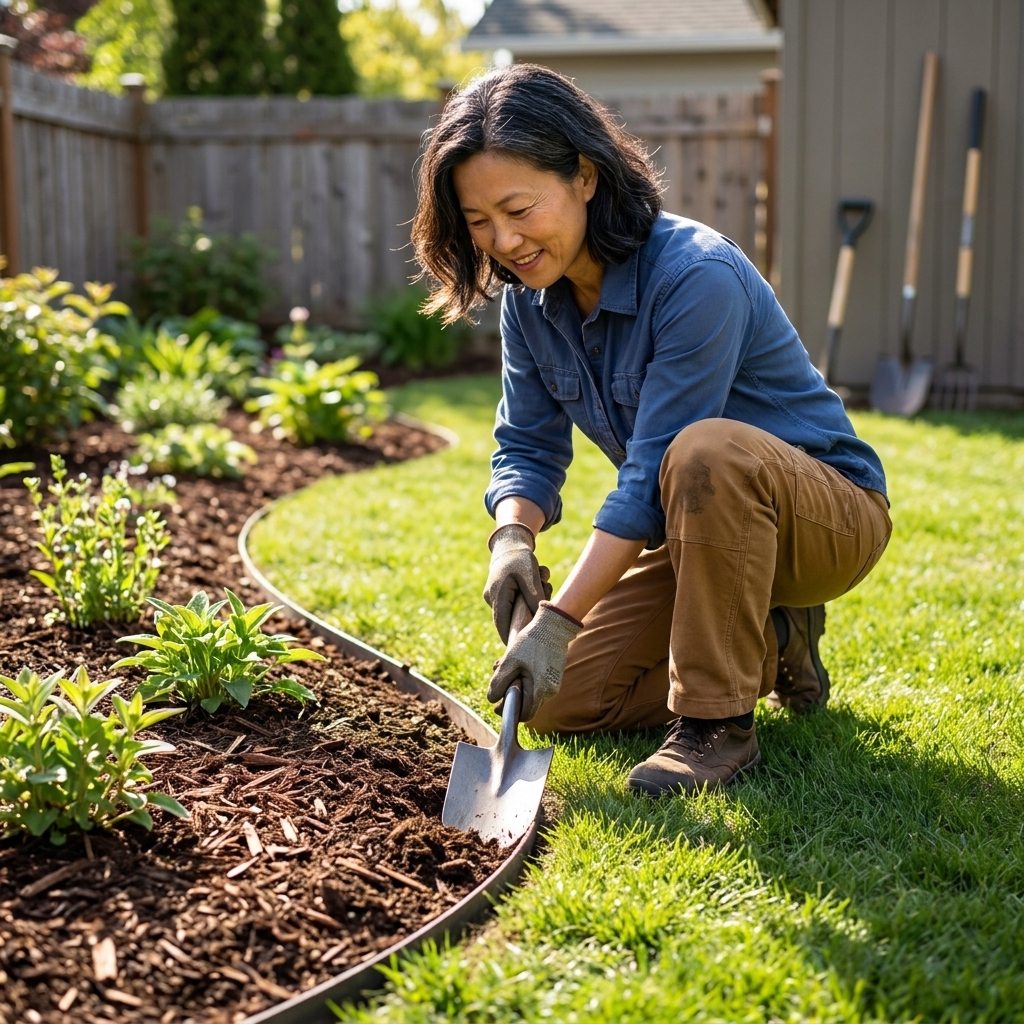
4) Define edges for instant “finished” energy
Crisp edges are one of the cheapest ways to make a garden look designed. Even a simple bedline cut into turf makes everything feel intentional.
Low-cost edging options
- Spade-cut edge: a clean trench line between lawn and bed. Classic and free.
- Upcycled brick or pavers: often available secondhand.
- Logs or branches: short rounds can create a rustic border for cottage-style beds.
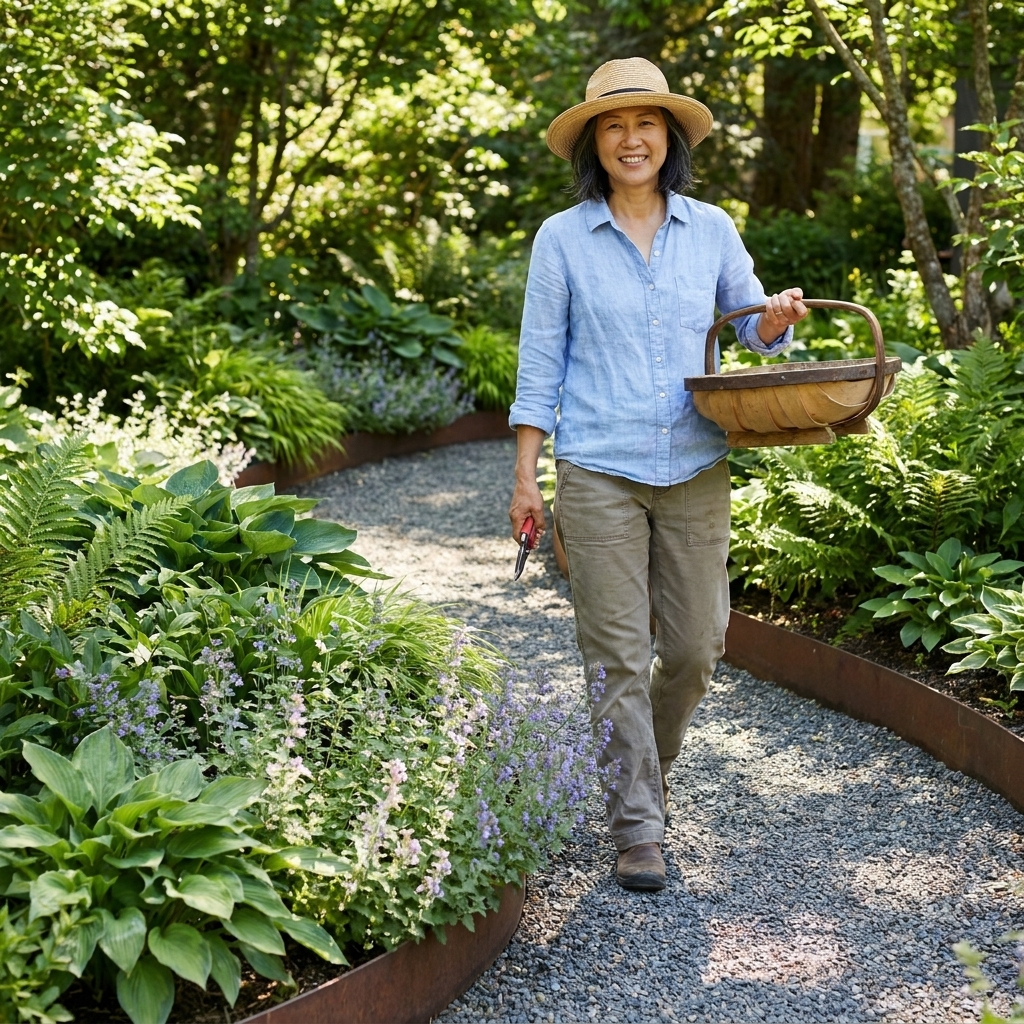
- Metal edging: not always the cheapest upfront, but long-lasting and tidy if you can find it used.
Design tip: keep the edge style consistent within one view. One material repeated reads as “plan,” not “pile.”
5) Upgrade your mulch strategy, not just your mulch budget
Mulch is one of the best investments you can make because it improves the garden while it beautifies it. It holds moisture, buffers soil temperature, and suppresses weeds.
Make mulch cheaper and more effective
- Sheet mulch: lay plain cardboard (no glossy coating) under wood chips in new beds to smother grass and weeds.
- Buy in bulk: if you can manage a delivery, bulk mulch is often far cheaper than bags.
- Ask your municipality: some towns offer free or low-cost arborist wood chips or compost.
For most beds, 2 to 4 inches of wood chips is a sweet spot. Thick enough to help, not so thick you create a soggy mystery layer.
A practical note: keep mulch a few inches away from plant stems and tree trunks to avoid rot and pests. Mulch volcanoes are dramatic, but not the good kind.
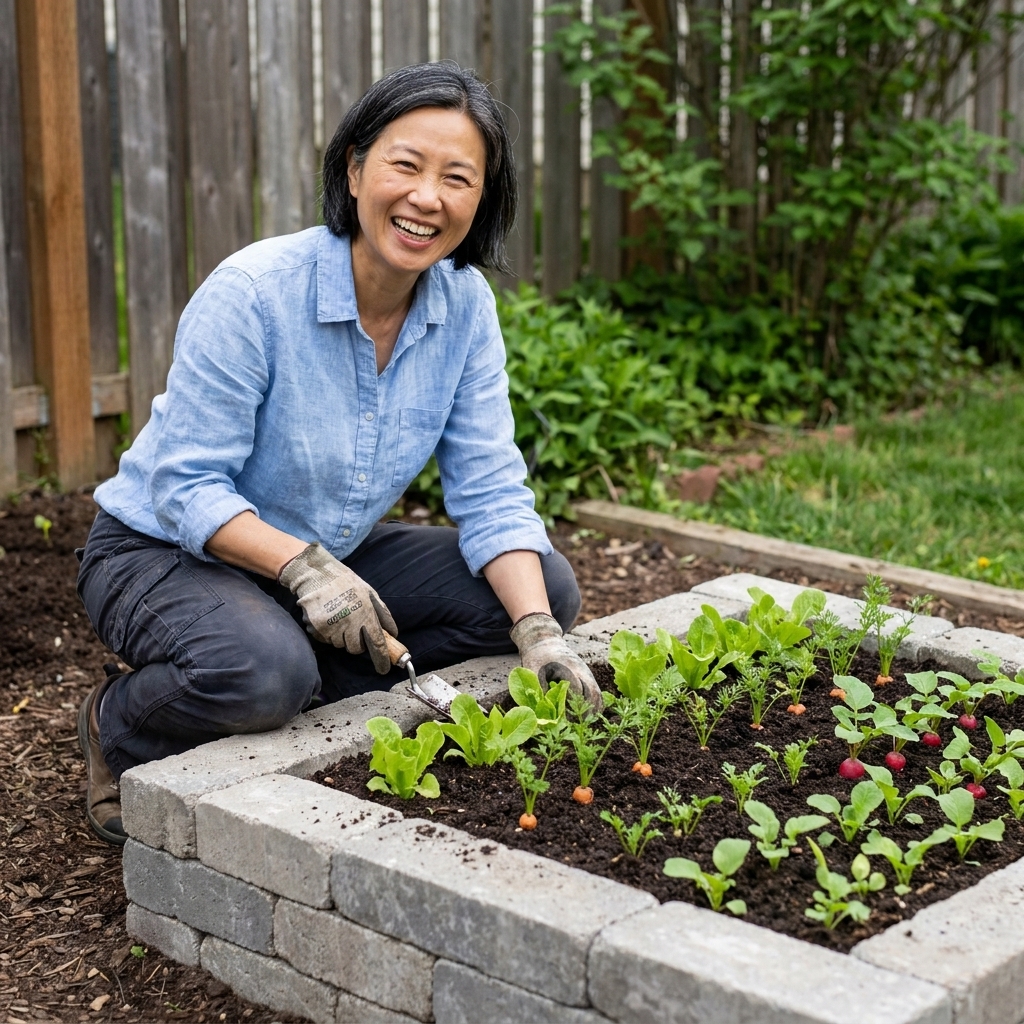
6) Build raised beds from reclaimed materials (the safe way)
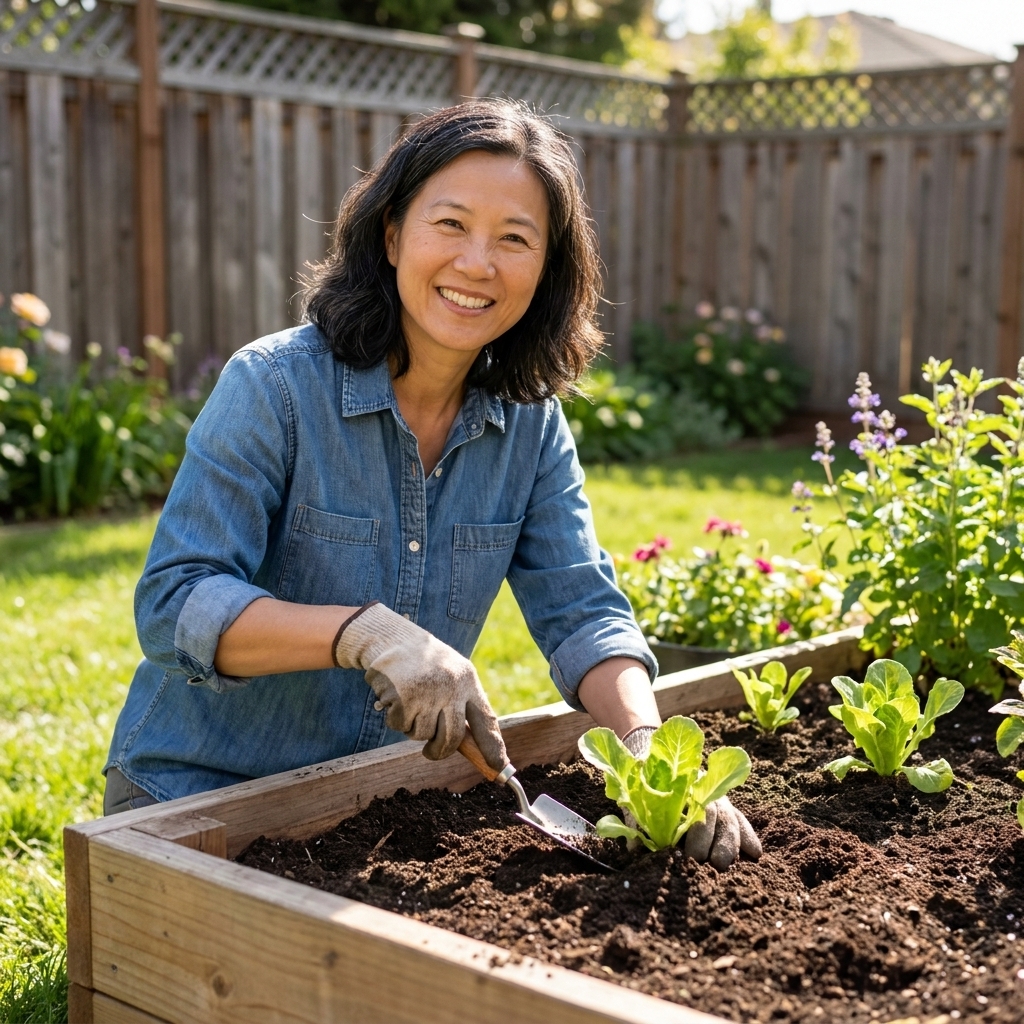
Raised beds can be pricey, but you can absolutely do them on a budget if you source carefully. Look for untreated lumber offcuts, stone, or concrete blocks.
Materials to consider
- Untreated wood: cedar is ideal but can be expensive. Untreated pine is cheaper and still gives several seasons.
- Concrete blocks: sturdy and often inexpensive. Use modern, intact blocks. The holes can even be planted with herbs or flowers. If you are concerned about soil contact, line the inside with heavy plastic or landscape fabric.
- Stone: if you have any on-site, you have free edging.
Materials to avoid for edible gardens
- Old railroad ties and unknown treated wood, especially around vegetables and herbs.
If you are growing food, line the bottom with hardware cloth if gophers, voles, or other burrowing rodents are an issue, and fill beds with a blend of topsoil and compost instead of straight bagged “raised bed mix” if cost is a concern.
7) Create a path using affordable, forgiving materials
Paths are pure garden magic. They make a yard feel bigger, invite you to explore, and prevent the “muddy shoes and compacted soil” problem that sneaks up on new gardeners.
Budget path ideas
- Wood chips: comfortable underfoot and easy to refresh.
- Gravel: great drainage, neat look. Use edging to keep it contained.
- Stepping stones set in mulch: inexpensive and flexible to install.
If you do gravel, do yourself a favor and prep the base. A simple layer of cardboard topped with gravel can help with weeds at first. A quality landscape fabric lasts longer, but it can be annoying to repair if you change your layout later. Either way, edging is what keeps gravel from migrating into the lawn like it owns the place.
Keep main paths at least 36 inches wide if you want to move a wheelbarrow without doing a sideways shuffle.
8) Group plants in threes and fives for a designer look
If you want a bed to look “done,” repetition is your friend. One plant sprinkled everywhere can look accidental. Three of the same plant placed together reads as intentional, even if each individual plant is small.
How to do it
- Choose 3 to 5 “backbone” plants (shrubs or sturdy perennials).
- Repeat them down the bed.
- Fill gaps with low-cost annuals or divisions while everything matures.
This approach is especially budget-friendly because you can buy fewer varieties. Fewer varieties also makes maintenance simpler, which is my favorite kind of design.
9) Add height with trellises, arches, and vertical planters
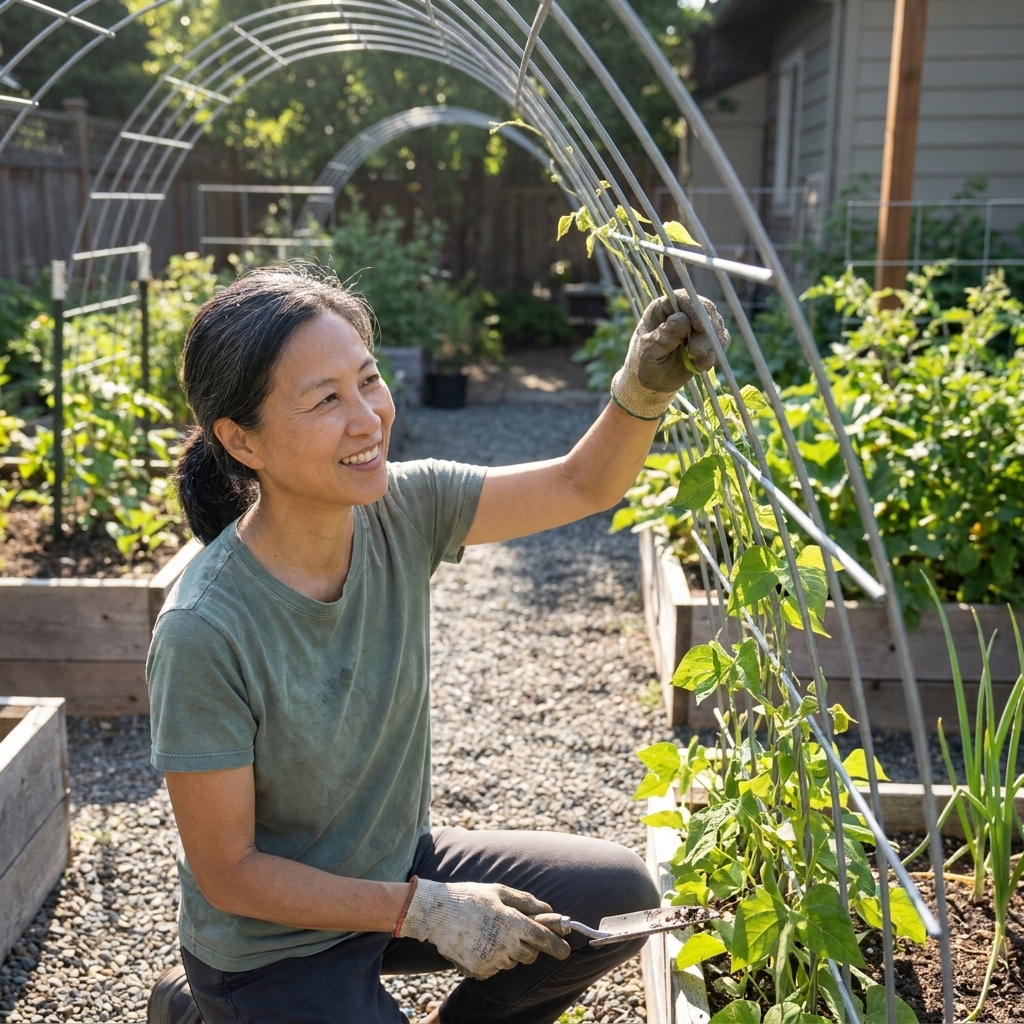
Vertical elements make a flat yard feel layered and lush, and they do it fast. You can often DIY a trellis from cattle panels, reclaimed wood, or sturdy branches lashed together.
Climbers that give a lot for a little
- Annuals: sweet peas, nasturtiums, morning glories (check invasiveness in your region).
- Edibles: pole beans, cucumbers, small-fruited squash with support, hardy kiwi in appropriate climates (it can be extremely vigorous, and many varieties need both a male and female plant to fruit).
- Perennials: clematis, some climbing roses, and native honeysuckles (avoid invasive species).
Place vertical structures where you will see them often, like near a patio, gate, or along the path. A trellis in the middle of nowhere is just a confusing ladder.
10) Set up a small “destination” seating spot
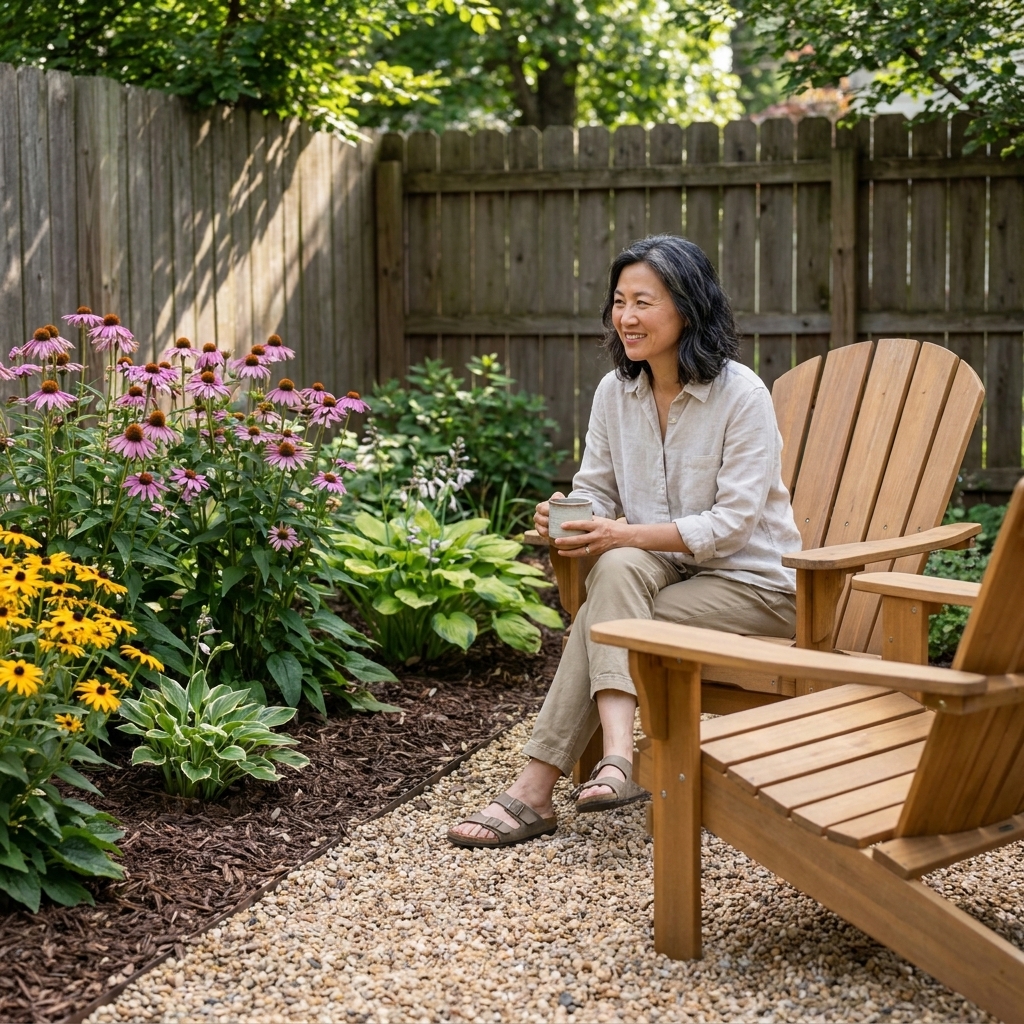
You do not need an expensive patio set to make a backyard feel like an outdoor room. A simple chair, a small table, and a defined surface underfoot can transform how you use the space.
Cheap ways to make it feel intentional
- Use gravel or mulch to define a small seating pad.
- Repurpose materials: old pavers, bricks, or even large flat stones can create a tiny terrace.
- Add a pot or two near the seating area so it feels tucked into the garden.
This is my personal “therapy corner” recommendation. Even five minutes outside with a cup of tea counts as garden time.
Putting it together: a low-budget weekend plan
If you want a straightforward way to start without getting overwhelmed, here is a combination that works in many yards:
- Day 1: sketch the layout, mark one new bedline with a hose, and cut a clean edge.
- Day 2: sheet-mulch the bed with cardboard and wood chips, then plant a few grouped perennials or divisions.
- Next weekend: add a simple chip path and one vertical element like a trellis.
Watering does not have to be fancy, but it does need to be consistent while plants establish. A cheap soaker hose snaked through a new bed can be the difference between “thriving” and “crispy.” For the first couple of weeks, plan on checking moisture every day or two, especially in heat.
In a month, it will look better. In a year, it will look like you hired help. In two years, you will be the one handing out divisions to neighbors with a wink and a “trust me, this stuff is unstoppable.”
Quick FAQ
What is the cheapest ground cover for a backyard makeover?
Wood chips are often the cheapest way to cover a lot of ground quickly, especially if you can get arborist chips locally. For living ground cover, look for easy spreaders you can divide or source through swaps, but always check that they are not invasive in your area.
Is it really cheaper to propagate plants?
Yes, especially for shrubs and perennials, but it costs you time instead of money. If you enjoy the process, propagation is one of the best budget tools in gardening.
How do I make a small backyard feel bigger on a budget?
Create a curved path or a defined bed edge, add one vertical feature (trellis or tall plant), and repeat a few plants for unity. Those three moves add depth and structure without major construction.