When summer turns your yard into a skillet, it is tempting to give up and plant nothing but gravel. I get it. But hot, dry weather does not mean you have to live without flowers. The trick is choosing blooms built for sun, wind, and “forgetful watering,” then setting them up right in the first few weeks.
Below are 15 drought-tolerant flowers that keep color coming in hot, dry climates. I am focusing on plants that handle full sun, lean soils, and real-world heat waves, not just “drought tolerant” on the tag. Quick note before you shop: hardiness and invasiveness are regional. A few of these are perennials only in warm zones and annuals elsewhere, and some have restrictions in parts of the U.S. Always check local guidance.
Before you plant: 6 water-wise moves
You can pick the right plants and still struggle if the basics are working against you. These quick steps make drought-tolerant flowers far more reliable.
- Water deeply, not daily. In the first season, soak the root zone, then let the top few inches dry before watering again. As a rule of thumb, “deep” means moisture reaching roughly 6 to 8 inches down for most flowers. Shallow sips train shallow roots.
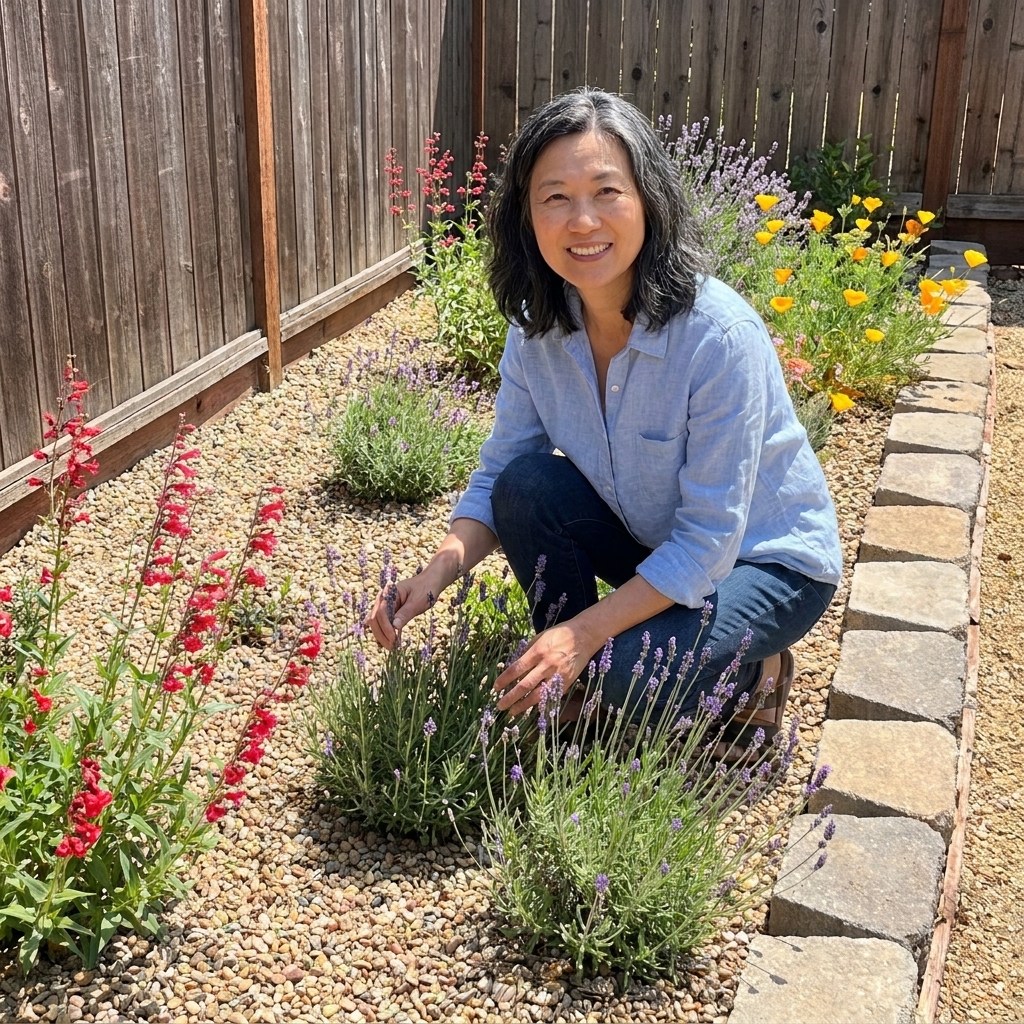
- Mulch like you mean it. A 2 to 3 inch layer of shredded bark or wood chips cuts evaporation dramatically. In very arid regions, gravel mulch can also work well around heat lovers like lavender and penstemon.
- Skip rich, soggy soil. Many drought-adapted bloomers prefer average to lean soil with sharp drainage. If your soil holds water, add compost for structure and focus on mineral amendments like pumice, expanded shale, or small gravel. Be cautious with sand in clay soils. Unless it is truly coarse and used correctly, it can make drainage worse.
- Plant at the right time. In hot climates, fall planting is often easier than spring. Roots grow while temperatures cool, and summer stress hits later.
- Give them breathing room. Crowded plants compete for moisture and invite mildew. Follow spacing recommendations, even if it looks sparse at first.
- Deadhead strategically. Some plants bloom longer with regular deadheading. Others (like blanket flower) can be lightly sheared to reboot.
15 drought-tolerant flowers for heat
Notes below include bloom color, general timing, and the care detail that matters most when the weather turns brutal. Most of these need a real establishment period. Plan on 4 to 8 weeks of attentive watering after planting (longer in extreme heat) before you test their “tough plant” reputation.
1) Lantana (Lantana camara)
Why it thrives: Heat is lantana’s love language. Once established, it keeps pumping out nectar-rich clusters even when everything else sulks.
- Bloom: Spring to frost in warm regions; often nonstop in summer
- Colors: Yellow, orange, pink, red, multi-colored blends
- Hardiness note: Perennial in warm climates, often grown as an annual where winters freeze
- Best tip: Give it full sun and do not overwater, which can reduce blooms. Also check local invasive plant lists. In some regions lantana can spread aggressively, and it is toxic if eaten by pets or livestock. Where it is a problem, look for sterile cultivars or choose a better local option.
2) Blanket flower (Gaillardia)
Why it thrives: A prairie classic that keeps flowering through heat and wind, especially in well-drained soil.
- Bloom: Early summer into fall
- Colors: Red, orange, yellow bicolors
- Best tip: Avoid heavy fertilizing. Rich soil makes it floppy and short-lived.
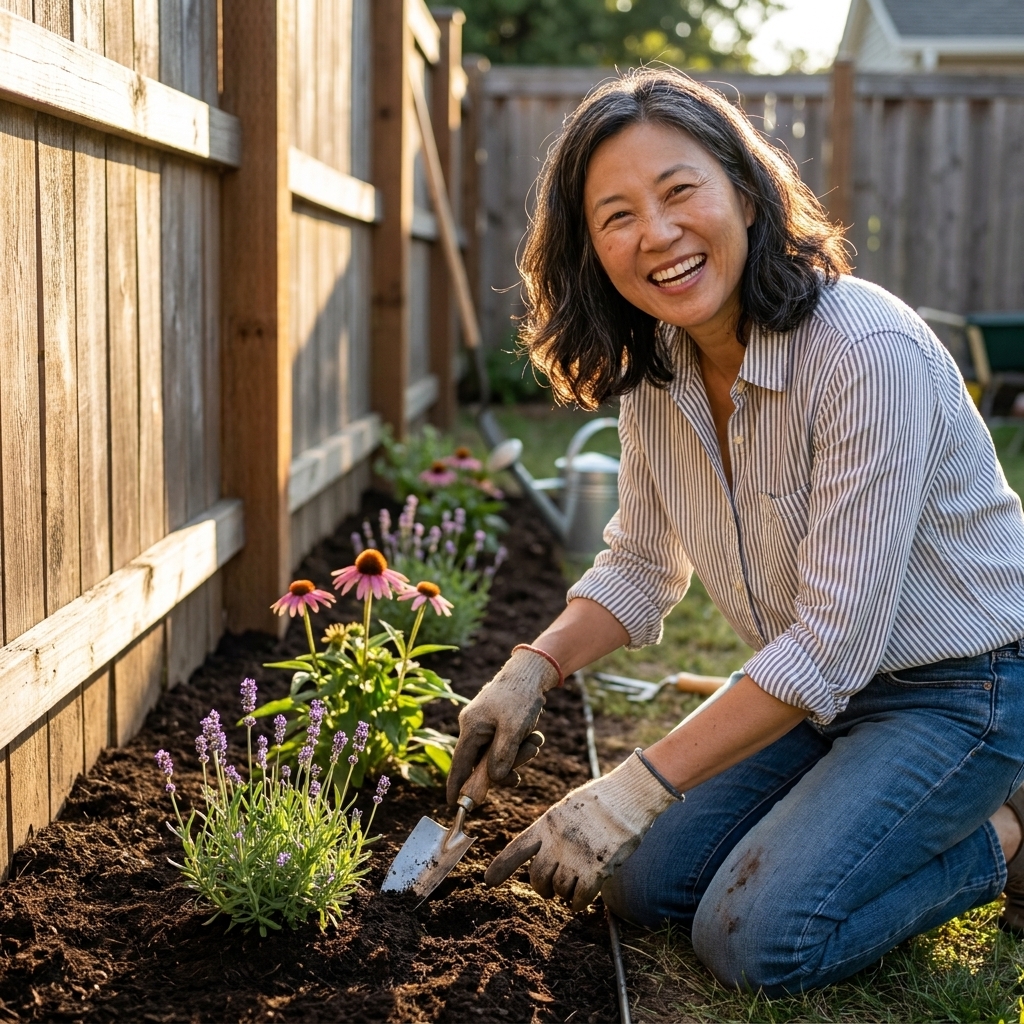
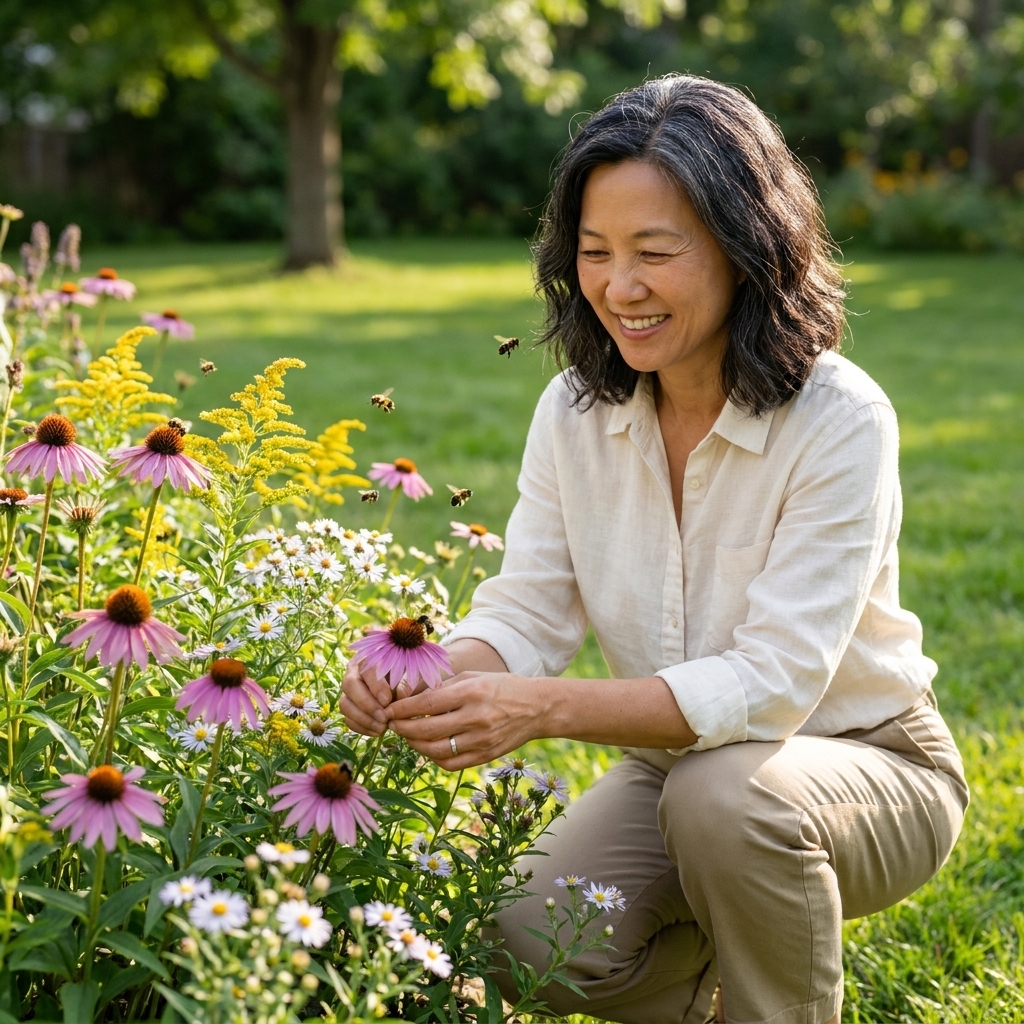
3) Coneflower (Echinacea)
Why it thrives: Deep-rooted and resilient once established, with bonus seedheads for birds if you leave some blooms to mature.
- Bloom: Summer
- Colors: Purple, pink, white, orange, yellow (variety dependent)
- Best tip: Water consistently the first season, then taper. Drought tolerance improves with age.
4) Black-eyed Susan (Rudbeckia)
Why it thrives: A cheerful, tough perennial (and sometimes biennial) that handles sun and dry spells better than it gets credit for.
- Bloom: Summer into early fall
- Colors: Gold petals with dark centers
- Best tip: Deadhead for longer bloom, or leave some seedheads for winter interest.
5) Yarrow (Achillea)
Why it thrives: Ferny foliage, flat-topped flowers, and impressive drought tolerance once roots settle in.
- Bloom: Early to late summer
- Colors: White, yellow, pink, apricot, red (variety dependent)
- Best tip: Shear after the first flush to encourage a second round of blooms and tidy growth.
6) Salvia (perennial types)
Why it thrives: Spiky blooms that bees adore, with a strong ability to keep flowering in heat if soil drains well.
- Bloom: Late spring through summer, often with repeat flushes
- Colors: Purple, blue, pink, white
- Best tip: Cut back spent flower spikes by about one-third to trigger rebloom.
7) Russian sage (Salvia yangii, formerly Perovskia)
Why it thrives: Airy lavender-blue haze that laughs at sun, reflected heat, and low water.
- Bloom: Mid-summer to fall
- Colors: Lavender-blue
- Best tip: Plant where it gets all-day sun and good airflow. It hates soggy feet.
8) Lavender (Lavandula)
Why it thrives: Mediterranean roots and a preference for dry, bright conditions. Great for borders and paths where you can brush past and release the scent.
- Bloom: Late spring through summer (variety dependent)
- Colors: Purple, violet, pink, white
- Best tip: Drainage is everything. If your soil is heavy, plant on a slight mound or raised area.
9) Ice plant (Delosperma spp.)
Why it thrives: A succulent groundcover with neon-bright daisy flowers, perfect for hot, dry edges and rock gardens.
- Bloom: Late spring through summer
- Colors: Magenta, purple, orange, yellow, white
- Best tip: Choose Delosperma (often sold as hardy ice plant) rather than Carpobrotus, which is also called ice plant and is invasive in some coastal areas. Keep crowns dry in winter if your climate gets cold and wet. Excellent drainage prevents rot.
10) Moss rose (Portulaca grandiflora)
Why it thrives: A sun-loving annual with succulent leaves that stores water. It blooms hardest when conditions are toughest.
- Bloom: Summer through early fall
- Colors: Hot pink, orange, red, yellow, white, bicolors
- Hardiness note: Annual in most climates
- Best tip: Use it where other annuals fry, like along a driveway strip or front edge of a bed.
11) Verbena (heat-tough types)
Why it thrives: Some verbenas handle heat and dry soil well, especially when given space and sun.
- Bloom: Late spring through fall in warm climates
- Colors: Purple, pink, red, white
- Best tip: Performance varies a lot by species and cultivar. Verbena rigida and some tough perennial types handle drought better than many common bedding hybrids, which can struggle in humid heat. If it looks tired mid-summer, trim lightly and water once deeply to reset.
12) Globe amaranth (Gomphrena)
Why it thrives: A heat-loving annual with clover-like, papery blooms that hold color and dry beautifully for bouquets.
- Bloom: Summer to frost
- Colors: Purple, magenta, white, red, orange
- Hardiness note: Annual in most climates
- Best tip: Do not pamper with too much fertilizer. Moderate feeding keeps it compact and floriferous.
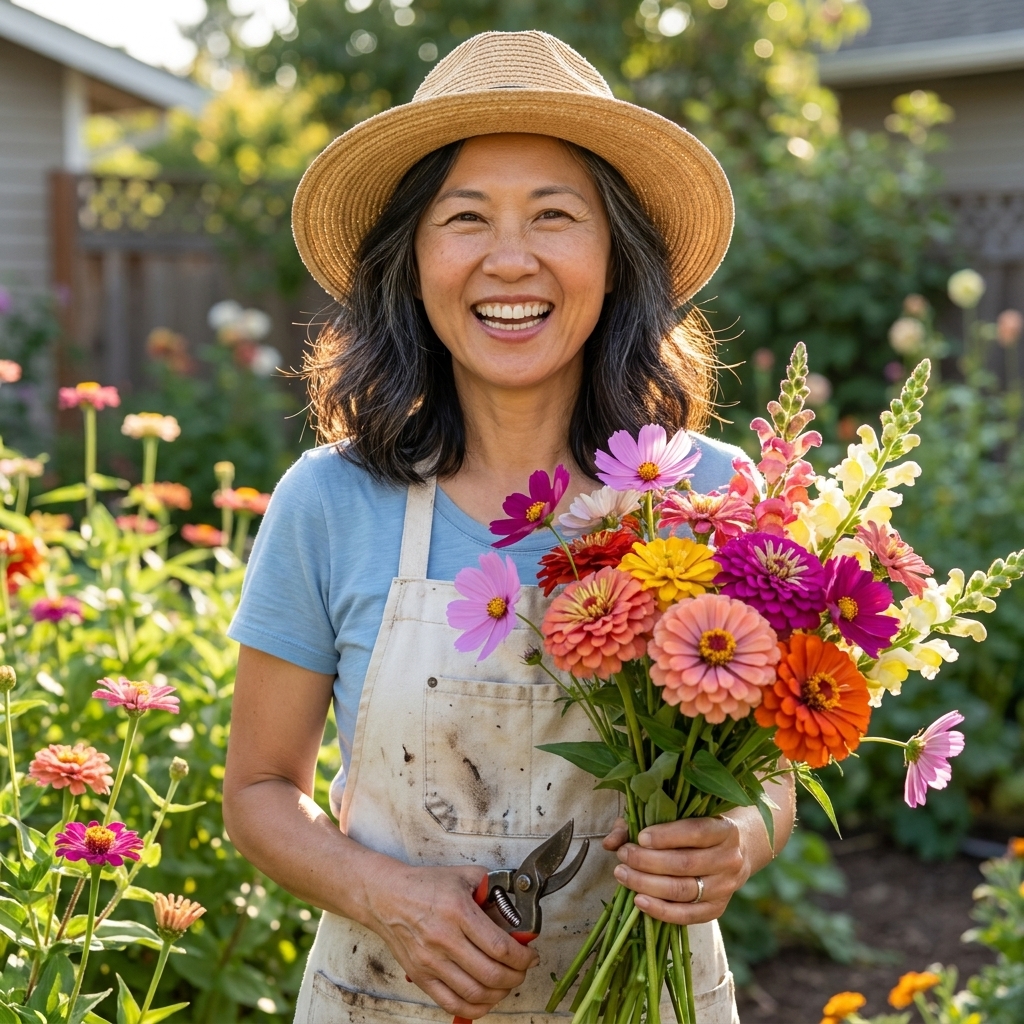
13) Zinnia (Zinnia elegans)
Why it thrives: Zinnias handle heat better than many summer annuals and keep pumping out blooms if you keep cutting them.
- Bloom: Summer to frost
- Colors: Nearly every color except true blue
- Hardiness note: Annual
- Best tip: They are drought-tolerant once established, but they flower best with consistent deep watering, especially in very arid climates. Water at the base, not overhead, to reduce powdery mildew. Give good spacing for airflow.
14) California poppy (Eschscholzia californica)
Why it thrives: Made for dry summers. In many climates it reseeds politely and returns with minimal effort.
- Bloom: Spring and early summer, sometimes repeating in cooler fall weather
- Colors: Orange, yellow, cream, pink (variety dependent)
- Best tip: Direct sow in place. It dislikes transplanting because of its taproot.
15) Penstemon (Penstemon spp.)
Why it thrives: A go-to for xeriscapes, with tubular flowers that hummingbirds find irresistible and foliage that tolerates lean conditions.
- Bloom: Late spring through summer (species dependent)
- Colors: Pink, red, purple, blue, white
- Best tip: Avoid heavy mulch piled against the crown. Many penstemons prefer a drier crown and excellent drainage.
Keep color in a heat wave
Even drought-tolerant flowers can pause blooming during extreme heat, especially when nights stay warm. These are my most reliable “keep it pretty” tactics.
- Prioritize morning watering. If you need to irrigate, do it early. Less water is lost to evaporation, and foliage dries faster.
- Water the roots, not the leaves. Drip irrigation, soaker hoses, or a slow hose trickle at the base beats sprinklers in hot weather.
- Pinch and deadhead. Remove spent blooms on lantana, zinnias, blanket flower, and salvias to keep new buds coming.
- Give temporary afternoon shade to new plantings. A piece of shade cloth, patio umbrella, or even a propped-up lawn chair can reduce stress for the first week of a heat spike.
- Do not fertilize during extreme heat. Pushing new growth when the plant is stressed often backfires. Wait for milder weather.
- Accept the siesta. Some plants look droopy at 4 p.m. and perk back up by morning. If the plant rebounds overnight, you are fine.
Easy drought-tolerant combos
If you want a bed that looks cohesive, repeat a few shapes and textures rather than collecting one of everything. Here are combinations that play nicely together.
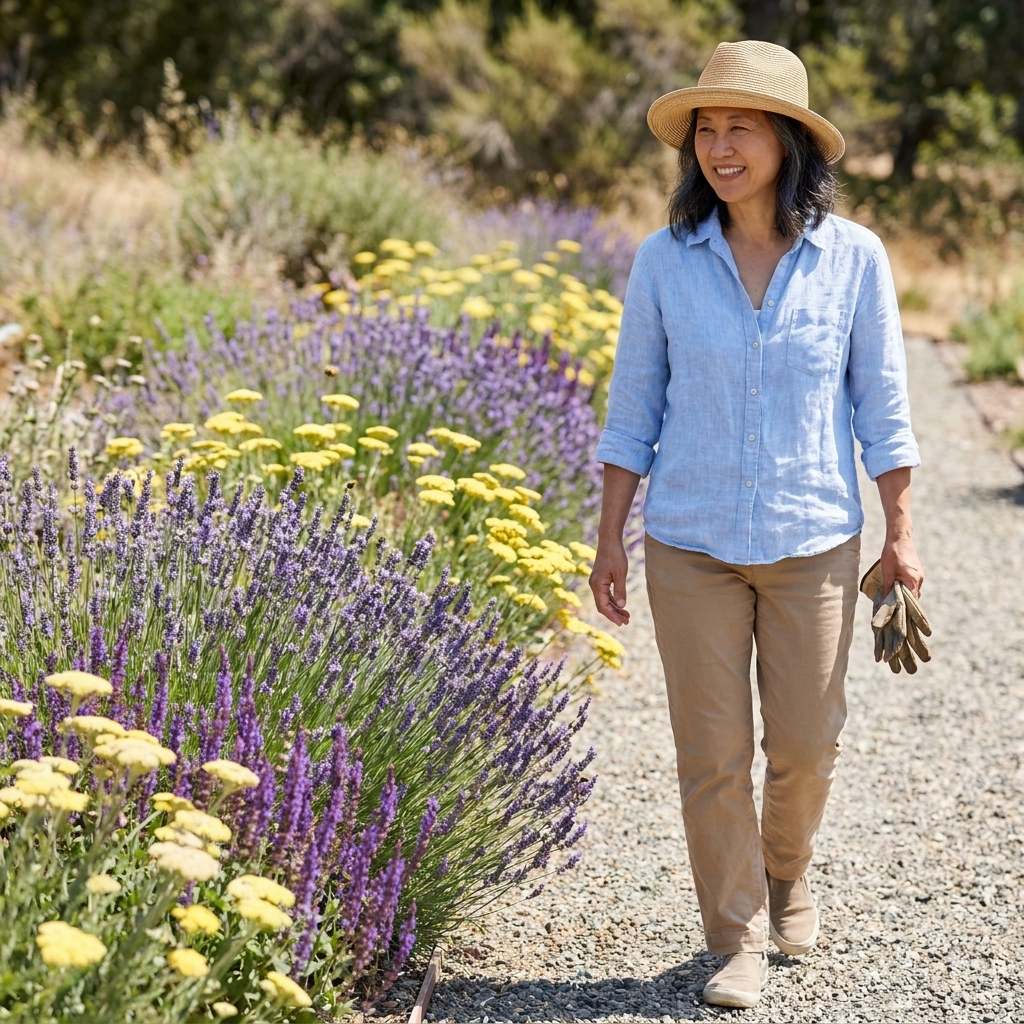
- Soft and silvery: lavender + Russian sage + yarrow
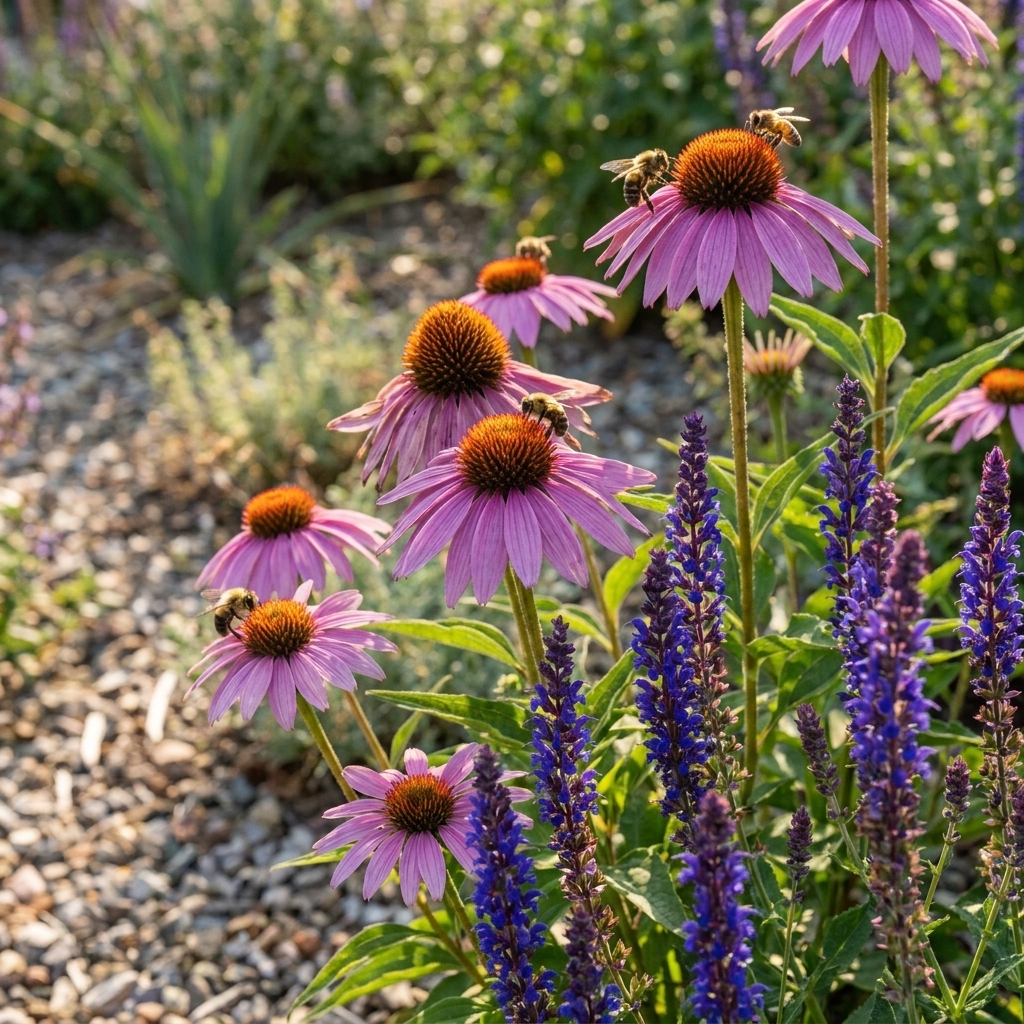
- Pollinator party: coneflower + salvia + blanket flower
- Hot color strip: lantana + moss rose + zinnia
- Rock garden edge: Delosperma + California poppy + penstemon
One quiet design trick: plant in drifts of 3s or 5s. Even tough plants look more intentional when they travel in a little pack.
Quick FAQ
How often should I water drought-tolerant flowers?
In the first season, most need consistent deep watering while they establish. After that, many can go a week or longer between deep waterings, depending on your heat, soil type, and wind. The goal is deep roots, not daily drinking. If the soil is moist 6 to 8 inches down, you can usually wait.
What is the most drought-tolerant flower for full sun?
It depends on your soil and winter conditions, but lantana (where it is not invasive), lavender (in well-drained soil), Delosperma, California poppy, and many penstemons are standouts for full sun and low water once established.
Can I use compost in a xeriscape?
Yes, in moderation. A thin layer mixed into the top few inches helps with root establishment. The key is still drainage. Compost improves sandy soil and can help heavy soil, but heavy clay often also needs mineral grit and careful watering practices.
Do drought-tolerant flowers still need mulch?
Usually, yes. Mulch is less about babying plants and more about stabilizing soil temperature and reducing evaporation. For Mediterranean-style plants like lavender, keep mulch pulled back from the crown.
Are these perennials everywhere?
No. Several favorites on this list are perennials only in warm climates and are grown as annuals where winters freeze (lantana, moss rose, gomphrena, and many verbenas). Before you commit, check your USDA hardiness zone and, just as important, your local invasive plant guidance.