If you have ever planted a bed that looked incredible in May and a little tired by July, you are in very good company. Most “bloom gaps” are not a gardening failure. They are a planning issue. The good news is that annuals and perennials solve different problems, and when you use them together on purpose, your flower bed can stay colorful from early spring through frost.

I think of perennials as the steady neighbors who show up every year, and annuals as the cheerful friends who bring dessert and keep the party going. Let’s build a bed that has both.
Annuals vs. perennials: the real difference
Annuals complete their life cycle in one growing season. They are planted, bloom hard, and then most decline when cold weather arrives. Tender annuals are usually finished by frost, while cool-season annuals can shrug off light frosts and keep going longer in many gardens.
- What they do best: nonstop color, fast fill, instant impact, great for plugging gaps
- Tradeoff: you replant (or reseed) every year
Perennials return for multiple years. Many bloom for a shorter window, then shift into leafy “supporting actor” mode.
- What they do best: structure, repeat performance, habitat value, less replanting over time
- Tradeoff: bloom windows can be brief, and many take a season or two to really size up
Quick clarification: plants can act “annual” or “perennial” depending on climate. Some tender perennials are grown as annuals in colder zones. When in doubt, check the plant tag for your hardiness zone and overwintering notes.
Start with the site
Before you fall in love with a cart full of flowers, take a quick look at what you are working with. It is the easiest way to avoid disappointment later.
- Sun: Full sun is usually 6+ hours. Part shade is often 3 to 6 hours. Shade is less than that. Match plants to your reality, not your hopes.
- Soil moisture: Does the bed dry out fast, stay evenly moist, or hold water after rain?
- Exposure: Hot reflected heat near driveways and walls can make annuals and new perennials thirstier.
Once you know your sun and moisture, choosing annuals and perennials becomes much simpler.
The balancing act: structure vs. sparkle
The most reliable season-long color comes from a simple division of labor:
- Perennials handle structure. They create repeatable shapes, heights, and textures so the bed looks intentional even between bloom peaks.
- Annuals handle sparkle. They keep color going when perennials pause, they brighten the front edge, and they fill holes while new perennials grow in.
If you are building or renovating a bed, a helpful starting ratio is:
- 60 to 75 percent perennials (including ornamental grasses and long-lived foliage plants)
- 25 to 40 percent annuals (including tender plants you treat as annuals)
That is not a rule carved in stone. If you want maximum bloom and do not mind replanting and feeding, you can push the annual number higher. If you want lower upkeep and long-term stability, lean more heavily on perennials.
In a brand-new bed, I often lean heavier on annuals for the first year to avoid that “sad islands in mulch” look while perennials mature.
Plan for bloom windows
When you walk through a garden center, everything is blooming at once and it is very persuasive. At home, each perennial has a season. A bed with continuous color usually includes at least three waves of bloom, plus plants chosen for foliage and seedheads.
Step 1: Split the year into four seasons
- Early spring: bulbs, early woodland bloomers, cool-season annuals
- Late spring to early summer: peak perennial time for many gardens
- Midsummer: heat lovers, long bloomers, and annuals doing the heavy lifting
- Late summer to fall: asters, sedums, grasses, mums, fall annuals
Step 2: Build a backbone of long performers
These are perennials that bloom for a long stretch, rebloom with trimming, or look good long after flowering. Performance varies by cultivar and climate, but these are solid places to start, especially in full sun.
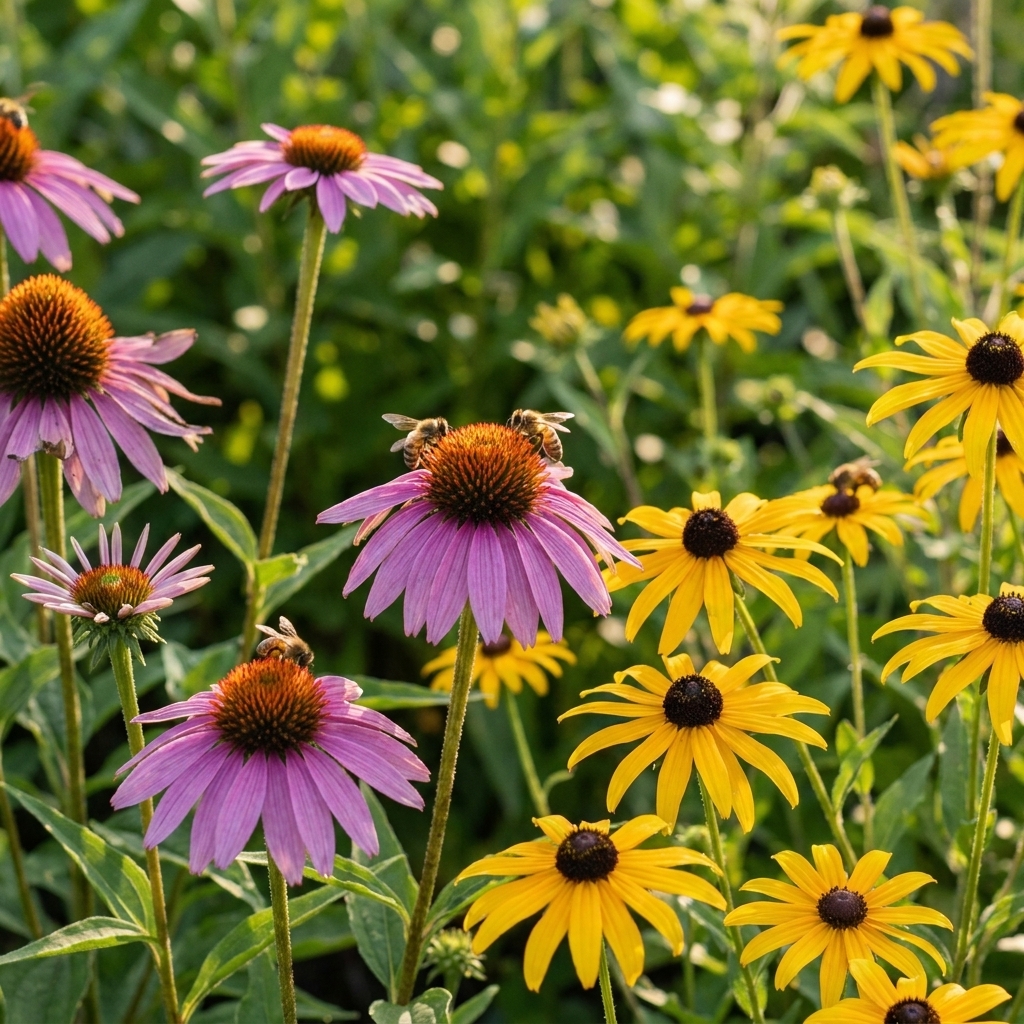
- Often long-blooming perennials (especially with deadheading): coneflower (Echinacea), black-eyed Susan (Rudbeckia), coreopsis, catmint (Nepeta), salvia (many types), yarrow (Achillea)
- Fall reliability: sedum (Hylotelephium), asters, ornamental grasses
- Foliage workhorses: heuchera (coral bells), hosta (shade), artemisia, ferns (shade)
Step 3: Use annuals to bridge the gaps
Annuals are your flexible “color insurance.” If June is lush but August feels empty, annuals cover that.
- Sun annuals: zinnia, cosmos, marigold, petunia, calibrachoa, lantana, angelonia
- Shade annuals: begonias, coleus, torenia, lobelia, impatiens (see note below)
- Cool-season annuals (for early and late color): pansies, violas, snapdragons, calendula, sweet alyssum
Impatiens note: In many regions, common impatiens can struggle with downy mildew. If you have had problems, look for resistant varieties or swap in New Guinea impatiens or begonias for similar impact.

Design rules that work
Color all season is great. Color all season, and a bed that still feels restful, is even better. These are my go-to rules when I am sketching a bed on the back of an envelope.
Repeat, then accent
Pick 2 to 4 main colors and repeat them throughout the bed. Then use one “pop” color sparingly as an accent.
- Easy palettes: pink + purple + white, yellow + orange + red, blue + white + silver foliage
- Beginner tip: white flowers and silver foliage make everything look more intentional
Layer by height
A classic bed layout is still classic because it works.
- Back: taller perennials and grasses (structure)
- Middle: medium perennials (the main bloom waves)
- Front edge: low perennials plus annuals for a tidy, continuous border
Plant in drifts
Even small gardens look more cohesive when you plant in groups of 3, 5, or 7 of the same plant. Use annuals the same way: a small drift reads as design, not clutter.
Leave pockets for swap-outs
Instead of cramming every inch with perennials, intentionally leave a few “annual pockets.” I like to tuck them near the front where swapping plants is easy and you actually notice the color.
Bed layouts you can use
Here are three simple ways to combine annuals and perennials without overthinking it.
Layout 1: Perennial backbone + annual edge
- Backbone: 3 to 5 types of perennials repeated across the bed
- Edge: a continuous ribbon of annual color (for sun: zinnias or calibrachoa, for shade: begonias or impatiens)
- Why it works: perennials keep the shape, annuals keep the “always blooming” look
Layout 2: Bloom waves
- Spring wave: bulbs plus cool-season annuals like pansies or snapdragons
- Summer wave: coreopsis, salvia, coneflower
- Fall wave: sedum, asters, ornamental grasses
- Gap filler: tuck zinnias or cosmos anywhere the summer wave slows down
Layout 3: Low-maintenance pollinators
- Perennials: nepeta, echinacea, rudbeckia, yarrow, asters
- Annuals: cosmos and zinnias (both are easy from seed)
- Bonus: you can let a few flowers go to seed for birds and winter interest
A simple sample plan
If you want one concrete starting point, here is an easy template for a 4 x 8 foot bed in full sun. Adjust counts based on the mature size on the plant tags.
- Back row (structure): 2 ornamental grasses (like switchgrass or feather reed grass) placed at the two back corners, plus 3 salvias spaced between them
- Middle (main show): 5 coneflowers and 5 coreopsis, planted in two repeating drifts
- Front edge (continuous color): 12 to 18 zinnias (or calibrachoa if you want a lower, mounding edge), planted in a ribbon along the front
- Annual pockets: leave 2 small open spots near the front corners to swap in whatever you crave that year
This kind of repeat-and-ribbon layout looks full quickly, stays legible as plants grow, and makes it easy to change the color mood next season without ripping everything out.
Keeping annuals going
Annuals are generous, but they can get tired. A little midseason refresh often turns a sagging July planting into an October headline.
- Trim leggy plants: petunias and calibrachoa often bounce back after a light shear, plus water and feed
- Resow fast growers: zinnias and cosmos can be reseeded in early summer for a later wave in warm climates
- Swap by season: pull out cool-season annuals once heat settles in, then bring them back in early fall when nights cool
Care differences that matter
Annuals and perennials can share a bed happily, but they do not always want the exact same care. A little planning prevents the most common headaches.
Watering
- New perennials: need consistent moisture their first season while roots establish
- Established perennials: often tolerate deeper, less frequent watering
- Annuals: shallow roots mean they dry out faster, especially in containers or along hot edges
Simple fix: group thirstier annuals together in the “pockets,” and choose drought-tolerant annuals (like lantana or zinnias) if your perennials prefer it on the dry side.
Feeding
- Annuals: bloom more with regular feeding (especially petunias, calibrachoa, and container plants)
- Perennials: often need less fertilizer once established, and too much can make them floppy
Simple fix: compost as a gentle base for the whole bed, then spot-feed the annual pockets as needed.
Deadheading and cutbacks
- Annuals: many bloom longer with deadheading or trimming
- Perennials: some rebloom with deadheading, others are fine left alone
If you only have time for one habit, deadhead or trim your annuals. That is usually the fastest route to more flowers.
Common mistakes
- Planting only “pretty right now” perennials: Many spring bloomers fade quietly. Mix in summer and fall bloomers so you have coverage.
- Overcrowding in year one: New gardeners often plant perennials at “instant garden” spacing, then everything fights by year two. Leave room for mature size and use annuals to fill the first-year gaps.
- Ignoring foliage: Flowers come and go. Foliage is the background that keeps a bed looking tidy. Add heuchera, grasses, artemisia, hosta, or ferns depending on sun.
- Forgetting the front edge: A clean edge makes the whole bed look cared for. Low perennials plus a consistent annual border is an easy win.
A season-long checklist
If you want a quick way to sanity-check your plan, run through this list:
- Do I have at least one strong bloomer for spring, early summer, midsummer, and fall?
- Do I have two foliage plants (or grasses) that look good even when nothing blooms?
- Did I leave 2 to 5 pockets for annuals so I can adjust color each year?
- Are my plants grouped in repeat drifts instead of one-of-everything?
- Do my annuals and perennials have similar sun and moisture needs where they are planted?
FAQ
Should I plant annuals or perennials first?
Start with perennials first so you can place the bed’s structure and spacing correctly. Then tuck annuals into the open spaces to add immediate color.
How many annuals do I need for continuous color?
In most beds, a few well-placed pockets of annuals go a long way. Aim for roughly one-quarter to one-third of your planting space in annuals if you want steady color all season, especially in the first year.
What is the easiest way to avoid a midsummer slump?
Pick a couple of midsummer perennials (like coneflower, rudbeckia, or salvia) and commit to at least one dependable annual (like zinnias in sun or begonias in shade). Deadhead or trim the annuals, water consistently, and you will usually cruise through the slump.
Can I use perennials only and still get season-long blooms?
You can, but it takes more careful selection. You will need a sequence of early, mid, and late bloomers plus plants grown for foliage and seedheads. Annuals make it much easier to cover gaps and adjust color year to year.
Parting thought
Every spring, I tell myself I will be “disciplined” and plant only perennials, and every year I end up tucking in at least a few annuals because I like the extra color and the freedom to experiment. A balanced bed is not about choosing sides. It is about building a sturdy, low-stress foundation and giving yourself room to play. If your garden is not perfect, congratulations. It means you are actually gardening.