Roses have a way of making us believe we are one perfect bloom away from becoming a person who has their life completely together. Then Japanese beetles arrive like tiny green wrecking balls, or black spot starts freckling leaves like it has a grudge.
The good news is that both problems are manageable when you tackle them with timing, consistency, and a little strategy. Below is the action plan I use in my own garden, the one I would share over the fence while my golden retriever Barnaby tries to steal your gardening gloves.
Quick ID: What you are dealing with
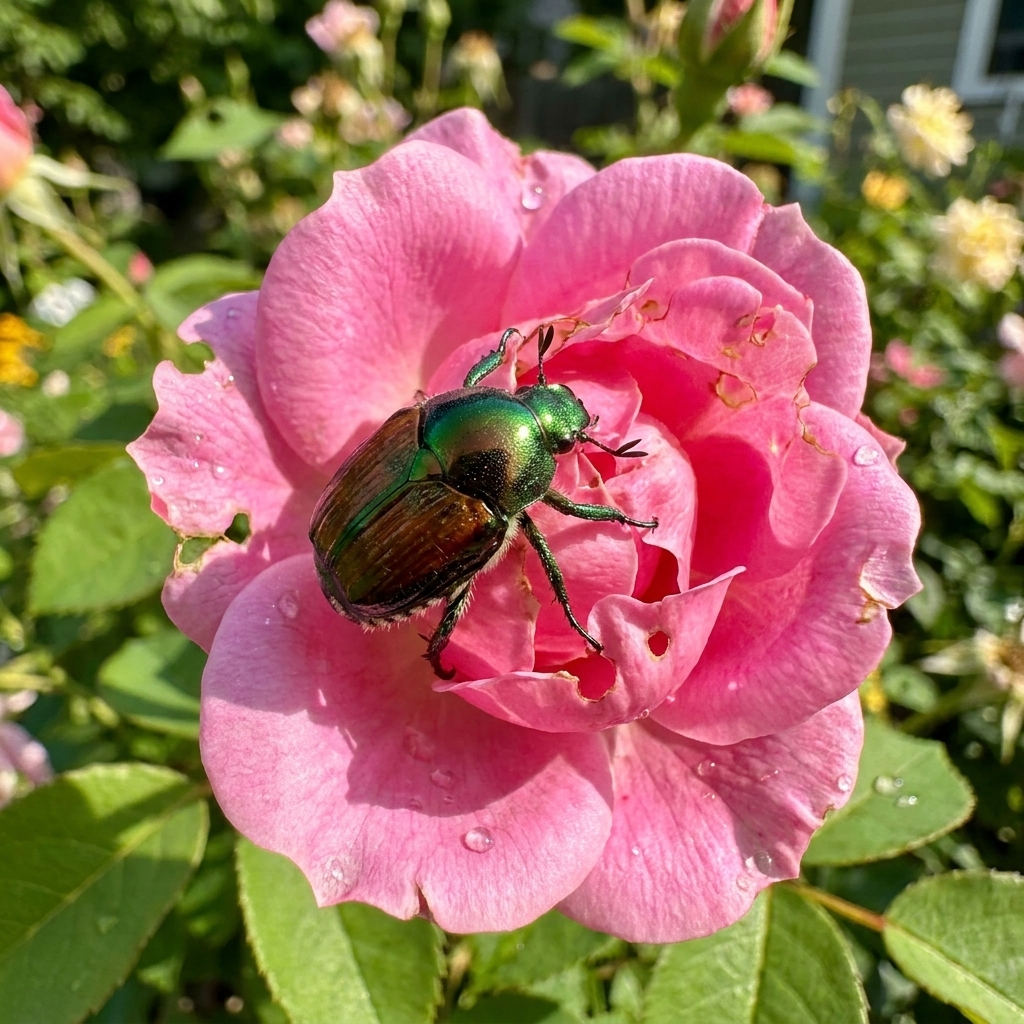
Japanese beetles
- What you see: Skeletonized leaves (veins left behind), ragged petals, clusters of beetles chewing together.
- What the beetle looks like: Shiny metallic green body with coppery wing covers and small white tufts along the sides of the abdomen.
- When it hits: Often in summer, commonly June to August depending on your region, sometimes in a sudden wave that lasts several weeks.
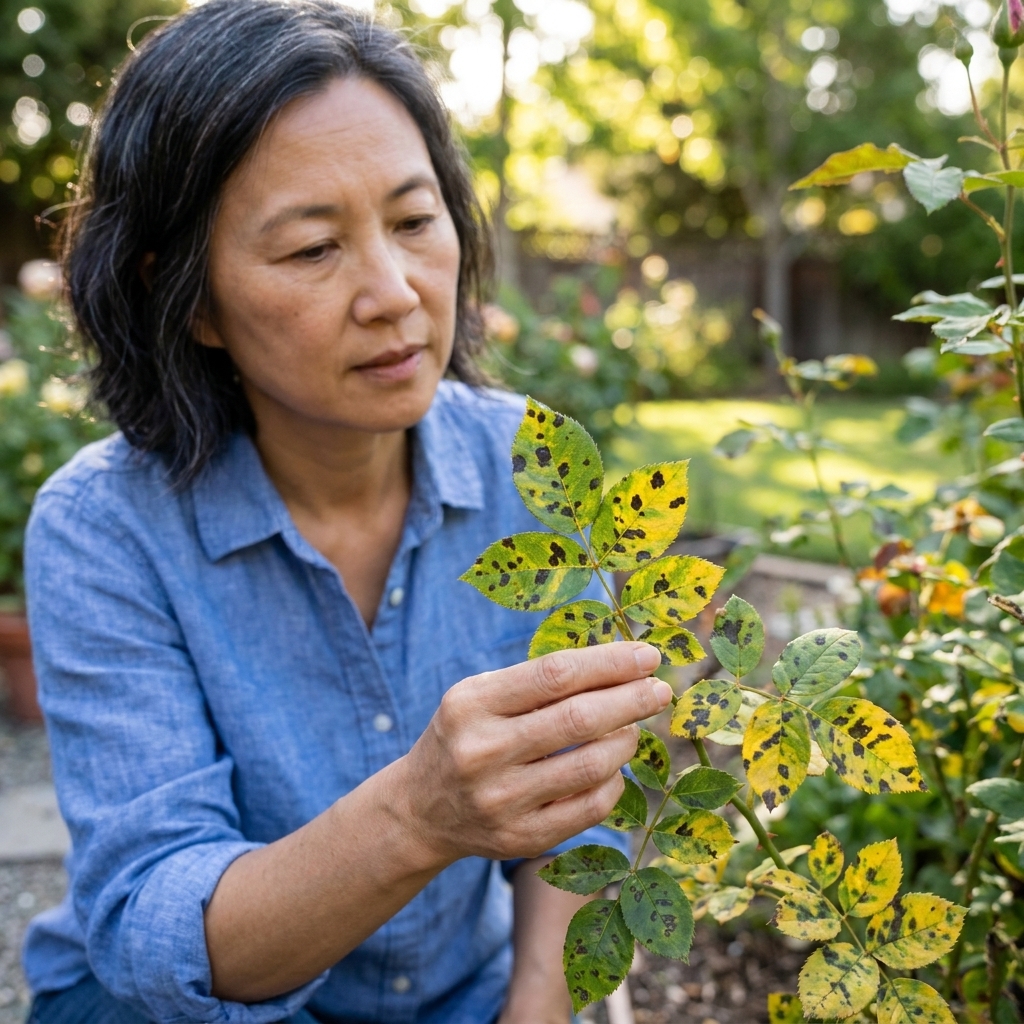
Black spot
- What you see: Round black spots with fringed edges on leaves, yellowing foliage, leaf drop starting from the bottom of the plant and moving upward.
- What it is: A fungal disease (Diplocarpon rosae) that thrives when leaves stay wet.
- When it hits: Spring through fall, especially during rainy, humid, or heavily irrigated periods.
Important: You can absolutely have both at once. Beetle damage can stress the plant, and stressed plants can be more vulnerable to disease pressure.
The 10-minute rose check
If you only adopt one habit, make it this: a quick weekly inspection. Catching problems early reduces how aggressive you need to be later.
- Look low first: Check the bottom third of the plant for black spot starting on older leaves.
- Flip leaves: Peek under leaves for early spotting and for other pests that like to hide out of sight.
- Scan blooms: Japanese beetles often go straight for flowers and tender new growth.
- Check the ground: Fallen infected leaves are a black spot reload button after rain or overhead watering.
Japanese beetles: a targeted plan
Step 1: Hand-pick early
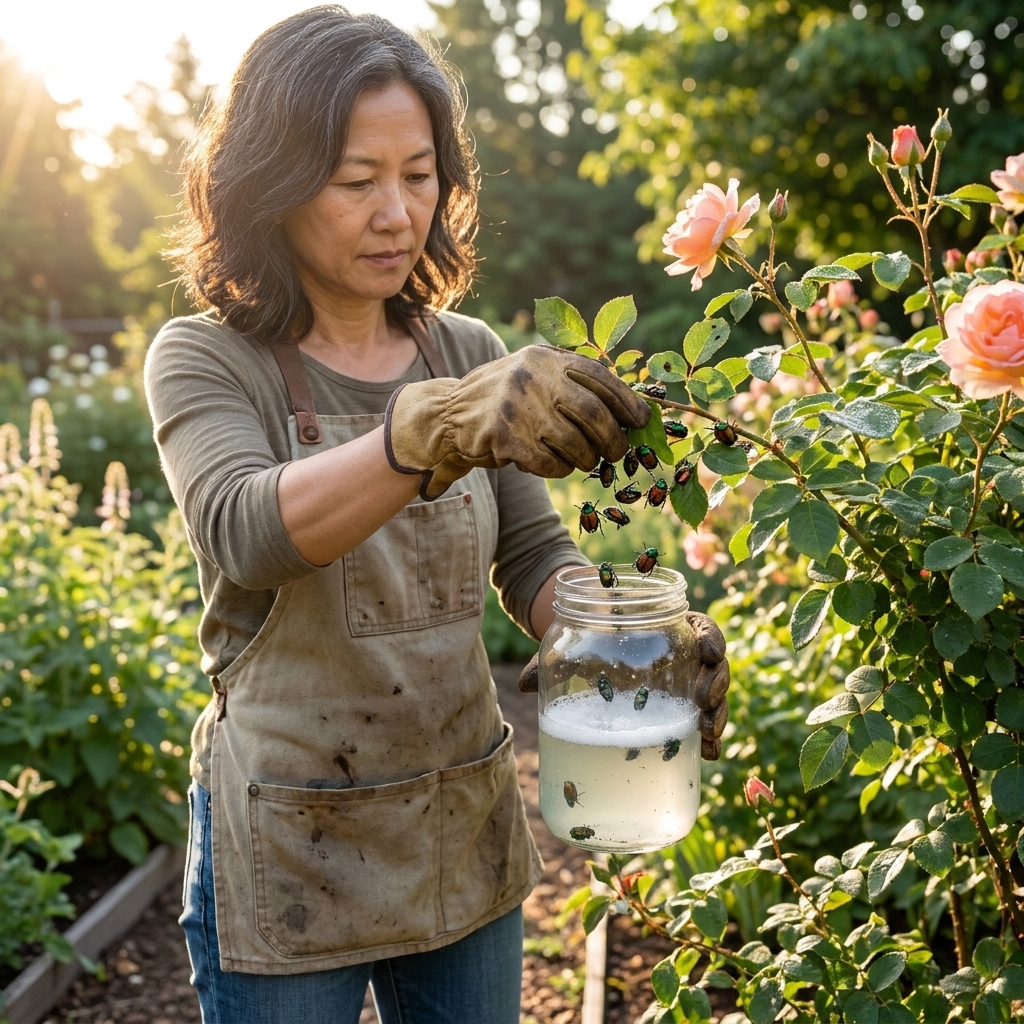
This sounds old-fashioned because it is, and it works. Japanese beetles are sluggish in the early morning and drop readily when disturbed. Hand-picking is especially helpful at the start of an outbreak, before the crowd shows up.
- Hold a wide jar or cup of soapy water under the beetles.
- Tap the bloom or leaf, let the beetles drop in.
- Repeat daily during peak weeks if you can. Even every other day makes a difference.
They release aggregation scents that call in more beetles, so removing the first wave early helps prevent a full-on party.
Step 2: Use netting on prized plants
If you have a few favorite bushes, physical barriers are surprisingly helpful.
- Drape lightweight insect netting over shrubs during peak beetle season.
- Keep netting from tangling in thorns by using simple hoops or stakes to tent it up.
- Secure the edges so beetles cannot stroll in through gaps.
- Remove when you need pollinator access, or if you notice the plant getting too warm or too shaded under the cover.
Step 3: Choose sprays carefully
If hand-picking is not keeping up, consider a targeted product. For roses, I think in tiers, starting with the gentlest options and moving up only if necessary.
- Kaolin clay (particle film): Creates a barrier that can discourage feeding, but results can vary with Japanese beetles. It needs thorough coverage and reapplication after rain, and it can leave a white cast on foliage and buds.
- Neem oil: Can deter feeding on some plants, but results are mixed on adult beetles. If you use it, spray at dusk and avoid spraying open blooms to reduce risk to beneficial insects. Test on a small area first to check for leaf sensitivity.
- Spinosad: Often more effective on chewing insects, but it is highly toxic to bees when wet. Do not spray when bees are foraging. Apply at dusk, avoid open flowers when possible, and allow it to dry before pollinators return. Follow label directions exactly and reapply only as directed.
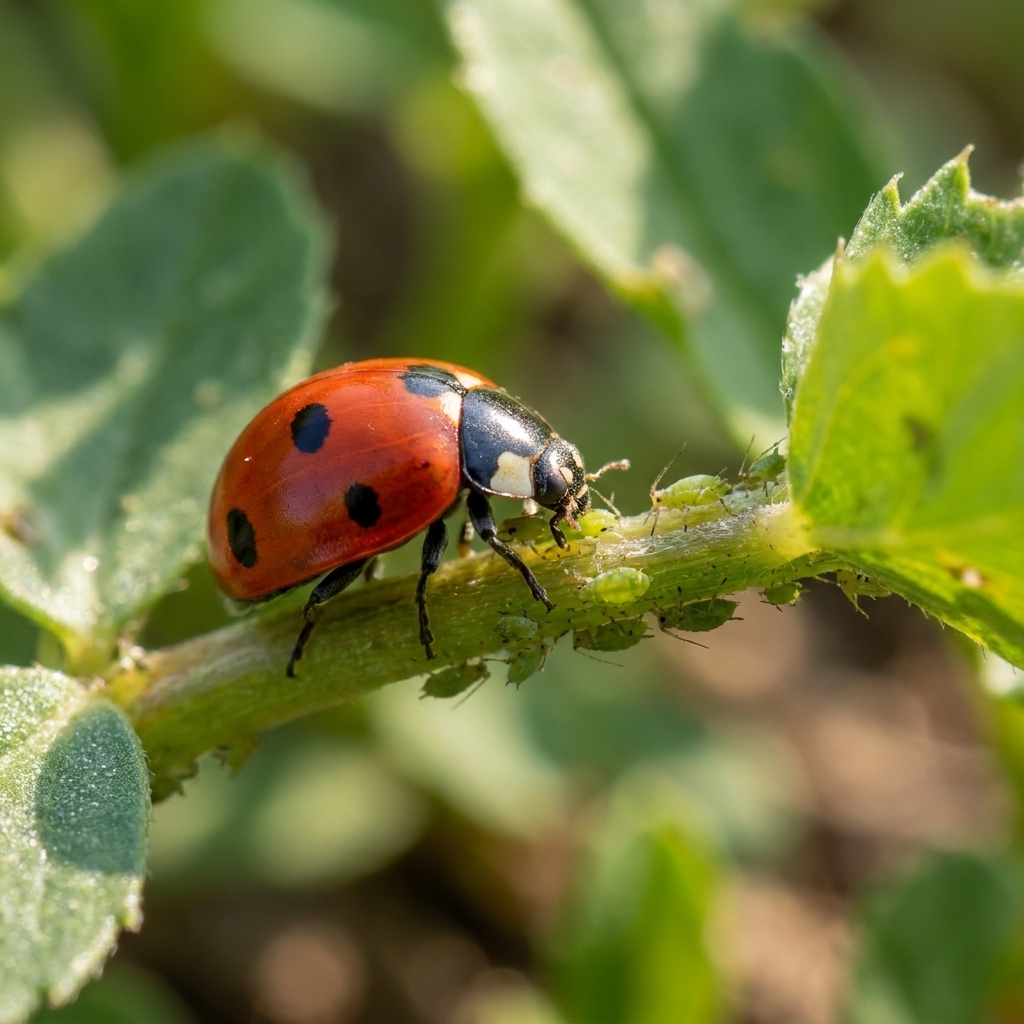
Avoid broad-spectrum insecticides unless you have a severe, persistent issue and you are comfortable with the tradeoffs. Roses rely on a whole ecosystem of beneficial insects that you want to keep around.
Step 4: Skip traps near roses
Those bag traps can catch a lot of beetles, but they also attract more into your yard. If you use traps, place them far from roses, downwind if possible, and closer to the perimeter of your property.
Black spot: break the cycle
Black spot management is mostly about interrupting the fungus life cycle. Once you do that, the plant can keep new growth cleaner and hold its leaves longer, which means stronger blooms.
Step 1: More sun and airflow
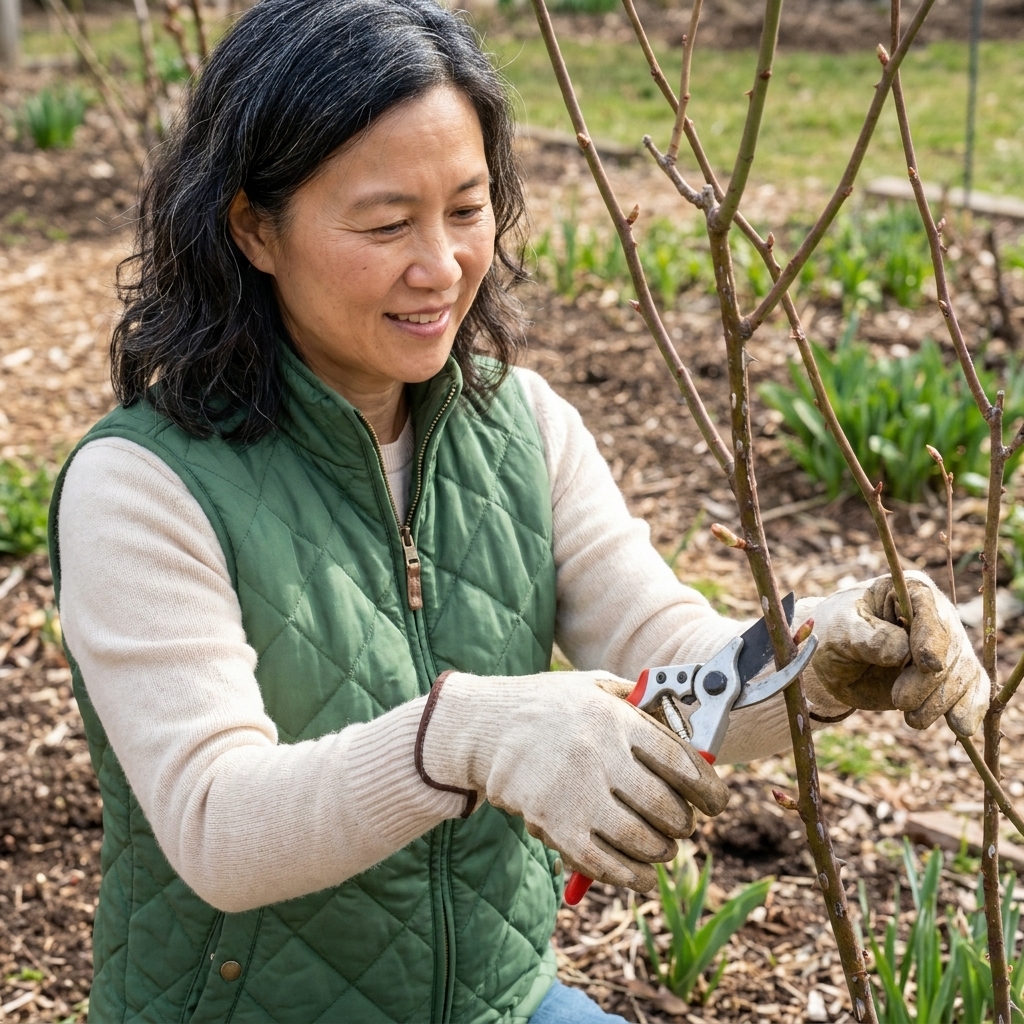
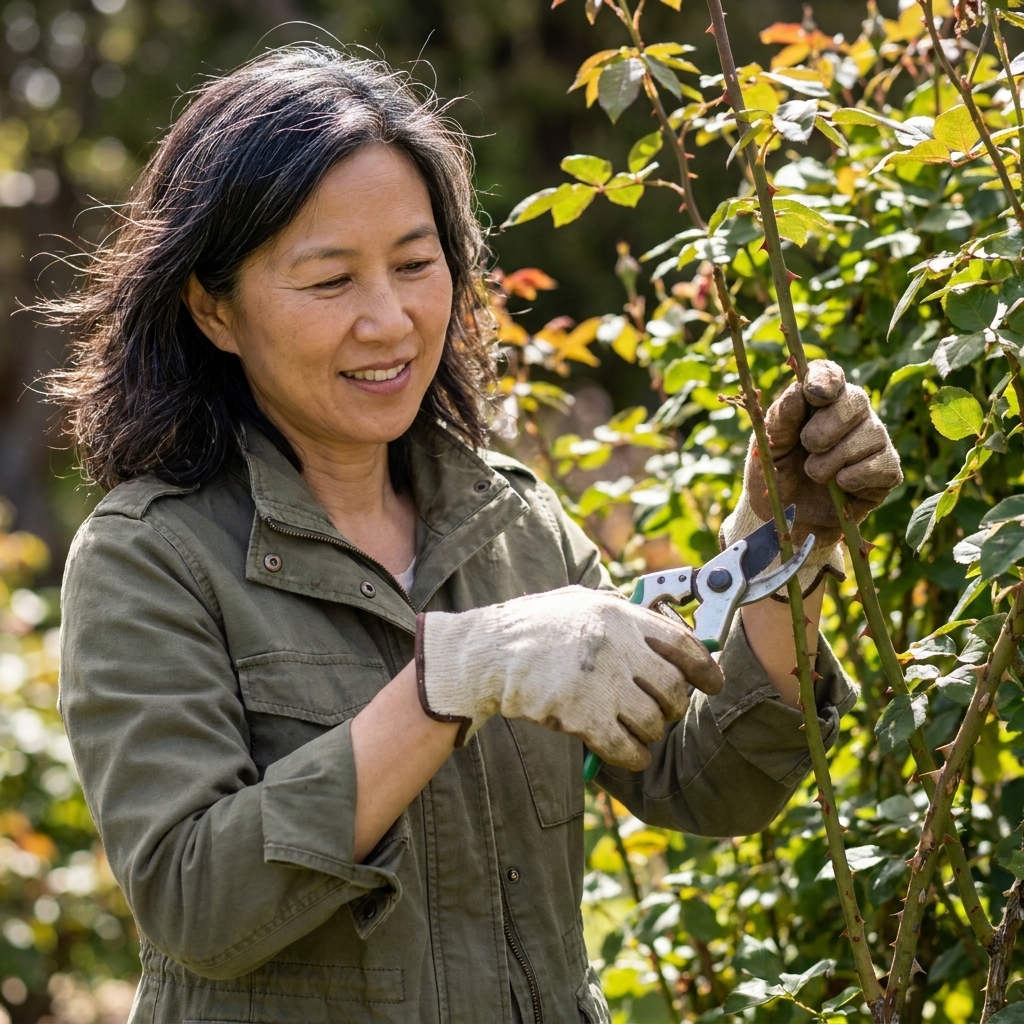
- Prune for airflow: Remove crossing canes and thin the center so leaves dry faster after dew or rain.
- Space roses: Crowded plants stay damp longer, which is basically an invitation to black spot.
- Water at the base: Drip irrigation or a soaker hose beats overhead watering every time.
Step 2: Sanitation that you will actually do
You do not need to become a leaf-policing superhero. You just need consistency.
- Remove and dispose of infected leaves you can reach, especially those on the lower plant.
- Rake up fallen leaves promptly. Do not leave them to decompose under the bush if black spot is active.
- If disease pressure is high, clean pruners between plants and after cutting infected material.
- At season’s end, do a thorough cleanup around your roses.
Compost note: Home compost piles do not always heat enough to kill fungal spores. When black spot is severe, I bag infected leaves or send them to municipal green waste where hot composting is more likely.
Step 3: Start sprays early
If black spot shows up every year in your garden, prevention beats reaction. Sprays work best before infection takes hold and during extended wet weather.
- Neem oil or horticultural oil: Can help as a protectant when used correctly. Apply in cooler parts of the day and avoid spraying stressed plants.
- Sulfur: A traditional organic option used as a protectant. Do not use sulfur within at least 2 weeks of applying oils (and always follow the label) to avoid plant damage. Follow label timing and temperature cautions.
- Copper-based fungicides: Can be effective as a protectant, but copper accumulates in soil over time. Use judiciously and only as needed.
Whatever you choose, apply according to the label and cover leaves well, including the undersides. Reapply after heavy rain if the product label indicates.
One plan for both: strengthen the rose
Healthy roses are not immune to beetles or black spot, but they recover faster and keep blooming. Think of this as building your plant’s bounce-back ability.
Feed lightly
- Avoid heavy nitrogen fertilizing, which can push soft new growth that pests love.
- In spring, top-dress with compost and use a balanced organic rose fertilizer if needed.
- Mulch 2 to 3 inches deep (keep mulch pulled back from the crown) to stabilize moisture and reduce soil splash that can spread fungal spores.
Water wisely
- Deep, less frequent watering encourages deeper roots.
- Morning watering is best so foliage dries quickly if it gets wet.
Plant for resistance
If you are planting new roses, disease resistance is not settling for less romance. It is choosing peace. Many modern shrub roses and landscape roses have significantly improved black spot resistance. Look for varieties marketed for disease resistance and, when available in your region, roses with strong trial results such as ADR-rated selections.
Seasonal checklist
Early spring
- Prune for airflow, remove dead or weak canes.
- Clean up old leaves and debris around the base.
- Refresh mulch.
Late spring to early summer
- Start weekly rose checks.
- Begin black spot prevention if it is a yearly issue, especially before rainy stretches.
Mid-summer
- Hand-pick in the morning.
- Use netting for special roses if pressure is high.
- Escalate to targeted sprays only if needed, apply at dusk, and avoid open blooms when possible.
Late summer to fall
- Continue sanitation: remove fallen leaves and heavily infected foliage.
- Stop fertilizing in time for your region so plants can harden off before cold weather.
End of season
- Final cleanup around roses to reduce disease carryover.
- Store stakes, netting, and sprayers clean and dry.
Common questions
Should I cut off beetle-damaged blooms?
If blooms are shredded, go ahead and deadhead to keep the plant tidy and encourage new flowering. If damage is minor, I often leave them and focus on removing the beetles. The goal is to reduce feeding and stress, not chase perfect petals.
Why does black spot keep coming back even when I spray?
Usually one of three reasons: sprays started after infection was widespread, coverage was incomplete, or wet foliage conditions are constant (overhead watering, dense growth, too much shade). Sprays are only one piece of the plan.
Can I treat lawns for Japanese beetle grubs to protect roses?
Grub control can reduce future beetle pressure, but it is not an instant fix for adults already flying in from neighboring areas. Timing matters: most treatments work best on young grubs, and the window depends on your region and the product. Some options, like milky spore, can be slow and are region-dependent. Adults can still arrive from down the street, so keep your rose-level defenses in place.
Do I need to remove every spotted leaf?
No. Remove the worst ones you can reach, focus on fallen leaves, and prioritize airflow and dry foliage. The cleaner you keep the base of the plant, the less black spot has to reinfect from below.
Any safety basics I should follow with sprays?
Yes. Always follow the label, wear the recommended protective gear, and follow local regulations. Keep kids and pets out of the area until sprays have dried, and store products securely.
A calm closing thought
Roses are not fragile divas, even if they have a reputation. They are tough plants with a flair for drama. With a weekly check, a little morning beetle patrol, and a simple black spot routine that keeps leaves dry and the area clean, you can keep your roses blooming beautifully without turning your garden into a full-time job.