If you have ever stood in the garden aisle holding a bag that says 10-10-10 and thought, “Is this plant food or a math test?” you are in excellent company. NPK ratios look mysterious, but they are actually one of the simplest tools you can use to steer plant growth in the direction you want.
In this guide, I will walk you through what N, P, and K do, how to read a fertilizer label, and how to choose a ratio that makes sense for flowers and shrubs, not just lawns and tomatoes. No perfection required. Your soil has seen worse.
What NPK means on fertilizer labels
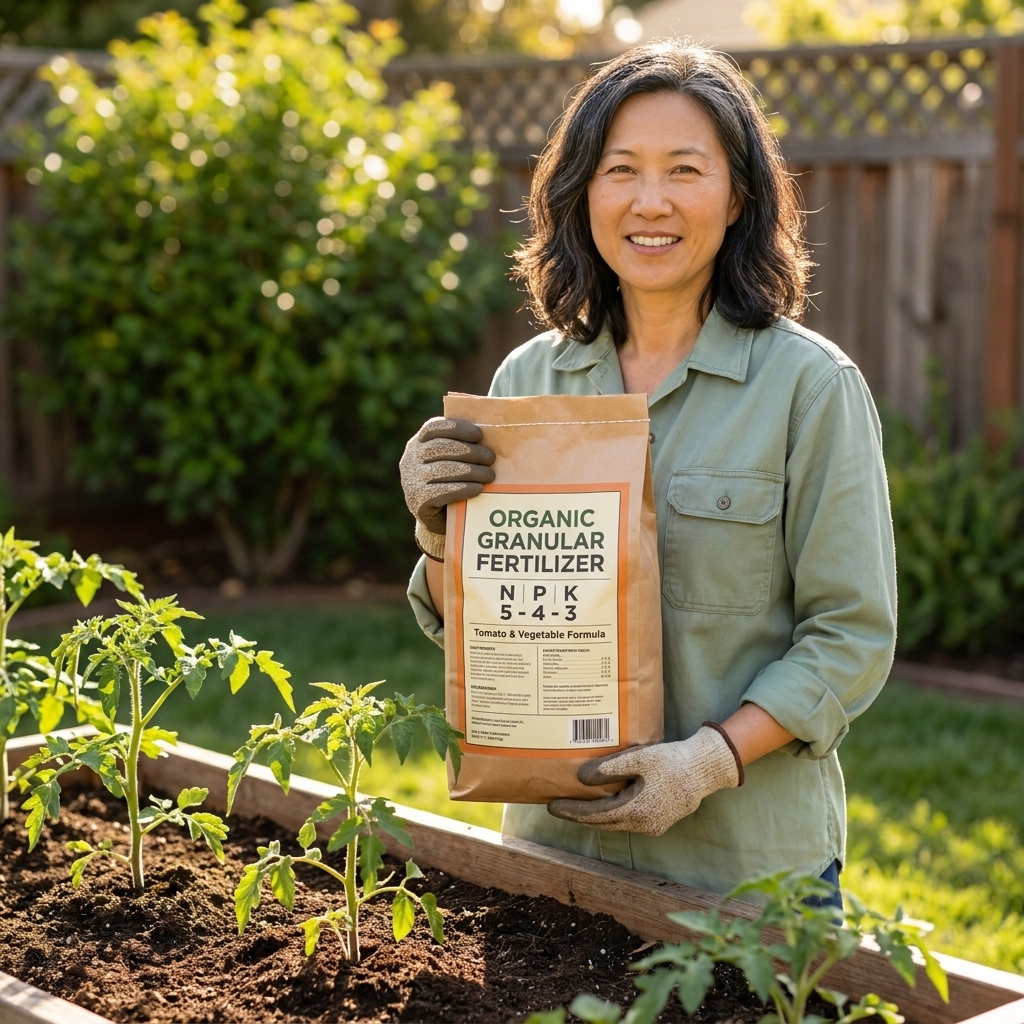
NPK stands for Nitrogen (N), Phosphorus (P), and Potassium (K). On fertilizer labels, you will see three numbers like 5-10-5 or 12-4-8. Those numbers are the product’s guaranteed analysis, listed in this order:
- First number (N): percent nitrogen (N) by weight
- Second number (P): percent phosphorus reported as phosphate (P2O5)
- Third number (K): percent potassium reported as potash (K2O)
So a 10-10-10 fertilizer contains 10% N, 10% P2O5, and 10% K2O by weight. That does not mean it is 10% elemental phosphorus and 10% elemental potassium. The rest is carriers, conditioners, and sometimes micronutrients.
Ratio vs strength (the part that trips people up)
The numbers tell you analysis (percent by weight). The “shape” of the numbers tells you the ratio (relative proportions).
- 20-20-20 and 10-10-10 have the same ratio (1:1:1), but 20-20-20 is more concentrated.
- 24-8-16 and 12-4-8 have the same ratio (3:1:2), but again, the higher numbers deliver more nutrients per pound.
That is why application rates matter. You can burn plants with a “balanced” fertilizer if you overapply.
What each nutrient actually does
I like to think of NPK as the three main levers you can pull for growth. Real life is more nuanced, but this mental model is accurate enough to make good choices.
Nitrogen (N): leafy growth and overall vigor
Nitrogen fuels chlorophyll production and helps plants build lush stems and leaves. If you want a shrub to put on new shoots, nitrogen is the gas pedal.
- When it helps: spring growth on established shrubs, leafy perennials, recovery after pruning, pale or slow growth in nutrient-poor soil
- When it hurts: too much nitrogen can cause soft, sappy growth that attracts aphids, delays flowering, and can reduce winter hardiness on woody plants if applied late in the season
Phosphorus (P): roots, blooms, and energy transfer
Phosphorus supports root development and helps plants move and store energy. It is often marketed as “bloom booster,” but most home gardens do not need extra phosphorus unless a soil test says so.
- When it helps: true phosphorus deficiency, some new plantings in very low-P soils, certain container mixes that are quickly depleted
- When it hurts: excess phosphorus can interfere with uptake of iron and other micronutrients, and it can contribute to water pollution if it runs off
One of the most common surprises from soil tests is high phosphorus. It accumulates easily, especially where composted manures or “bloom” fertilizers have been used for years.
Potassium (K): resilience, water balance, and overall plant function
Potassium is the quiet workhorse. It supports enzyme function, water regulation, and stress tolerance. Think of it as the nutrient that helps plants handle heat, cold snaps, drought stress, and general wear and tear.
- When it helps: improving plant sturdiness, supporting flowering and fruiting broadly, helping shrubs handle stress
- When it hurts: too much potassium can compete with magnesium and calcium uptake in some soils

How to read the rest of the fertilizer label
NPK is the headline, but the fine print tells you how that product behaves in your garden.
Fast-release vs slow-release
- Fast-release fertilizers are available quickly to plants and feed fast. Great for correcting a known deficiency, riskier for burning roots or pushing overly rapid growth. (Some forms still need a little time and soil biology to convert, so “fast” is not always “instant.”)
- Slow-release fertilizers release nutrients gradually through coatings or less-soluble forms. They are usually easier on beginners and better for shrubs and perennials.
Organic vs synthetic
“Organic” on a fertilizer bag usually means the nutrients come from plant or animal sources, and feeding depends on soil microbes breaking them down. “Synthetic” nutrients are typically available to plants more quickly.
In real gardens, both can be used responsibly. My rule is simple: choose the gentlest tool that reliably does the job. For many ornamental beds, that is compost plus a light, slow-release fertilizer when needed.
Micronutrients
Some products add iron, magnesium, sulfur, and trace minerals. Those can be helpful, but they are not a substitute for fixing pH or drainage issues. For example, yellow leaves on azaleas are often about soil pH and iron availability, not a lack of nitrogen.
pH matters more than people think
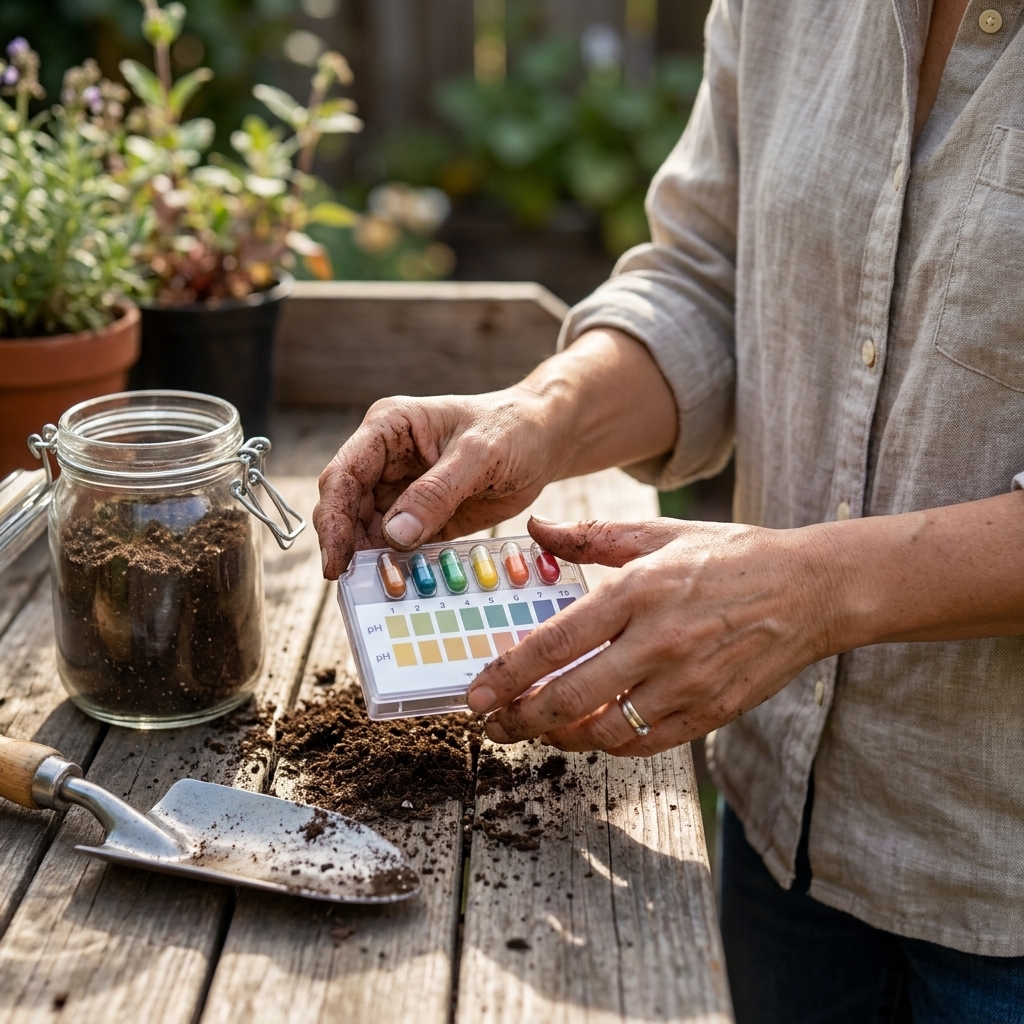
Soil pH controls how available many nutrients are. If pH is off for a plant, you can have nutrients in the soil and still see “deficiency” symptoms because the roots cannot access them well. If a plant looks hungry but fertilizer is not helping, pH is one of the first quiet culprits to check.
Fertilizer forms (and what to watch for)
Most gardeners buy fertilizer in one of three forms. They can all work, but they behave differently.
- Granular: spread over the root zone and watered in. Great for beds and shrubs, especially slow-release granules that feed steadily.
- Liquid: mixed with water and applied during watering. Useful for containers and quick corrections, but it is easier to overdo because results feel immediate.
- Spikes: pushed into the soil near a plant. Convenient, but they can create concentrated “hot spots” of nutrients instead of an even feed across the root zone. For shrubs with wide root systems, spikes are often not the best tool.
Choosing the right NPK ratio for flowers
Flowers are not one-size-fits-all. Annuals in containers behave differently than perennial beds in the ground. Use these as starting points, then adjust based on plant performance and, ideally, a soil test.
For flower-heavy annuals in containers
Containers can lose nutrients faster, especially with frequent watering and free-draining potting mix. A fertilizer with a bit more potassium often supports steady blooms and sturdier plants.
- Good ratio shapes: 1:1:1 (balanced) or 1:1:2 (slightly higher K)
- Examples: 10-10-10, 12-12-12, 10-10-20, 12-4-8
Pair with consistent watering. No fertilizer can outmuscle drought stress in a pot baking on a patio.
For perennial flower beds
Perennials generally prefer a lighter touch. Too much nitrogen can give you towering leaves and fewer blooms, plus floppy stems that need staking.
- Good ratio shapes: balanced or slightly lower N
- Examples: 5-5-5, 4-6-4, 3-4-4
If your perennials look healthy and bloom fine, compost plus mulch may be all you need.
About “bloom booster” fertilizers
Those high-phosphorus mixes (something like 10-30-10) can be useful in very specific cases, but they are often overused. If your soil already has adequate phosphorus, a bloom booster can create nutrient imbalances without improving flowering.
If you want better blooms, check these first:
- Sunlight: many “won’t bloom” complaints are shade issues
- Pruning timing: some shrubs set buds on old wood
- Overfeeding nitrogen: lush leaves, few flowers is a classic sign
- Water stress: inconsistent moisture leads to bud drop

Choosing the right NPK ratio for shrubs
Shrubs are long-term residents. The goal is steady growth, good root support, and stress tolerance, not a burst of soft growth that needs constant pruning.
For established shrubs in decent soil
Many shrubs do well with a modest, balanced feed or sometimes none at all if you top-dress with compost annually.
- Good ratio shapes: 1:1:1 or slightly higher K
- Examples: 5-5-5, 6-6-6, 8-8-8, 12-4-8
For newly planted shrubs
This is where gardeners often overdo it. New shrubs need time to grow roots, and high fertilizer rates can stress fresh roots.
- Best first step: improve planting technique and watering consistency
- If you fertilize: choose a gentle, slow-release product and apply lightly, or wait until you see new growth
In many cases, mulch and consistent moisture outperform fertilizer for helping new shrubs establish.
For flowering shrubs (hydrangea, lilac, viburnum, roses)
Use a moderate, balanced fertilizer or one slightly lower in nitrogen if the plant is leafy but stingy with blooms.
- Good ratio shapes: balanced or slightly lower N
- Examples: 4-6-4, 5-10-5, 6-8-6
With hydrangeas especially, bloom quality is just as tied to light, moisture, and pruning as it is to feeding.
For evergreens (boxwood, arborvitae, juniper)
Evergreens often respond to a spring feeding, but they really dislike late-season nitrogen that pushes tender growth before winter.
- Good ratio shapes: slightly higher N in early spring, balanced otherwise
- Examples: 10-6-4, 12-6-6, 10-10-10
As a general rule, stop nitrogen-heavy feeding about 6 to 8 weeks before your expected first frost, unless local extension guidance says otherwise for your climate.

Quick NPK cheat sheet
- More leafy growth: choose higher N (example: 12-4-8)
- Steady all-purpose feeding: balanced (example: 10-10-10 or 5-5-5)
- Better resilience and sturdier growth: choose a K-leaning option, often higher K relative to P (example: 10-10-20 or 12-4-8)
- Root support in low-P soils: modestly higher P (example: 5-10-5), but confirm with a soil test if possible
If you only remember one thing: match the fertilizer to the goal, and match the dose to the plant. Most problems come from overapplication, not underfeeding.
Signs you are using the wrong NPK ratio
Plants talk. They do not use words, but they absolutely complain.
Too much nitrogen
- Fast, floppy growth that needs staking
- Lots of leaves, few blooms
- Increased pest issues like aphids on tender new shoots
- Leaf burn if overapplied, especially with fast-release products
Too much phosphorus
- Yellowing between leaf veins on some plants due to micronutrient lockout
- Long-term soil imbalance, especially where manure-based compost is added heavily
Too much potassium
- Magnesium or calcium deficiency symptoms in some soils, even if those nutrients are present
To be fair, many “nutrient problems” are actually about watering, compaction, poor drainage, or pH. Fertilizer cannot fix roots sitting in soggy soil.
How to apply fertilizer safely
Start with soil, not guesses
If you can do one thing that saves money and prevents frustration, do a soil test every few years. Many cooperative extension offices offer affordable testing and will tell you if phosphorus is already high or if pH is limiting nutrient uptake.
Use the right timing
- Spring: best time for most shrub and perennial feeding
- Mid-season: light feeding for heavy bloomers in containers
- Late summer to fall: avoid heavy nitrogen for woody plants unless locally recommended
Keep fertilizer off stems and leaves
Granular products should be spread evenly over the root zone, not piled at the base like a little nutrient volcano. Water in after applying.
Measure once, regret less
Follow the label rate. If you are nervous, start at half strength, especially with fast-release fertilizers or young plants.
Common NPK questions
Is 10-10-10 good for everything?
It is a solid general-purpose option, but “good for everything” depends on your soil. If your soil test shows high phosphorus, a balanced fertilizer may add more P2O5 than you need. In that case, a product with a lower middle number (like 12-4-8) often makes more sense.
What is better for flowers: higher P or higher K?
Most flowering plants benefit from overall good nutrition and stable moisture. If you already have adequate phosphorus, slightly higher potassium often supports sturdier growth and steady blooming without piling on extra P.
Can I use lawn fertilizer on shrubs and flowers?
Sometimes, but be cautious. Many lawn fertilizers are high nitrogen and may push leafy growth at the expense of blooms. Also, some include herbicides, which you should never apply around ornamentals unless the product is explicitly labeled for that use.
Do I need fertilizer if I use compost?
Often, not much. Compost improves soil structure and provides a gentle nutrient trickle. For heavy feeders in containers or nutrient-poor soils, you may still need supplemental fertilizer, but usually at a lower rate.
What if my plant looks bad but fertilizer does not help?
Pause and troubleshoot the basics: light, water, drainage, root crowding, pH, and pests. Fertilizing a stressed plant can sometimes make things worse.
A calm way to choose your next bag
If you are standing in front of the fertilizer wall right now, here is the simplest decision path I know:
- No soil test? Choose a moderate, slow-release fertilizer and avoid extremely high middle numbers.
- Feeding flowers in containers? Pick balanced or slightly higher K.
- Feeding shrubs? Go gentle, slow-release, and mostly spring timing.
- Seeing lots of leaves but few blooms? Ease up on nitrogen and check sun and pruning timing.
And if you take nothing else from this guide, take this: plants rarely need more fertilizer than we think they do. They need consistency, decent soil structure, and a gardener willing to learn from last season’s “oops.” I have a compost bin full of them.