Roses have a reputation for being fussy, but pruning does not have to feel like open-heart surgery. Think of it more like a haircut with a purpose: you are removing what is dead or unproductive so the plant can push fresh, bloom-ready growth. The goal is simple: more light, more airflow, stronger canes, and flowers that do not hide in a thicket of stems.
If you are nervous about cutting “too much,” you are in good company. My first rose pruning job ended with a pile of canes so big my golden retriever, Barnaby, tried to drag one off like a trophy. The good news: roses are resilient. With a few clear rules, you can prune confidently and get maximum blooms without stressing yourself out.
Why pruning boosts blooms
Roses bloom best on vigorous, well-lit growth. Pruning helps by:
- Directing energy into fewer, stronger stems instead of lots of weak ones.
- Improving airflow to reduce fungal issues like black spot and powdery mildew.
- Letting light in so leaves can photosynthesize efficiently.
- Encouraging new flowering wood on types that bloom on new growth.
Typically, the most bloom-focused pruning happens once a year, then you do smaller “tidy up” cuts during the growing season. In very mild climates, some gardeners also do a meaningful late-spring shaping prune after the first flush.
Tools and prep (do this first)
What you need
- Bypass pruners for stems up to about pencil thickness.
- Loppers for thicker canes.
- Pruning saw for old, woody canes.
- Thick gloves (rose thorns do not care about your plans).
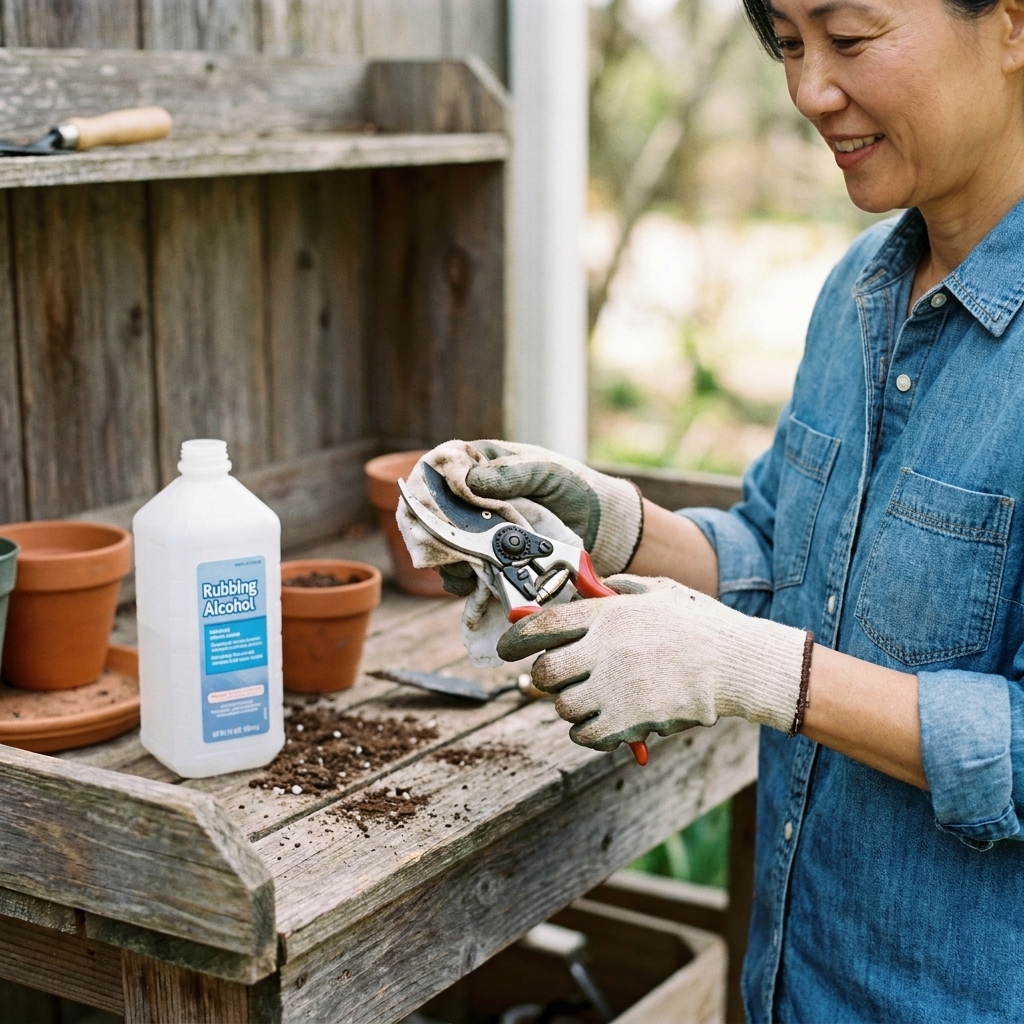
- Rubbing alcohol or disinfectant wipes to clean blades.
Clean cuts matter
Sharp, clean tools reduce ragged wounds that invite disease. Wipe blades before you start, and again if you cut out any diseased wood.
Dress for success
Long sleeves, sturdy gloves, and closed-toe shoes make pruning feel calmer. If your rose is particularly thorny, wrap the canes gently with a towel as you reposition them. If canes tend to spring back, consider eye protection, too.
Know your rose first
If you are not sure what kind of rose you have, take one minute to do this quick check. It prevents the biggest beginner mistake: pruning off your flower buds.
- Repeat bloomer or once bloomer? If it flowers in waves all season, it is a repeat bloomer. If it puts on one big show in early summer and then stops, it likely blooms on last year’s wood and should be pruned after flowering.
- Climber or shrub? Climbers throw long canes meant to be trained along a fence or trellis. Shrubs form a rounded bush and can usually handle a yearly thinning and shaping.
- Grafted or own-root? Look near the base for a knobby swelling (the graft union). On grafted roses, avoid cutting so low that you remove the desired variety or damage the graft area. Own-root roses do not have that obvious knob and usually resprout true-to-type from the base.
When to prune roses
The best timing depends on your rose type and your winter climate, but these guidelines will keep beginners out of trouble.
Main prune: late winter to early spring
For most roses, the big prune happens when the plant is still dormant but severe cold is easing up. A classic gardener trick is to watch for early spring bud swell on the rose, or for nearby early bloomers like forsythia starting to flower. That is your seasonal green light.
In cold-winter regions
Wait until the worst freezes are past. Pruning too early can coax tender new growth that gets zapped by late cold snaps.
In mild-winter regions
You can prune earlier, often mid to late winter. Many gardeners do a lighter winter prune and a stronger spring shaping once growth starts.
What about fall pruning?
In most climates, avoid heavy fall pruning. It can encourage soft new growth just as the plant should be hardening off for winter. Instead, do a simple fall tidy:
- Remove dead or diseased wood.
- Clip off extra-long canes that could whip in wind.
- Pick up fallen leaves, especially if disease was an issue.
Deadheading season: spring through frost
Deadheading is not the same as pruning, but it is the easiest way to keep repeat bloomers producing. You remove spent flowers to encourage new buds instead of hips.
The 7 core pruning steps
If you learn one sequence, make it this one. It works for many rose types, then you fine-tune based on the category.
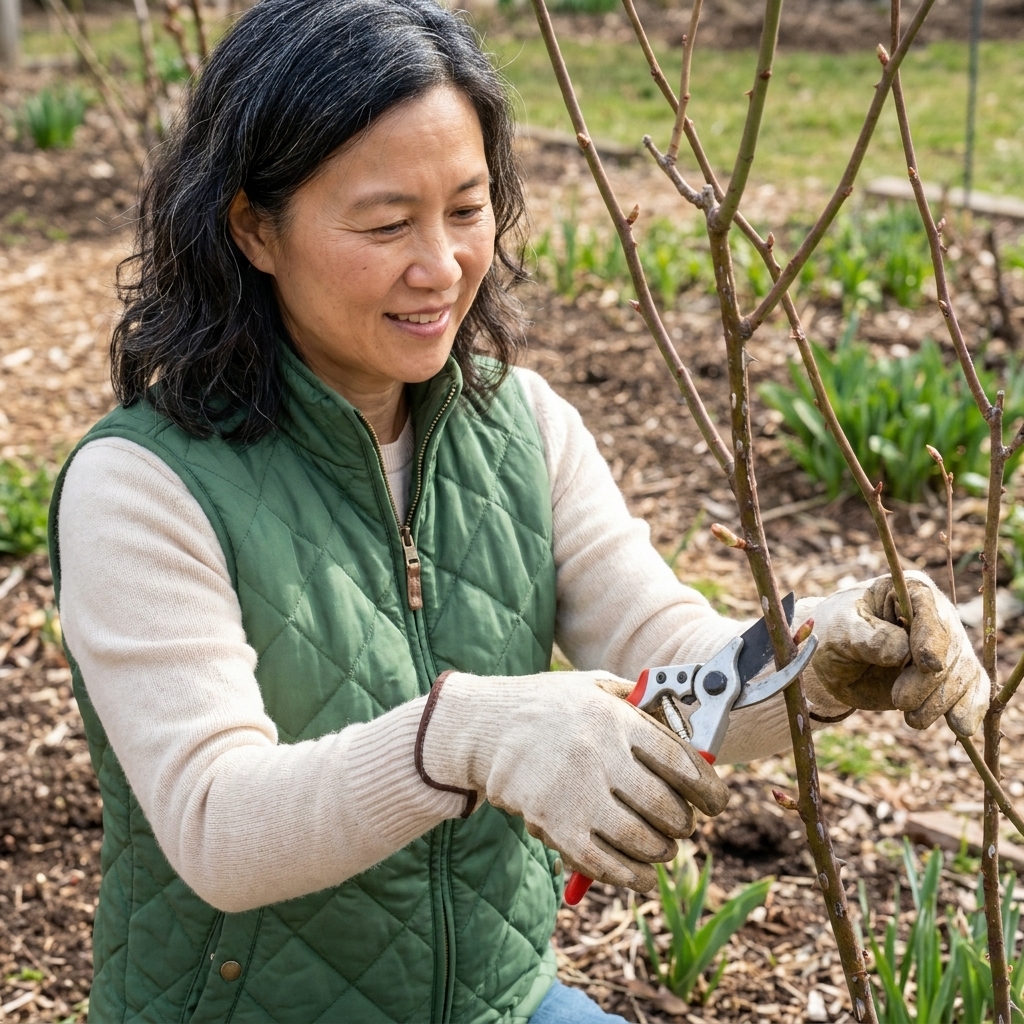
- Start with the “3 D’s”: remove dead, damaged, and diseased canes at the base or back to healthy wood.
- Remove crossing canes that rub. Keep the strongest, best-placed cane.
- Open the center so air can move through. Aim for a vase shape on bush roses.
- Reduce height to a manageable size for your space and to prevent flopping. If your rose is grafted, keep an eye on the graft union at the base and do not cut the whole plant down below it.
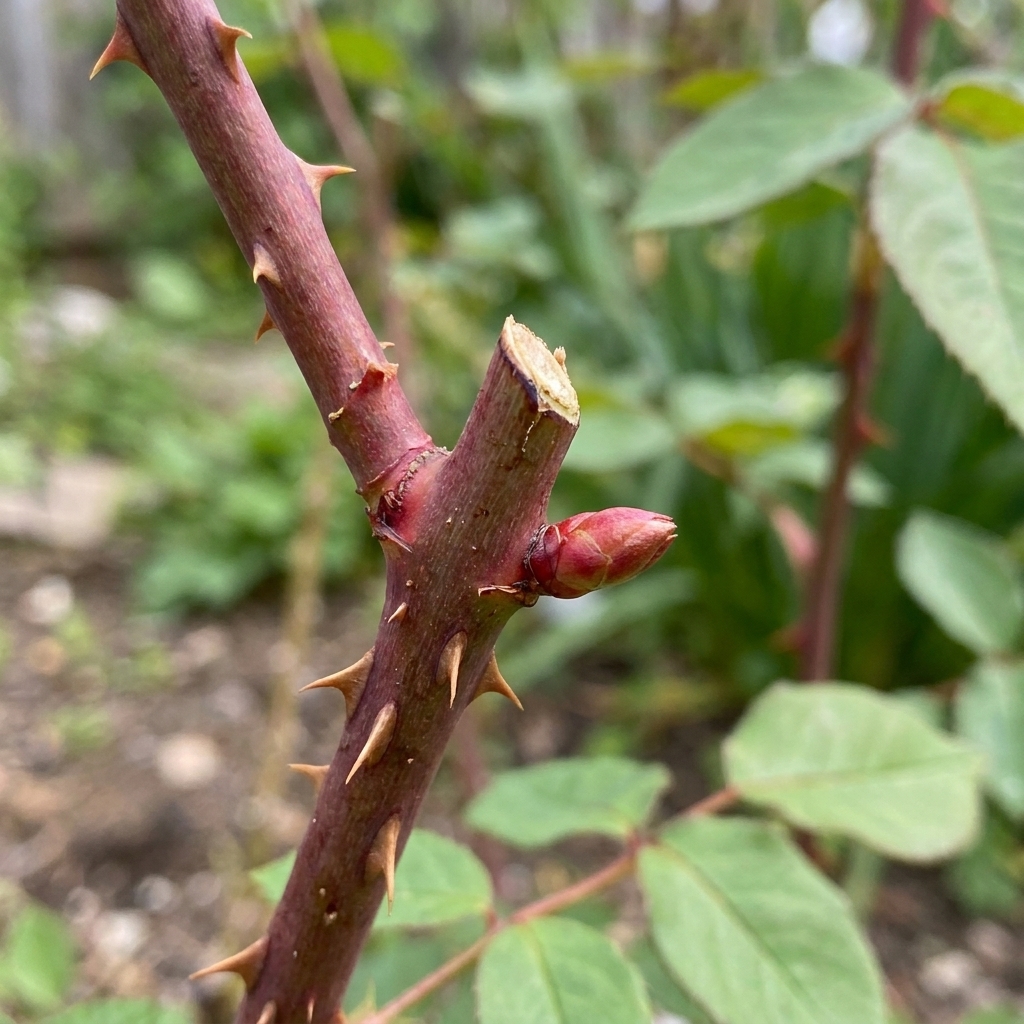
- Cut to an outward-facing bud to encourage growth away from the center.
- Make the cut correctly: about 1/4 inch above a bud, at a slight angle so water sheds off.
- Clean up debris and dispose of diseased material in the trash, not the compost (most home compost piles do not get hot enough to reliably kill pathogens).
How to tell if a cane is alive: scratch the bark lightly with your fingernail. Green underneath means it is alive. Brown and dry usually means dead.
How hard to prune
Here is the gentle truth: pruning severity often affects bloom size versus bloom quantity, but it also depends on the variety, plant vigor, and your climate.
- Hard prune (remove more length): fewer canes, stronger shoots, often larger blooms.
- Moderate prune: balanced approach for most gardens.
- Light prune: more canes left, often more total blooms, but sometimes smaller flowers and more crowding.
For most beginners with modern repeat-blooming roses, a moderate prune is the sweet spot.
Pruning by rose type
Rose labels and plant tags are not always clear, so I will describe common categories the way they behave in a typical home garden. Timing below follows the seasonal guidance above unless noted.
Hybrid tea roses
These are the classic long-stemmed roses often grown for cutting. They respond beautifully to a stronger annual prune.
- When: late winter to early spring.
- How: remove thin twiggy growth and keep 3 to 6 strong canes.
- Height: often cut back to about 12 to 24 inches, depending on plant vigor and climate.
- Shape: open center, outward buds.
Floribunda roses
Floribundas produce clusters of blooms and generally like a slightly lighter hand than hybrid teas.
- When: late winter to early spring.
- How: thin crowded stems, remove weak growth, and shorten remaining canes.
- Height: often 18 to 30 inches, depending on cultivar and size.
Grandiflora roses
Grandifloras combine traits of hybrid teas and floribundas, often tall and vigorous.
- When: late winter to early spring.
- How: prune similar to hybrid tea but keep a bit more framework if the plant is naturally tall.
Shrub roses
These are often the easiest. Many shrub roses are bred to be low-maintenance, which means they forgive imperfect pruning.
- When: late winter to early spring.
- How: remove dead wood, thin for airflow, then reduce overall size by about 1/3 if needed.
- Tip: if you have an ever-blooming shrub rose hedge, you can do a yearly thinning plus occasional shaping cuts through the season.
Climbing roses
Climbers are where beginners often go wrong, because the main canes are not meant to be chopped down yearly.
- When: do major structural work in late winter to early spring. For once-blooming climbers, prune right after flowering.
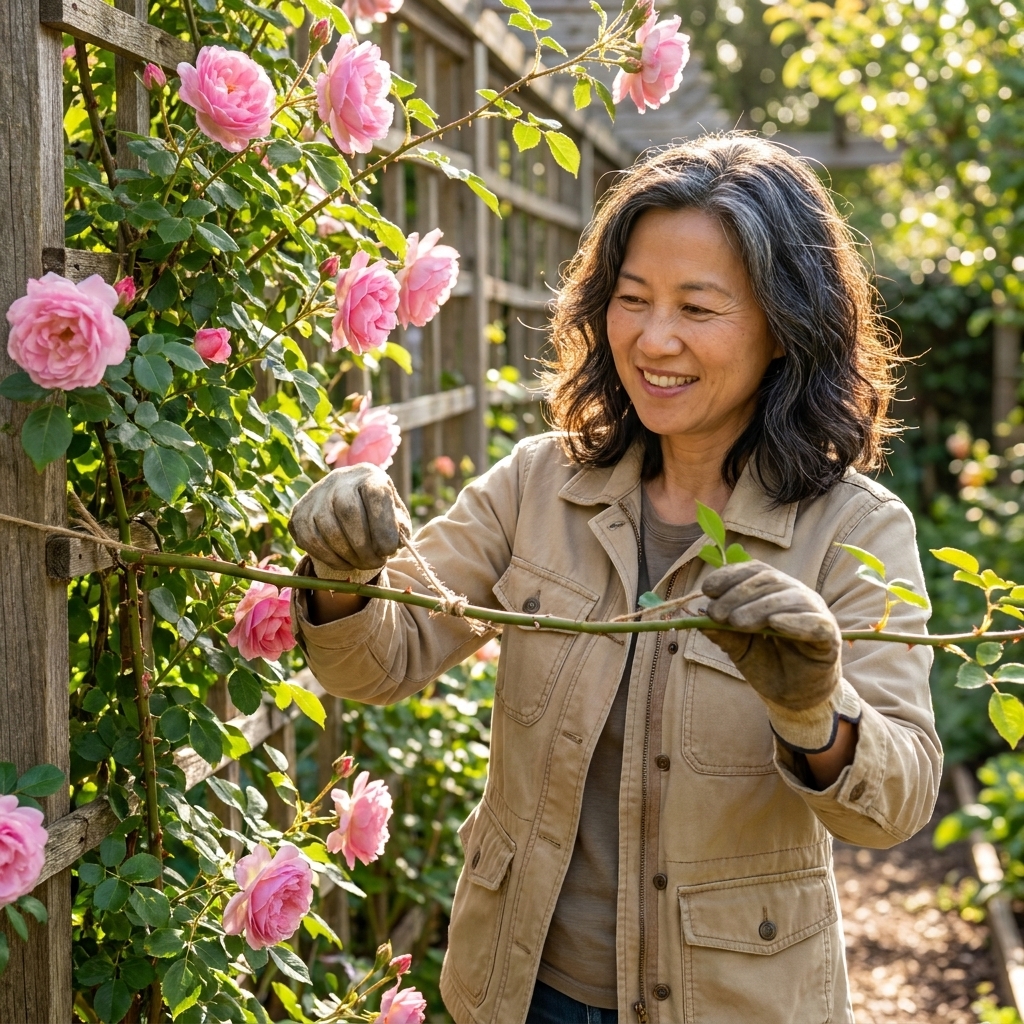
- How: keep the long main canes (the “framework”), and prune side shoots back to 2 to 4 buds.
- Train for blooms: tie main canes more horizontal along a trellis or fence. More horizontal canes usually produce more flowering side shoots.
Rambling roses
Ramblers typically bloom on older wood and can be very vigorous.
- When: prune after flowering.
- How: remove a few of the oldest canes at the base to stimulate new canes, and shorten laterals as needed.
Old garden and once-blooming roses
If your rose blooms once in early summer and then stops, it likely blooms on last year’s growth. A hard spring prune can remove your flower buds.
- When: prune right after the bloom show ends.
- How: remove dead wood anytime, then shape and thin after flowering.
Knock Out and other landscape roses
These are typically shrub roses and are very forgiving.
- When: late winter to early spring.
- How: cut back by about 1/3 to 1/2, then thin out crowded canes.
- Bonus: you can do a light trim after a big flush if they get leggy.
Miniature roses
Mini roses want the same basic approach as larger repeat bloomers, just on a smaller scale.
- When: late winter to early spring.
- How: remove dead and weak stems, then shorten the rest by about 1/3.
Tree roses (standards)
A tree rose is a grafted rose on a tall trunk, so the flowering top is treated like its rose type.
- When: late winter to early spring.
- How: prune the head like a hybrid tea, floribunda, or shrub, depending on what is grafted on top. Remove any shoots coming from the trunk or base.
Deadheading for repeat blooms
Deadheading keeps many modern roses flowering longer. Here is a simple method that works in most home gardens:
- Follow the stem down from the spent bloom to the first leaf that has 5 leaflets (not always, but often a good signal of a strong growth point).
- Cut about 1/4 inch above an outward-facing bud or leaf junction.
- If you want shorter stems and a tidier plant, cut a bit deeper. If you want more blooms sooner, cut less.
If the 5-leaflet rule feels fussy, skip it and focus on the real goal: make a clean cut above a strong, outward-facing growth point.
When not to deadhead: if you want rose hips for winter interest or for wildlife, stop deadheading later in the season so hips can form.
Common pruning mistakes
- Mistake: shearing roses like a hedge.
Do instead: thin selectively so light reaches the interior. - Mistake: leaving a long stub above a bud.
Do instead: cut about 1/4 inch above the bud to reduce dieback. - Mistake: pruning once-blooming roses in early spring.
Do instead: prune right after flowering so you do not remove next year’s buds. - Mistake: keeping lots of skinny growth because it feels “mean” to remove it.
Do instead: remove weak stems so the plant invests in sturdy, bloom-capable canes. - Mistake: ignoring suckers below the graft.
Do instead: remove suckers promptly, as close to their origin as possible.
How to spot and remove suckers
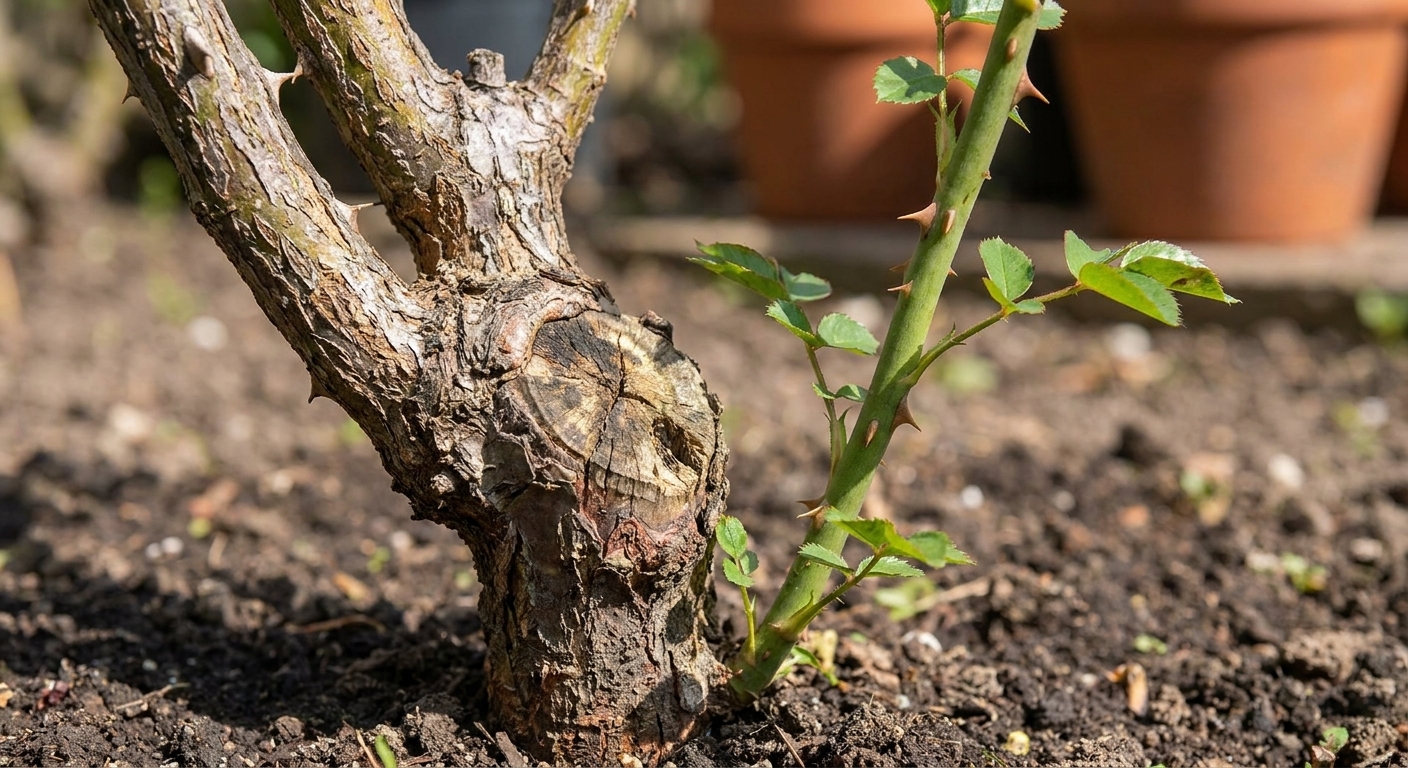
Suckers are shoots coming from below the graft union on grafted roses. They often look different than the rest of the plant and can overtake it.
- Where to look: at the base of the plant, below a knobby graft swelling, or even several inches away if the rootstock spreads.
- How to remove: trace the sucker down to where it originates and cut it off as close as possible. Some gardeners gently peel it away to discourage regrowth, but only do this if it separates cleanly. Do not tear or strip bark.
If your rose is own-root (common with some shrub and heirloom roses), you will not have a graft union, and “suckers” are less of a concern.
After-pruning care
Pruning is only half the bloom equation. Help your rose bounce back with a little aftercare.
- Clean up: remove fallen leaves and cuttings, especially if you had disease last year.
- Mulch: add 2 to 3 inches of compost or shredded bark, keeping it a couple inches away from the crown.
- Water: deep water after pruning if the soil is dry.
- Feed thoughtfully: once you see new growth, use a balanced organic fertilizer or compost. Avoid overfeeding with high nitrogen, which can mean lots of leaves and fewer flowers.
- Watch for pests: tender new growth can attract aphids. A strong spray of water in the morning often solves it without chemicals.
Quick cheat sheet
- Most repeat-blooming roses: main prune late winter to early spring.
- Once-blooming roses: prune after flowering.
- Hybrid teas: prune harder for strong stems and big blooms.
- Floribundas: moderate prune, focus on thinning.
- Climbers: keep main canes, shorten side shoots, train horizontally.
- Shrub roses: remove dead wood, thin, and reduce size by about 1/3 if needed.
FAQ
Will pruning delay blooms?
A proper spring prune usually leads to a strong flush of blooms once new growth matures. Extremely hard pruning can push blooms a bit later, and results vary by variety and climate, but it often produces bigger flowers.
Can I prune roses in summer?
Yes, lightly. Deadheading and selective shaping are great in summer. Avoid major structural pruning during heat waves, and keep the plant watered.
Do I need to seal the cuts?
In most home gardens, no. Clean cuts and overall plant health matter more. If cane borers are a known issue in your area, local extension advice may recommend sealing fresh cuts, but it is not universally necessary.
What if I pruned “wrong” last year?
Roses are forgiving. Focus on good basics this season: remove dead wood, open the center, and make clean cuts above outward buds. Most plants rebound beautifully.