When pests show up, it is tempting to grab the first bottle on the shelf and start spraying like you are putting out a tiny green fire. I get it. I have been there, standing in the evening light with a sprayer in one hand and a sinking feeling in the other.
Neem oil and insecticidal soap are two of the most popular “gentler” pest controls for home gardens. They can be very effective, but they are not interchangeable. They behave differently on the plant. They hit different pests best. And they come with different risks if you spray at the wrong time.

Below is a clear, practical breakdown so you can pick the tool that matches your problem instead of adding stress to your garden routine.
Quick answer: which one should you choose?
- Choose insecticidal soap if you need fast knockdown of soft-bodied pests you can see right now, like aphids, whiteflies, young mealybugs, or spider mites, and you can spray the insects directly.
- Choose neem oil if you want broader help with repeated outbreaks and pests like scale crawlers, aphids, whiteflies, and sometimes light thrips pressure, and you are willing to spray on a schedule and be extra careful about heat and timing.
- Skip both (for the moment) if your plant is heat-stressed, wilting, newly transplanted, or already showing leaf scorch. Fix water and stress first, then treat pests.
How they work (plain English)
Insecticidal soap
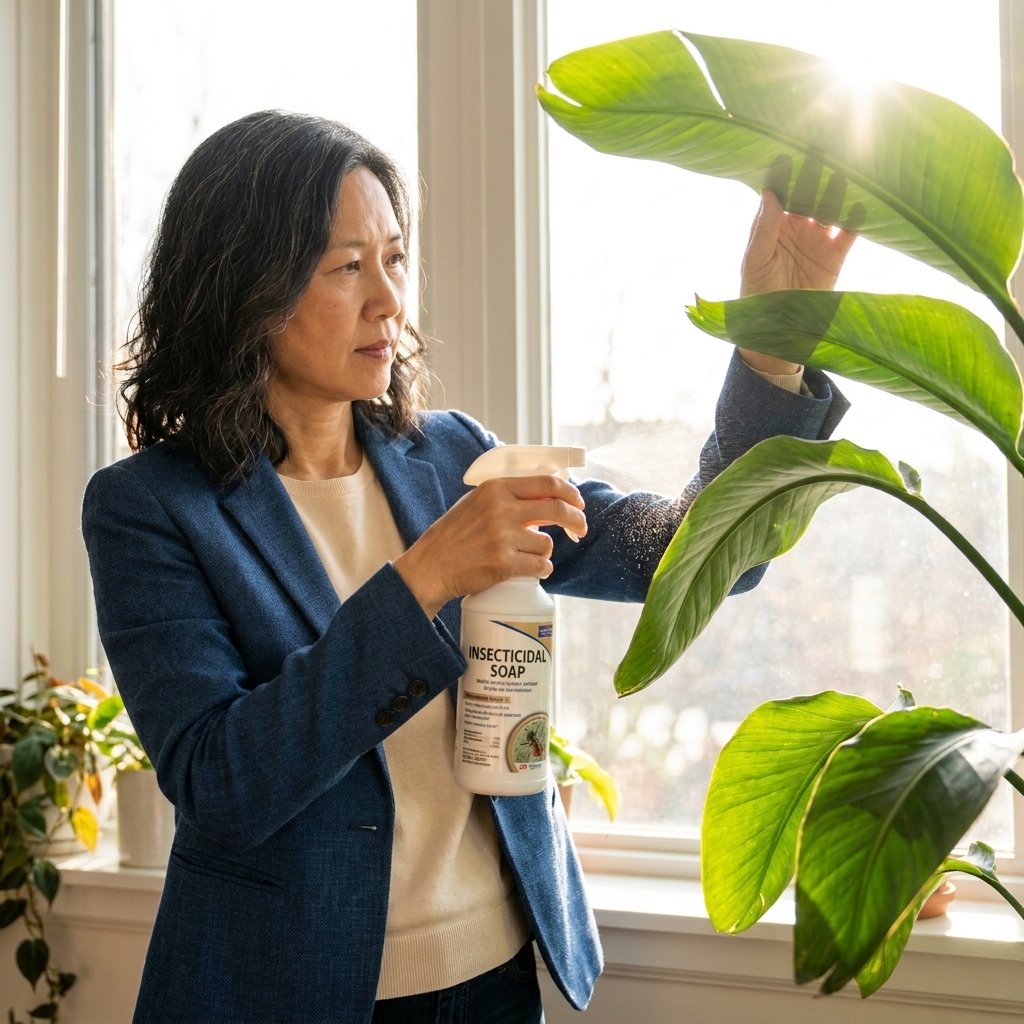
Insecticidal soap is made from potassium salts of fatty acids. The simplest way to think about it: it breaks down the outer membranes of soft-bodied insects. It works by contact, meaning it has to hit the pest to do its job.
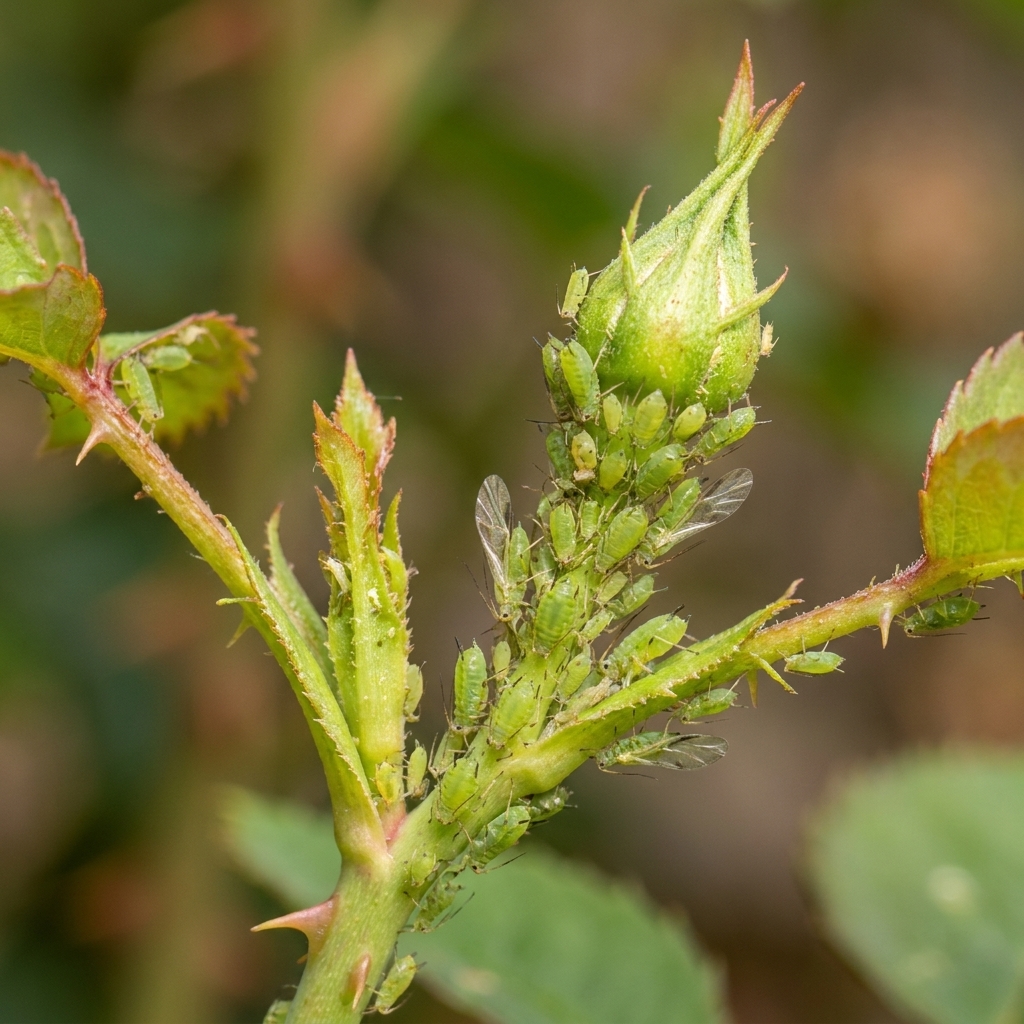
- Best at: aphids, whiteflies, spider mites, psyllids (nymphs), small mealybugs.
- Thrips note: results are limited and variable. It is most effective on larvae/nymphs you actually hit with spray. Adults are tough with soap alone.
- Not great at: hard-shelled adults, beetles, caterpillars, insects hidden in rolled leaves you cannot reach with spray.
- Residue: minimal. Once it dries, it is basically done.
Neem oil
Neem products come in a few forms, but most garden “neem oil” sprays rely on neem seed oil. Depending on the product and formulation, neem can work as:
- a smothering oil (coats insects and can affect eggs and immature stages)
- a feeding deterrent and growth disruptor (often associated with the compound azadirachtin in some products)
In practice, neem usually performs best when used early, applied thoroughly, and repeated according to the label. It is less of an instant “zap” and more of a “let’s get this outbreak under control over the next couple of weeks” tool.
- Best at: aphids, whiteflies, spider mites, scale crawlers (the mobile young stage), mealybugs (light infestations), and sometimes partial suppression of thrips when coverage is excellent and applications are repeated.
- Not great at: heavy scale infestations on woody plants (you often need pruning plus targeted treatments), caterpillars and many chewing insects.
- Residue: may leave a short-lived film that can help between sprays, but outdoors it breaks down quickly with sun and heat. How long it “hangs around” is very product- and weather-dependent.
Pros and cons
Insecticidal soap: the good
- Fast, visible results on soft-bodied pests when you get good coverage.
- Lower risk of plant burn than many oils when used correctly (still possible, especially on sensitive plants).
- Minimal residual impact, which can be a plus if you are trying to avoid affecting beneficial insects the next day.
- Great for targeted spot treatments on a few plants.
Insecticidal soap: the not-so-good
- Must hit the pest. If insects are hiding under curled leaves or deep in buds, you may miss them.
- Needs repeat applications because it does not keep working after it dries.
- Can harm beneficials on contact. If you spray a lady beetle larva directly, the soap does not politely spare it.
Neem oil: the good
- Helpful for recurring pressure when pests keep reappearing, especially on houseplants, citrus, and ornamentals.
- Works in more than one way (smothering plus deterrence or growth effects depending on product).
- Can help with some fungal issues on certain plants when used as directed (many neem labels include disease claims, but results vary by product and pathogen).
Neem oil: the not-so-good
- Higher risk of leaf scorch if applied in heat, full sun, or on drought-stressed plants.
- Coverage still matters. Neem is not magic. Miss the undersides and you will wonder why nothing changed.
- Stronger odor and residue than soap. Not everyone loves their patio smelling like a garlicky peanut for a day.
- Can impact beneficials, especially if sprayed directly or applied when pollinators are active.
Best use cases
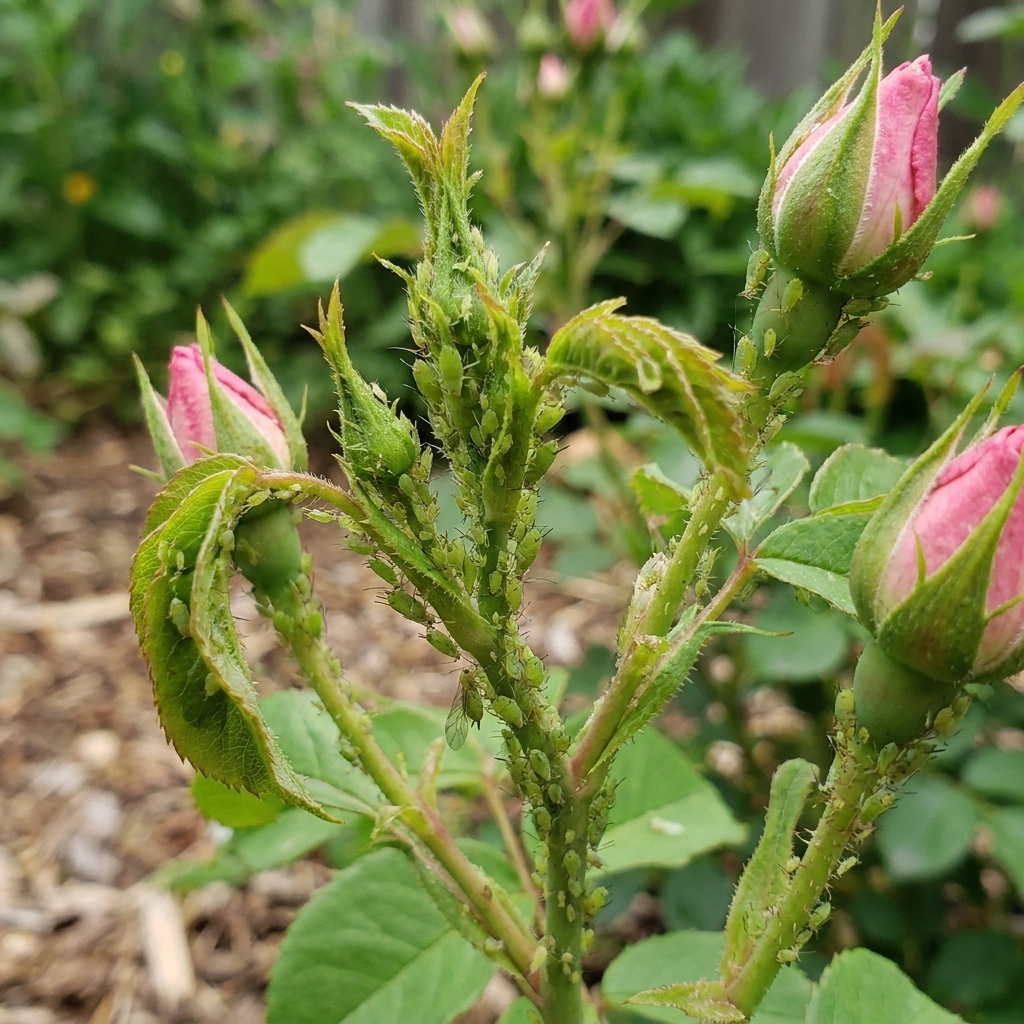
Aphids on tender new growth
My pick: Insecticidal soap first.
Aphids are basically built for soap because they are soft-bodied and often exposed right on that fresh, tender growth. Spray thoroughly, especially the undersides of leaves and the tips where growth is soft. Recheck in 2 to 3 days. If they are back in force, you can repeat or consider neem for a longer campaign.
Spider mites on beans, cucumbers, or houseplants
My pick: Insecticidal soap for quick control, then adjust conditions.
Mites love hot, dusty, stressed plants. Soap can knock them back, but long-term success often comes from rinsing foliage (a strong water spray), improving airflow, and keeping plants evenly watered. Neem can help too, but mites often require repeated, very thorough coverage no matter what you use.
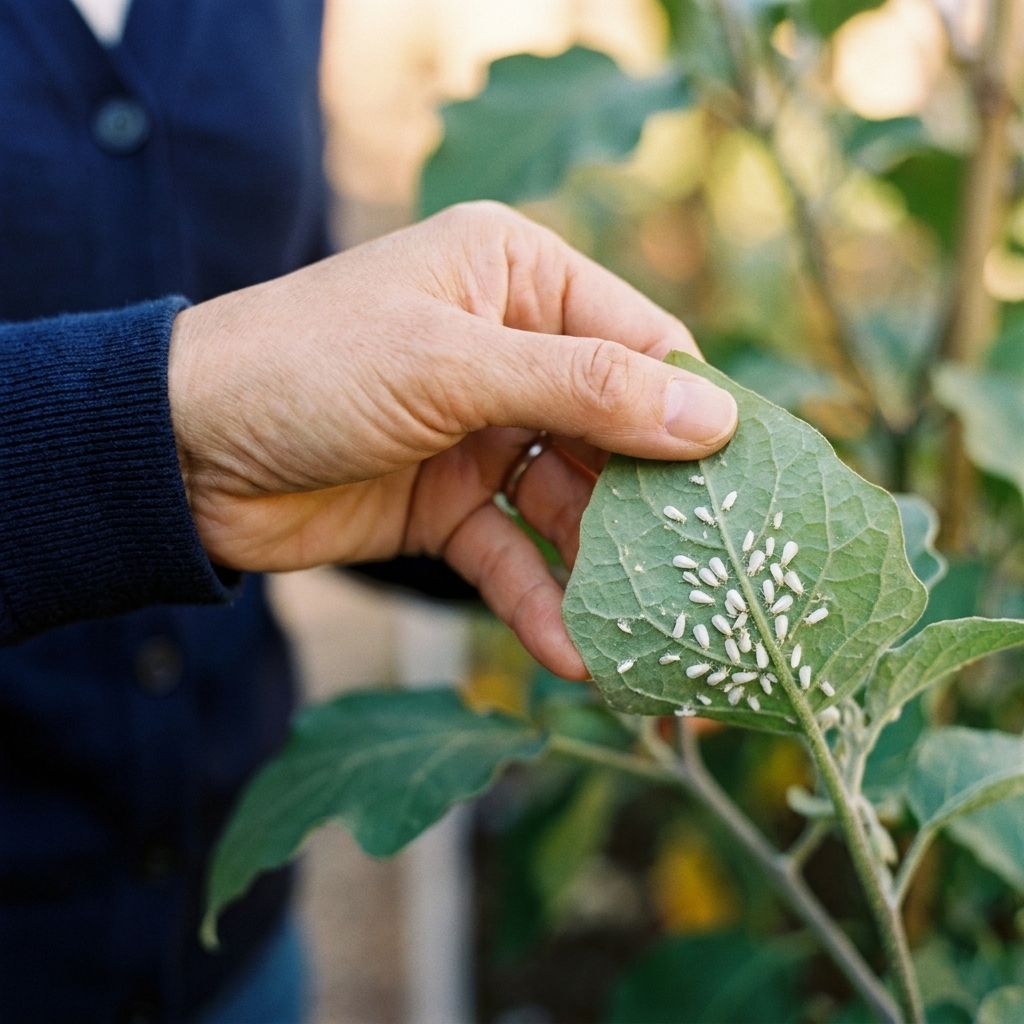
Whiteflies on tomatoes or ornamentals
My pick: Neem oil if you can stay consistent and you choose the right product.
Whiteflies breed quickly and hang out on leaf undersides. Neem can reduce feeding and reproduction over time, especially when the product contains azadirachtin. Clarified neem oil products may still help by coating pests, but results can be uneven. Pair neem with yellow sticky traps to monitor adults and prune the worst leaves if the infestation is heavy.
Thrips on flowers or new growth
My pick: Manage expectations and focus on coverage.
Thrips are hard. Insecticidal soap and neem can sometimes reduce numbers, but control is often partial. If you go this route, aim for repeated sprays that actually reach where thrips feed, and consider adding non-spray tactics like removing badly damaged blooms, using sticky traps to monitor, and avoiding overly lush, nitrogen-pushed growth that thrips love.
Mealybugs on houseplants
My pick: Start mechanical, then soap or neem.
For light infestations, I like to dab visible mealybugs with isopropyl alcohol using a cotton swab, then follow with insecticidal soap to catch stragglers in crevices. Neem can be useful for ongoing suppression, but it is messier indoors and can leave residue on leaves.
Scale on citrus, camellias, and other woody plants
My pick: Neem oil, but only at the right life stage.
Scale adults are protected under shells. Sprays work best on the mobile crawler stage. If you do not know whether crawlers are active, look for tiny moving specks on stems or use a piece of double-sided tape near an infested area and check it daily. For heavy infestations, pruning, horticultural oil timing, and sometimes professional guidance are more effective than repeated neem alone.
Plant safety
Most of the neem-vs-soap drama I see in home gardens is not about the product. It is about timing and plant stress.
Safer spraying habits (both)
- Spray in early morning or evening when temperatures are cooler and the sun is not intense.
- Avoid spraying during heat waves or when plants are wilted, drought-stressed, or freshly transplanted.
- Test first on a small section of the plant and wait 24 hours, especially on sensitive plants.
- Do not spray open blooms if you can help it. Aim for leaves and stems where pests live.
- Rinse edible crops thoroughly before eating, and follow label directions for any pre-harvest interval.
Plants that can be sensitive
Sensitivity varies by variety and growing conditions, but in general, be extra cautious with:
- ferns and some delicate foliage plants
- succulents (waxy coatings can react poorly)
- plants with fuzzy leaves (sprays can cling and cause spotting)
- young seedlings
- certain ornamentals like Japanese maples (test first)
If you have ever sprayed something and watched leaves freckle, curl, or look “fried” the next day, you are not alone. Your compost bin has room for that lesson. Mine certainly does.
Pollinators and beneficials
Neither neem nor insecticidal soap is “harmless.” They are generally considered lower-impact than many conventional insecticides, but they can still harm beneficial insects if sprayed directly.
- Insecticidal soap: contact-only. It is most risky to beneficials during the moment of spraying and while still wet.
- Neem: can affect more than just the target pests depending on formulation and exposure. Avoid applying where bees are actively foraging.
Best practice: spray at dusk when pollinators are not active, avoid flowers, and use the minimum effective amount. And if you can solve the problem with a strong water spray and leaf removal first, that is often the most bee-friendly choice.
How to apply (so it works)
Insecticidal soap
- Hit the insects. Coat the undersides of leaves and the growing tips.
- Spray to wet, not to drip. You want coverage, not runoff.
- Repeat every 4 to 7 days as needed, or as the label directs, since new pests hatch and arrive.
- Watch your water. Very hard water can reduce performance for some products or leave spotting on some leaves. If you have hard water and you keep getting “meh” results, try mixing with distilled water for a round and see if it improves.
Neem oil
- Mix carefully and keep it agitated. Neem oil separates. Shake often while spraying.
- Full coverage matters. Get leaf undersides, stems, and crevices where pests hide.
- Stick to a schedule during an outbreak, often every 7 to 14 days depending on the label and pest pressure.
- Watch the temperature. Avoid spraying when it is hot or when bright sun will hit wet leaves soon after.
One more practical note: neem products vary a lot. Some are clarified hydrophobic extract, some contain azadirachtin, some are blended with other ingredients. Always read the specific label for target pests, mixing rates, and plant warnings.
Can you use both?
On the same day, in the same tank, I recommend no unless the product label explicitly says it is compatible. Mixing homebrew combos is where plant burn and clogged sprayers are born.
If you want to use both in a strategy, the safer approach is to alternate them with a few days in between, watching your plant closely for any sign of stress. For example:
- Day 1: insecticidal soap to knock down what you see
- Day 5 to 7: neem oil to help reduce rebound
But also ask the quieter question: what is causing the outbreak? Over-fertilized, tender growth. Ants farming aphids. Plants packed too tightly. Fixing the underlying issue reduces how much spraying you need long-term.
What about dish soap?
This is the part where I put on my gentle-but-firm neighbor voice: please do not use dish soap as a substitute.
True insecticidal soaps are formulated for plants. Many dish detergents contain degreasers, fragrances, and additives that can strip plant waxes and cause serious leaf damage.
And even “natural” DIY options can go sideways. Castile-type soaps and other homemade mixes can still burn foliage when the concentration is too strong, the plant is stressed, or the weather is hot. If you want the soap approach, buy a product labeled as insecticidal soap and follow the directions.
FAQ
Which is better for vegetable gardens?
Both can be used in vegetable gardens if the label allows it. I lean toward insecticidal soap for quick, targeted outbreaks because it leaves little residue once dry, and toward neem for ongoing pressure when you need repeated suppression. Either way, wash produce well and follow label guidance for harvest timing.
Which is safer for pets?
Follow the label, keep pets away while you spray, and let the product dry completely before allowing pets back into the area. Neem and insecticidal soap are often low toxicity when used as directed, but they can still cause irritation or stomach upset if a pet licks wet leaves or drinks from a puddle of spray.
If your dog is anything like my golden retriever Barnaby, “do not lick the wet leaves” is not a rule he plans to follow. Dry time matters. And if you think a pet has ingested a product, call your veterinarian or a pet poison hotline rather than guessing.
Why did my leaves turn brown after spraying neem?
The most common reasons are spraying during heat or sun, spraying a drought-stressed plant, applying too strong a mix, or using neem on a plant that is sensitive to oils. Rinse the plant with water if you catch it quickly, and avoid further applications until the plant recovers.
Do these control caterpillars?
Not reliably. For caterpillars on edibles, Bt (Bacillus thuringiensis var. kurstaki) is often the better targeted option, used according to label directions, along with hand-picking when possible.
My rule of thumb
If you are staring at a cluster of soft-bodied pests and you want relief now, insecticidal soap is usually the most satisfying first step.
If you are dealing with a persistent issue that keeps cycling back, and you can commit to careful timing and repeat applications, neem oil can be a useful longer-game tool.
And if you are feeling overwhelmed, take a breath and start smaller than you think you need to. One plant. One careful spray. One follow-up check in a couple of days. Gardening is not a performance. It is a relationship, and relationships get better with steady attention, not panic.