Powdery mildew is one of those garden problems that feels rude in how quickly it shows up. One day your zucchini looks lush, the next it is wearing a dusty white sweater. The good news is that powdery mildew is usually manageable, especially if you catch it early and pair treatment with a few simple habit changes.
This guide will help you confirm what you are seeing, choose a treatment that fits your garden style (organic or conventional), and prevent it from boomeranging back when the weather turns friendly for fungus.
What it is
Powdery mildew is a group of fungi that live on the surface of leaves, stems, and sometimes flowers and fruit. Different species prefer different plants, but they behave similarly: they send out microscopic spores that travel on air currents, land on a suitable host, and start growing.
Unlike many fungal diseases that need wet leaves, powdery mildew often thrives with high relative humidity even if the leaf surface looks dry. In fact, on some plants, free water on the leaf can slow spore germination. That is why it often flares up when days are warm and nights are cool, or when plants are packed tightly with limited airflow.
Common plants affected
- Cucurbits: zucchini, cucumbers, squash, pumpkins, melons
- Roses
- Bee balm (Monarda), phlox, zinnias, dahlias
- Peas
- Grapes
- Apple trees and other fruiting plants (some varieties)
- Houseplants too, especially in stuffy indoor corners
How to identify it
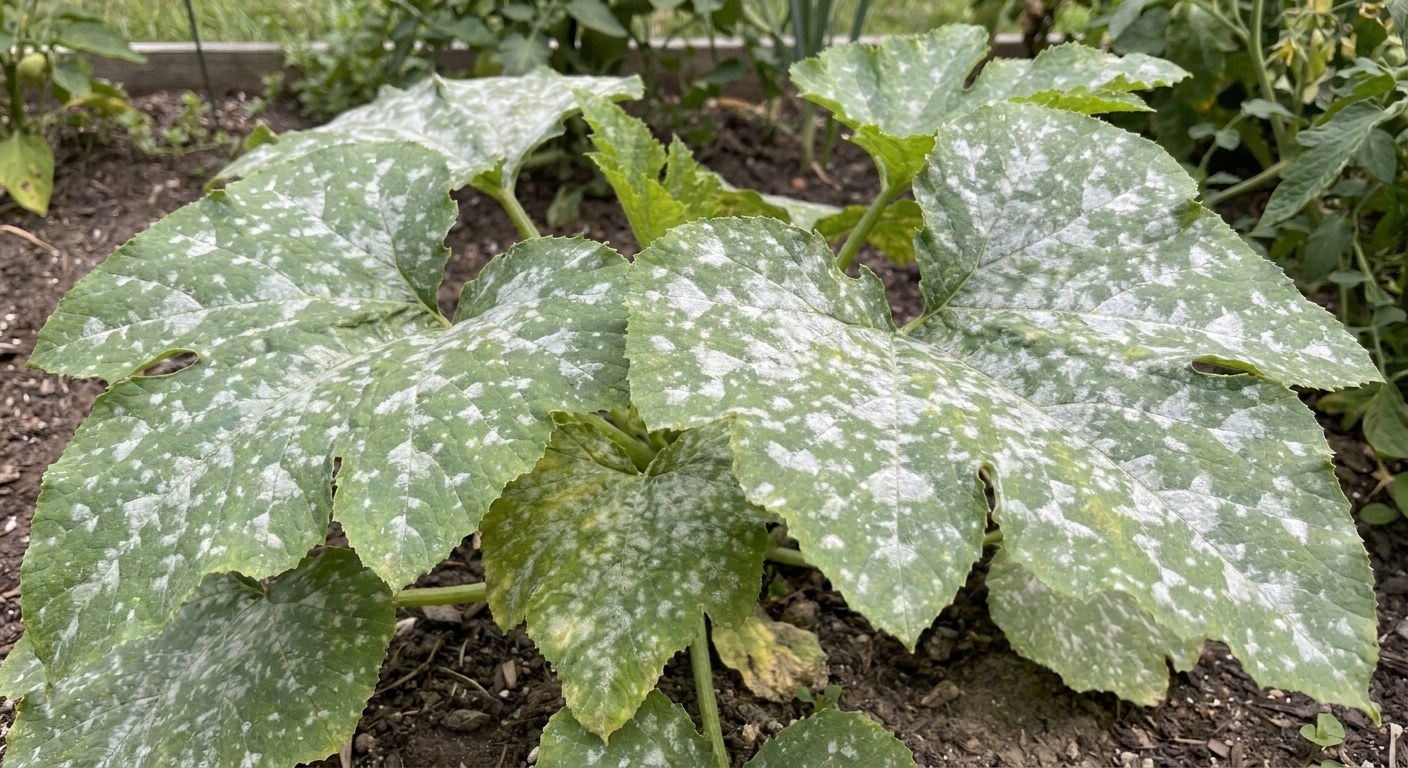
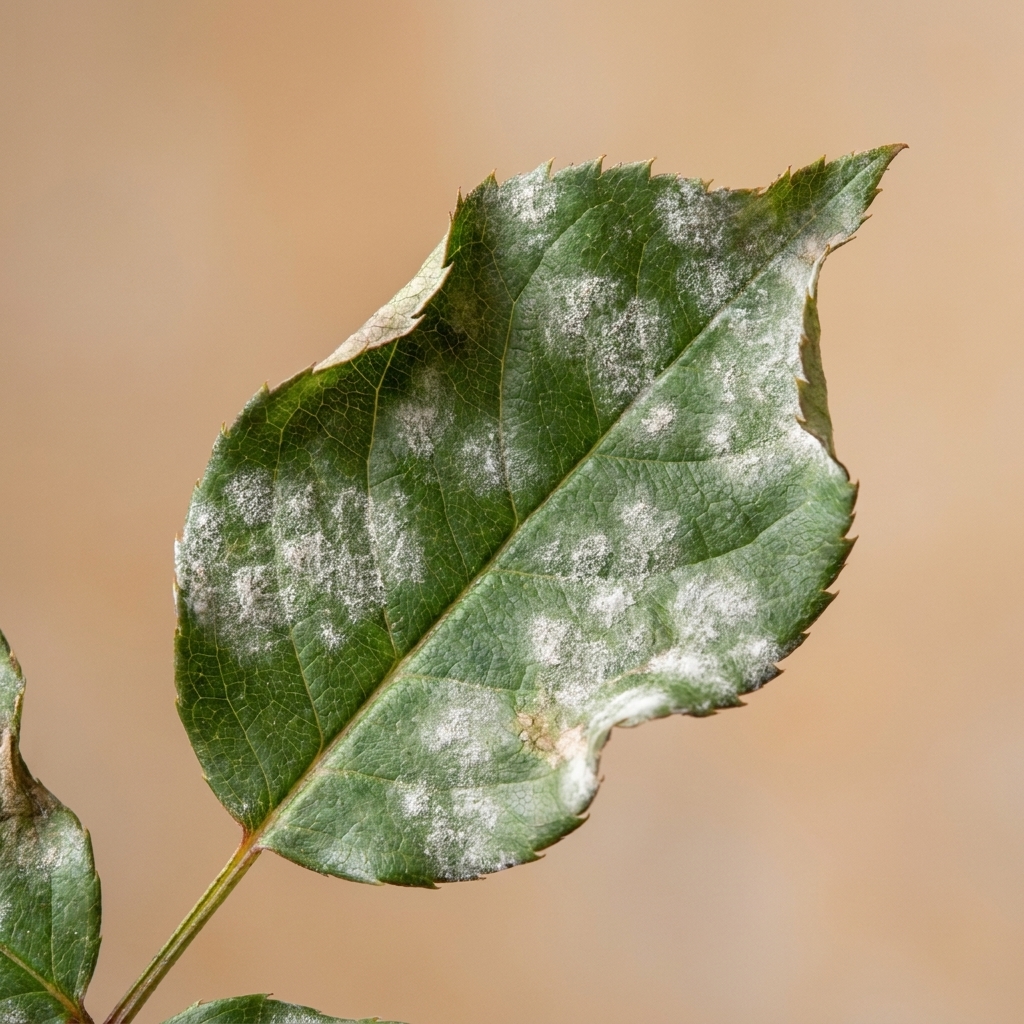
The classic sign is a white or gray powdery coating on leaves, usually starting as small circular patches that expand. It can look like someone dusted your plant with flour.
Early signs
- Small pale spots on the top of leaves
- Faint white fuzz along veins or leaf edges
- Slight leaf puckering or curling before the powder is obvious
Later signs
- Powdery growth covering large areas of the leaf
- Yellowing, browning, and crispy leaves
- Stunted growth and reduced flowering or fruiting
Quick at-home check
Gently rub a white patch with your fingertip. Powdery mildew often smears or brushes off like dust. (Do this carefully and wash hands afterward, since you can move spores around.)
Do not confuse it with
- Downy mildew: tends to cause angular yellow spots on the top of leaves and a gray or purple fuzz underneath, and it usually needs prolonged leaf wetness.
- Spray residue or dust: often coats the leaf more evenly and does not reappear in expanding patches after you wipe it away.
- Hard-water spotting: leaves pale mineral rings or speckles after overhead watering, not a fuzzy growth.
- Spider mites: cause fine stippling and bronzing and may leave delicate webbing, especially on leaf undersides.
Why it happens
I always tell new gardeners: powdery mildew is less about you doing something wrong and more about conditions lining up in the fungus’s favor. Still, a few factors make outbreaks more likely.
Top triggers
- Reduced airflow: crowded plantings, dense foliage, or a sheltered corner with little breeze
- High humidity: especially when nights are cool
- Low light: often worse in shade because plants stay cooler and air stays more humid
- Plant stress: drought stress, poor soil, or inconsistent watering
- Susceptible varieties: some cultivars are simply mildew magnets
- Nearby sources: spores can blow in from infected plants nearby and can also linger on leftover plant material
First steps
Before you spray anything, do these three things. They make every treatment work better.
1) Prune for airflow
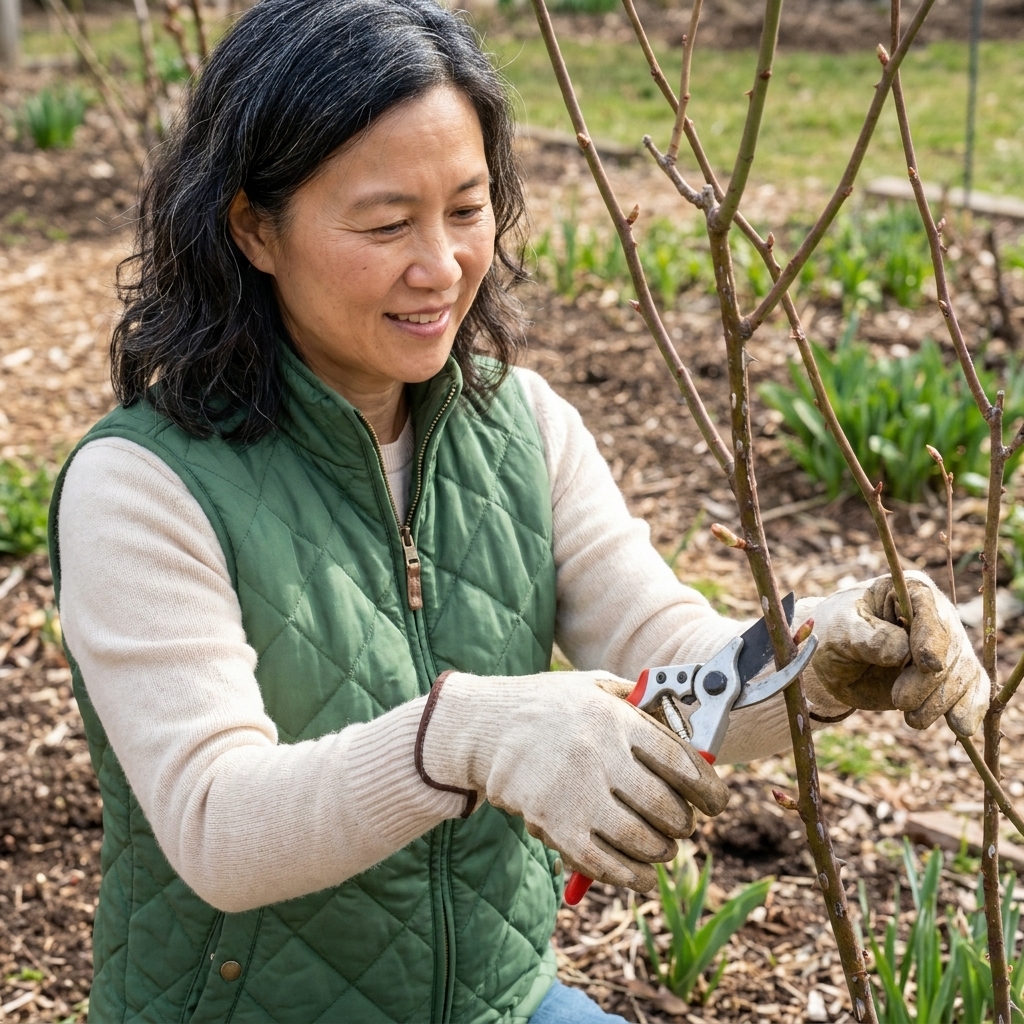
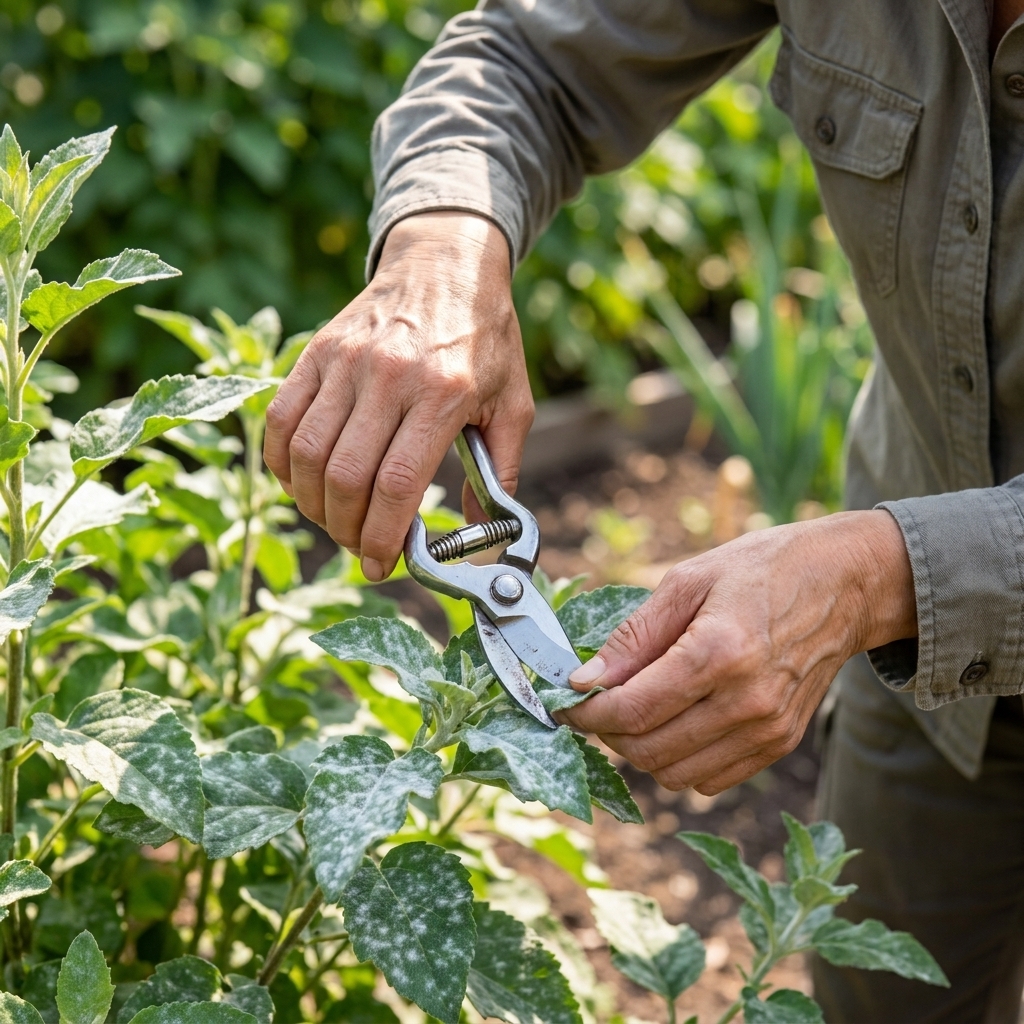
Remove the most heavily infected leaves first, especially those touching other leaves. Use clean pruners and do not compost infected material unless your compost reliably heats up.
2) Reduce humidity around the plant
- Water at the soil line, not overhead
- Water in the morning so plants dry quickly
- Mulch to reduce soil splash and keep moisture consistent
3) Decide what “success” looks like
For fast-growing annuals like squash late in the season, you may choose to manage symptoms and harvest what you can rather than chasing perfection. For roses, young trees, or prized perennials, it is worth being more aggressive early.
Organic treatments
Organic does not mean gentle on the fungus. Several low-toxicity options work well when applied correctly and consistently. The key is coverage: spray leaf tops and undersides until evenly coated, but not dripping.
Option 1: Potassium bicarbonate
Potassium bicarbonate is one of my favorite go-to choices because it can stop active powdery mildew by changing the leaf surface conditions and disrupting fungal growth. It is a contact treatment, meaning it helps with what it touches, but it will not magically repair already-damaged leaves.
- Best for: active infections you want to knock back quickly
- How to apply: follow label rates, reapply every 7 to 10 days and after heavy rain
- Notes: do not exceed label concentration, and test on a small area first on sensitive plants
Option 2: Sulfur
Sulfur is a classic organic fungicide that works best preventively and early in an outbreak.
- Best for: prevention on susceptible plants like roses and cucurbits
- Temperature caution: avoid applying during hot weather (often above 80 to 90°F depending on the label), which can burn foliage
- Compatibility caution: do not apply sulfur close in time to horticultural oils (follow the product label for the required interval)
Option 3: Horticultural oils (including neem)
Oils work by coating fungal growth and spores. Neem oil is popular, but any labeled horticultural oil can help when used carefully.
- Best for: light to moderate infections and prevention
- How to apply: spray in the early morning or evening to reduce leaf burn
- Pollinator note: avoid spraying open flowers, and do not spray when bees are actively foraging. Oils can harm beneficial insects if you hit them directly.
- Notes: thorough coverage matters, including leaf undersides
Option 4: Biological fungicides (Bacillus-based)
Some products use beneficial microbes (often Bacillus species) that compete with or inhibit fungal pathogens.
- Best for: ongoing prevention, mild outbreaks, gardeners who prefer microbe-based tools
- Timing: most effective when started early and repeated regularly
What about baking soda sprays?
Baking soda (sodium bicarbonate) is a common home remedy. It can help a little, but it is not my first choice because sodium can build up in soil over time and can be harsher on leaves at effective concentrations. If you want a home-based option, choose a labeled potassium bicarbonate product instead. It tends to be more effective and more plant-friendly.
What about milk sprays?
Milk sprays are a longtime folk remedy, and there is some evidence they can suppress powdery mildew when used regularly in bright light. Results are mixed in home gardens. If you try it, use a diluted solution and test on a small area first because milk can leave residue and odors.
Commercial fungicides
If powdery mildew is returning year after year or spreading quickly despite organic measures, a commercial fungicide may be the most efficient way to protect the plant, especially on ornamentals and fruit crops where leaf loss can reduce vigor.
Common active ingredients
- Myclobutanil and other sterol inhibitors: effective, often used on roses and ornamentals
- Chlorothalonil: a broad-spectrum protectant (not effective on all powdery mildews equally, and not labeled for every edible crop)
- Systemic options: can provide longer protection but must be used exactly as directed
Important: Availability and home-garden labels vary by region. Always confirm the product is labeled for your specific plant and situation (edible vs ornamental), follow pre-harvest intervals for food crops, and rotate modes of action when possible to reduce resistance.

Step-by-step plan
If you are standing in the yard wondering what to do first, here is a simple plan that works for most gardens.
Step 1: Remove the worst leaves
Take off heavily coated leaves that are unlikely to recover. Bag them and put them in the trash. If the plant is a vining cucurbit, prioritize removing leaves that block airflow through the center.
Step 2: Choose your spray
- Light infection: horticultural oil or biological fungicide
- Moderate infection: potassium bicarbonate or sulfur (if temperatures allow)
- Severe or fast-moving infection: consider a labeled commercial fungicide, especially for valued ornamentals
Step 3: Spray thoroughly and repeat
Powdery mildew control is rarely one-and-done. Reapply at the interval listed on the label (or weekly for many organic options), and reapply after rain if the product is not rainfast.
Step 4: Adjust the environment
Treatments work better when you also:
- Thin crowded plants
- Stake or trellis to lift foliage
- Switch to soaker hoses or drip irrigation
- Water consistently to reduce stress
Quick spray safety reminders
- Do not spray in midday heat
- Do not spray drought-stressed plants until they have recovered
- Test on a small area first if you are unsure how a plant will react
- Follow label intervals, especially when alternating sulfur and oils
Notes for common plants
Squash and cucumbers
Some powdery mildew pressure is almost inevitable later in the season. Focus on delaying it so plants produce well.
- Harvest regularly and remove declining leaves
- Use potassium bicarbonate or sulfur early, then maintain weekly sprays during high-pressure weather
- Plant resistant varieties when possible
Roses
Roses often respond well to a mix of sanitation, pruning for airflow, and preventive sprays.
- Water at the base and mulch well
- Avoid heavy nitrogen feeding that pushes soft, susceptible growth
- Begin prevention early in the season if mildew is a yearly visitor
Zinnias and phlox
These are classic powdery mildew hosts. If they mildew every year in your garden, it is not a moral failing. It is a plant selection issue.
- Give them full sun and generous spacing
- Try mildew-resistant cultivars
- Remove and replace severely infected annuals rather than repeatedly spraying all summer
Prevention that works
Prevention is not about doing more work. It is about doing a few small things consistently so conditions stay less inviting to mildew.
Airflow
- Follow spacing recommendations on seed packets and plant tags
- Thin seedlings even when it feels emotionally difficult
- Prune crowded centers on shrubs and vining plants
Sunlight
Most mildew-prone plants do best with more sun than we think. If a bed gets less than 6 hours, consider shifting susceptible plants to a sunnier spot.
Watering habits
- Water deeply, less often, and at the base
- Avoid evening overhead watering
- Use mulch to keep moisture even and reduce stress
Soil health and feeding
Soft, fast growth is often more susceptible. Aim for slow, steady growth with compost and balanced fertilizers. If you use nitrogen-heavy products, use them sparingly and early.
End-of-season cleanup
- Remove infected plant debris
- Clean stakes and tomato cages
- Do not leave mildew-covered vines to rot in place if mildew was severe

Common questions
Will it kill my plant?
It can, especially young plants or heavily infected ones under stress. More often, it weakens the plant, reduces yield, and causes leaves to yellow and drop. Treating early and improving airflow usually keeps plants productive.
Is it harmful to people or pets?
In the garden, powdery mildew on plants is generally not dangerous to touch, but it is still a fungus. Avoid breathing in spores when pruning or spraying, and wash hands afterward. If someone in your home has mold allergies or asthma, wear a mask during cleanup.
Can I eat vegetables with powdery mildew?
In most cases, yes. Powdery mildew is mainly a surface issue on leaves. Wash produce well. If fruit is damaged, soft, or rotting, skip it. Always follow label instructions for any product used on edible crops, including pre-harvest intervals.
Why does it keep coming back after I spray?
Usually one (or more) of these is happening: coverage is incomplete (undersides missed), reapplication intervals are too long, the plant is too crowded, weather is ideal for mildew, or the product used is better for prevention than knockdown. Pair pruning and spacing with a product that is effective on active infections, like potassium bicarbonate, and stay consistent for a couple of weeks.
Should I compost infected leaves?
Powdery mildew fungi need living plant tissue to keep thriving, so they do not usually “live” long in a finished compost pile. The bigger issue for most home gardeners is spreading spores while handling infected leaves. If you have a hot, well-managed compost system, small amounts are usually not a big deal, but I still prefer trashing heavily infected material to keep cleanup simple and reduce the chance of spreading spores around the garden.
A realistic mindset
If powdery mildew is a repeat guest in your yard, the win is not spotless leaves 24/7. The win is keeping plants healthy enough to flower, fruit, and make you want to go outside. Start with airflow and sunlight, treat early when needed, and do not be afraid to swap in resistant varieties next season. Your garden is allowed to be a little imperfect. Mine certainly is, and my dog Barnaby still thinks it is the best place on earth.