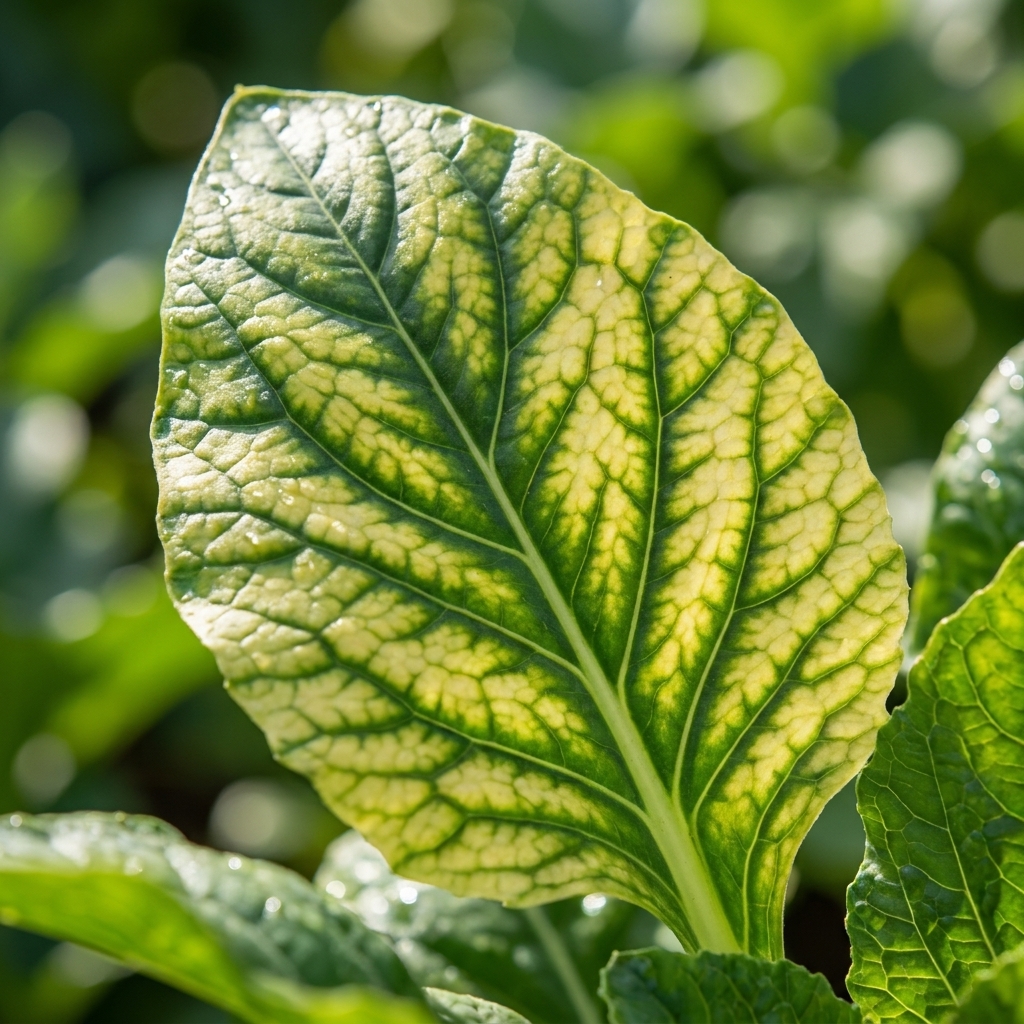
If you have ever stood in the garden center (or stared at a pile in your neighbor’s driveway) wondering whether compost or aged manure is “better,” you are in excellent company. Both can turn tired dirt into a living, crumbly soil that holds water, drains well, and actually grows things without drama.
The twist is that compost and aged manure are not interchangeable. They feed soil in different ways, release nutrients on different timelines, and come with different risks. Below is the neighbor-over-the-fence version of the decision, with enough detail to keep you from accidentally scorching seedlings on a well-meaning spring afternoon or overdoing fertility in a way your plants (and soil test) will not appreciate.
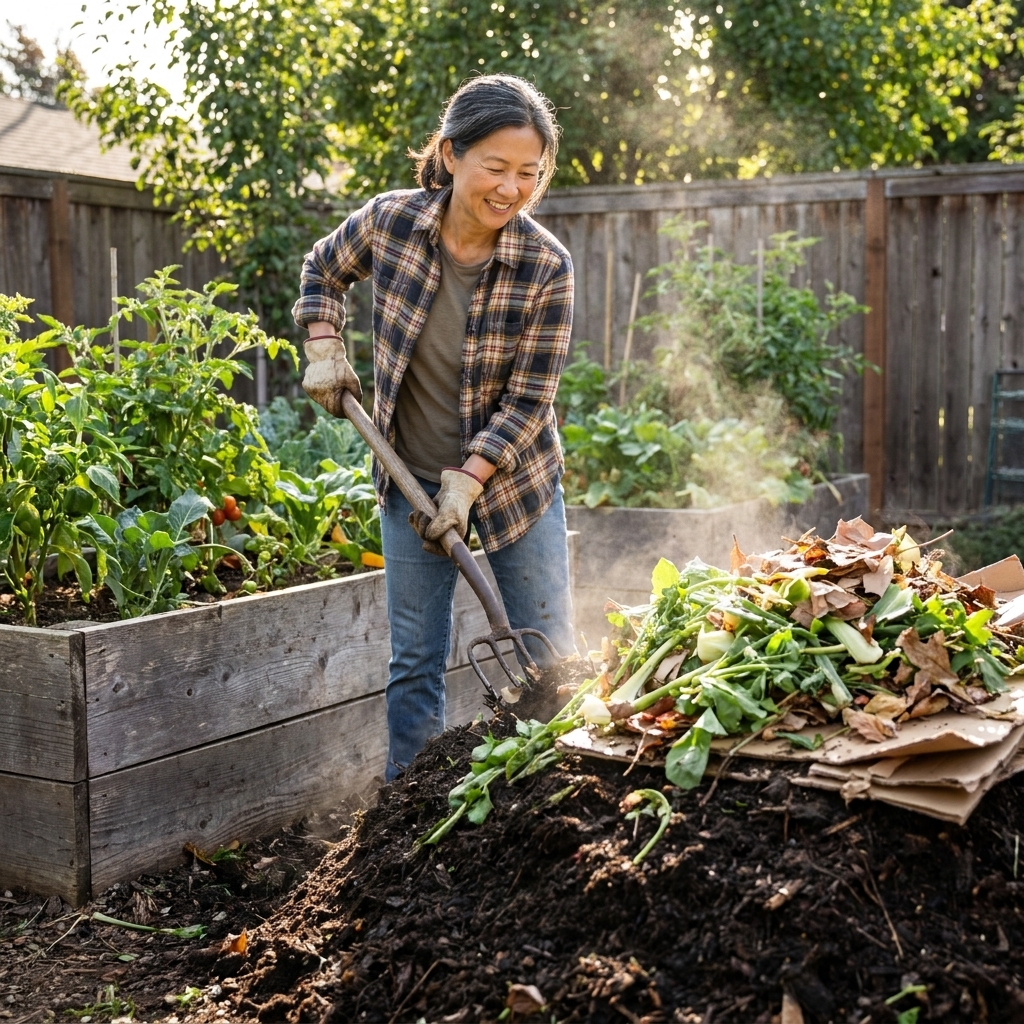
Quick answer: what should you choose?
- Choose compost if you want a dependable, low-risk soil conditioner that improves structure and biology with gentle nutrition.
- Choose aged manure if you want a stronger nutrient boost (especially nitrogen) and you know it is fully aged and sourced responsibly.
- Choose both if your soil is depleted and you want the best of both worlds: compost for structure and stability, aged or composted manure for extra fertility.
What compost is
Compost is decomposed organic material. Think leaves, grass clippings, garden debris, and food scraps that have broken down into a dark, earthy-smelling, soil-like product.
Nutrients: steady and soil-first
Compost typically has lower N-P-K than manure, but it is not “weak.” It is more about slow release and soil building than quick fertilizing. Nutrients are tied up in stable organic matter and become plant-available as soil microbes do their work.
Why compost is a favorite
- Improves soil structure in both clay and sand, helping with drainage and water holding at the same time.
- Boosts soil life (microbes, beneficial fungi), which supports long-term fertility.
- Lower risk of burning plants compared with manure or synthetic fertilizers.
- Great for mulching and top-dressing around established plants.
Compost downsides
- Quality varies. Unfinished compost can temporarily tie up nitrogen while it finishes decomposing.
- Not always enough for heavy feeders by itself (tomatoes, corn, squash) unless you apply generously or pair it with another nutrient source.
- Weed seeds can survive if a pile never got hot enough (more common in casual backyard piles).
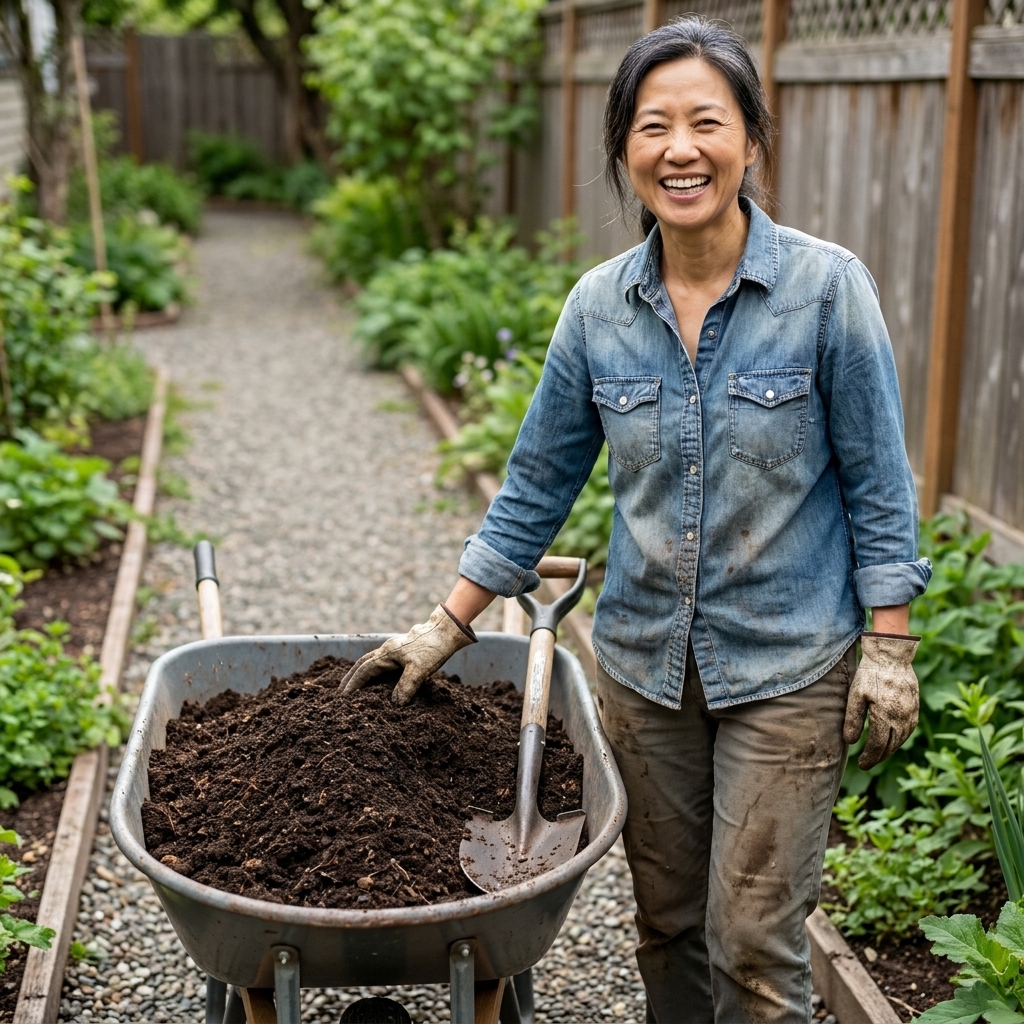
What aged manure is
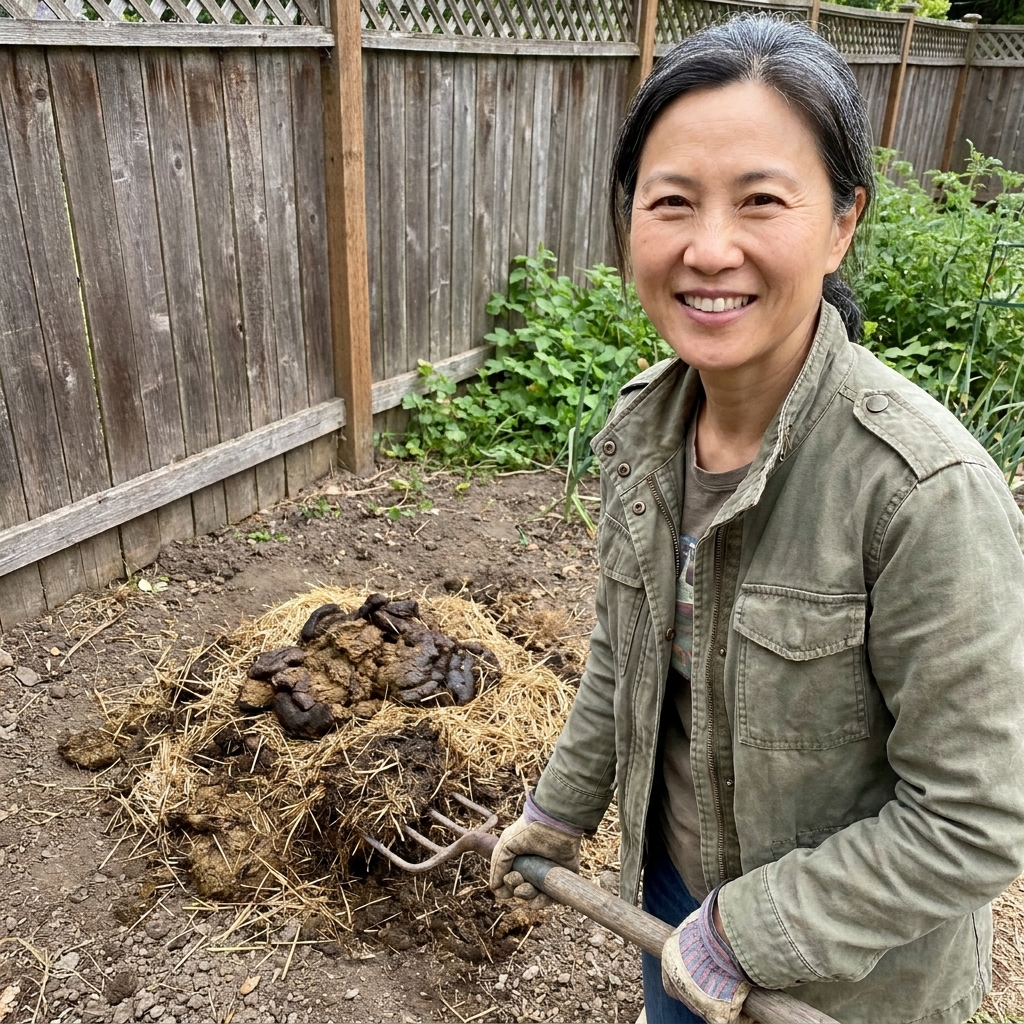
Aged manure is animal manure that has been stored long enough to break down and mellow out. You will also see composted manure, which has been actively composted (heated, turned) like a compost pile. That composted version is often more consistent, and when it is properly composted and cured, it is generally a safer, more predictable choice for garden use.
Nutrients: often more nitrogen, faster payoff
Manure is often richer in nitrogen than leaf-and-kitchen-scrap compost, and it can provide a more noticeable growth response. The exact nutrient content depends on the animal, bedding, diet, and how it was stored, so treat any “guarantees” on a label (or a friend’s enthusiastic claim) as a starting point, not gospel.
Why gardeners use it
- Excellent fertility builder for depleted beds, especially when you are trying to grow leafy greens or establish new plantings.
- Adds organic matter while also feeding plants, not just soil.
- Pairs well with carbon-heavy mulches (like straw or shredded leaves) because it helps balance nitrogen needs.
Manure downsides
- Risk of burning plants if it is too fresh or too concentrated.
- Salt content can be higher than compost, which is especially hard on seedlings and containers.
- Weed seeds can hitchhike through animals and survive in aged but not truly composted manure.
- Food safety concerns for edible gardens if manure is not handled carefully.
Nutrients: match the tool to the job
If you want a simple way to think about it:
- Compost is for soil structure, resilience, and steady nutrition.
- Aged manure is for more immediate fertility, with a higher need for timing and sourcing.
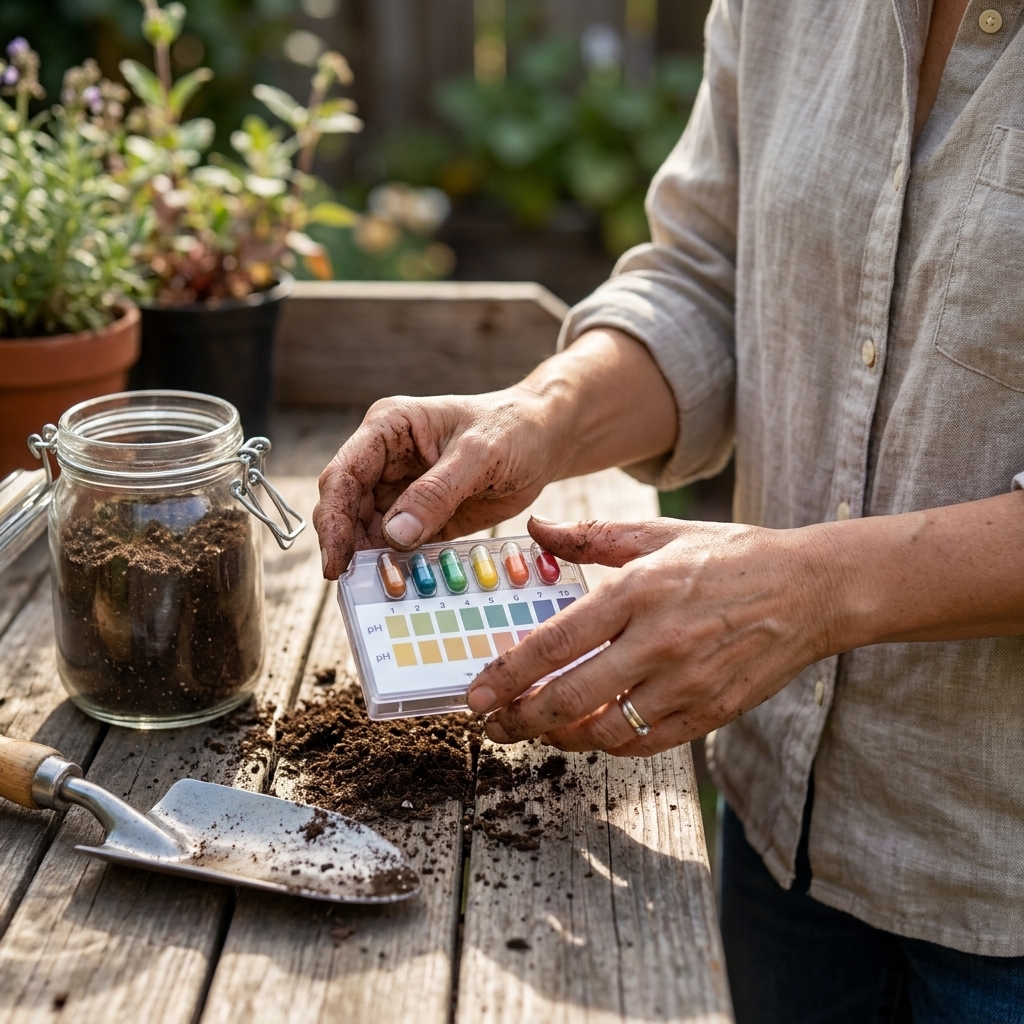
Also important: you can overdo both. Thick layers year after year can lead to nutrient imbalances (especially phosphorus), overly rich soil, or lush, tender growth that attracts pests. If you are amending regularly, a soil test every 2 to 3 years is the easiest way to make sure you are building your soil, not quietly creating a phosphorus problem.
Safety and the messy parts
Fresh vs. aged vs. composted manure
These words get tossed around like they are the same thing. They are not.
- Fresh manure: high in ammonia and soluble nitrogen. Can burn plants. Not what you want in an active bed.
- Aged manure: stored for months, less “hot,” but not necessarily pathogen-free and not necessarily weed-seed-free.
- Composted manure: actively composted to reach pathogen-killing temperatures, then cured. Usually more consistent and typically lower odor, but only truly “safer” if it was composted properly.
Food safety for edible gardens
For vegetables, especially anything you eat raw (lettuce, carrots, strawberries), be picky. The safest approach is to use finished compost or properly composted manure from a trusted source.
If you are using untreated, un-composted manure (even if it is “aged”) in a food garden, anchor your timing to widely used guidance. Under USDA National Organic Program rules, raw manure should be applied at least:
- 120 days before harvest for crops that contact the soil (think carrots, lettuce, strawberries, melons resting on the ground).
- 90 days before harvest for crops that do not contact the soil (think trellised tomatoes and peppers, sweet corn).
Many home gardeners sidestep the whole timing headache by applying aged manure in fall, then planting in spring. Whatever your schedule, keep manure off edible plant parts and wash produce well.
A quick note on which manures to avoid
For food gardens, avoid using cat, dog, or pig manure. They are more likely to carry pathogens that do not belong anywhere near your salad bowl. “Humanure” is also not a typical home-garden amendment unless handled under a strict, proven system designed for it.
Herbicide carryover (the sneaky one)
This one surprises people: some manures and composts can carry persistent herbicides that came from hay or pasture treatments. The result is twisted, stunted beans, peas, tomatoes, and peppers.
If you are sourcing manure or straw bedding from a farm you do not know well, ask what the animals were fed and what the fields were treated with. When in doubt, do a quick bioassay: pot up a few bean seeds in a mix that includes the manure, and compare to beans grown in plain potting mix. If the test seedlings look distorted, do not use that material in your beds.
How to tell it is finished
This is the unglamorous but important part. Finished amendments behave better in your garden.
Finished compost usually looks like
- Dark and crumbly, like a forest floor
- Mostly unrecognizable inputs (no obvious slimy food scraps)
- Earthy smell, not sour or ammonia-like
- Not heating up anymore after turning (temperature is stable)
Aged or composted manure is ready when
- It no longer smells sharply of ammonia
- It is darker and more broken down (bedding is soft and partially decomposed, not fresh straw flakes)
- It is not hot to the touch in the center of the pile
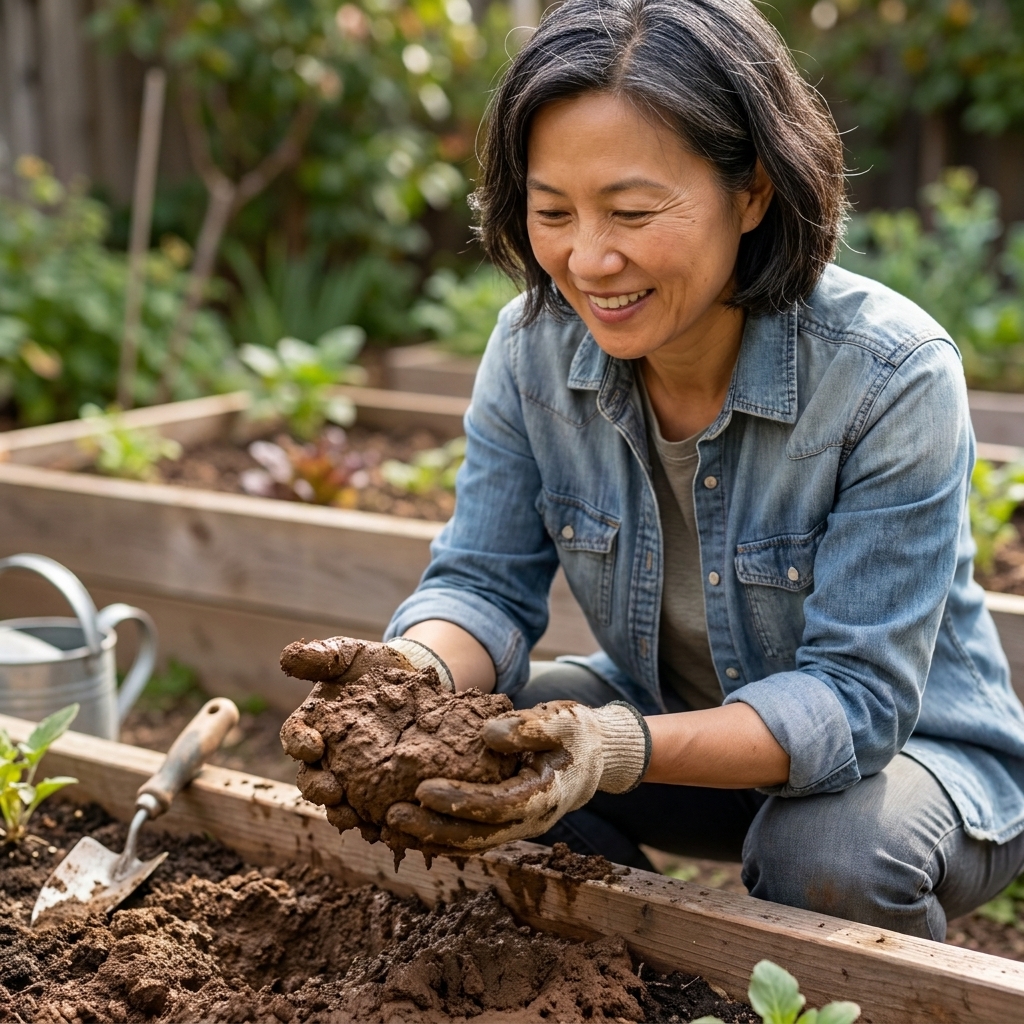
- It crumbles instead of forming wet, sticky clumps
Best uses by garden type
Vegetable beds
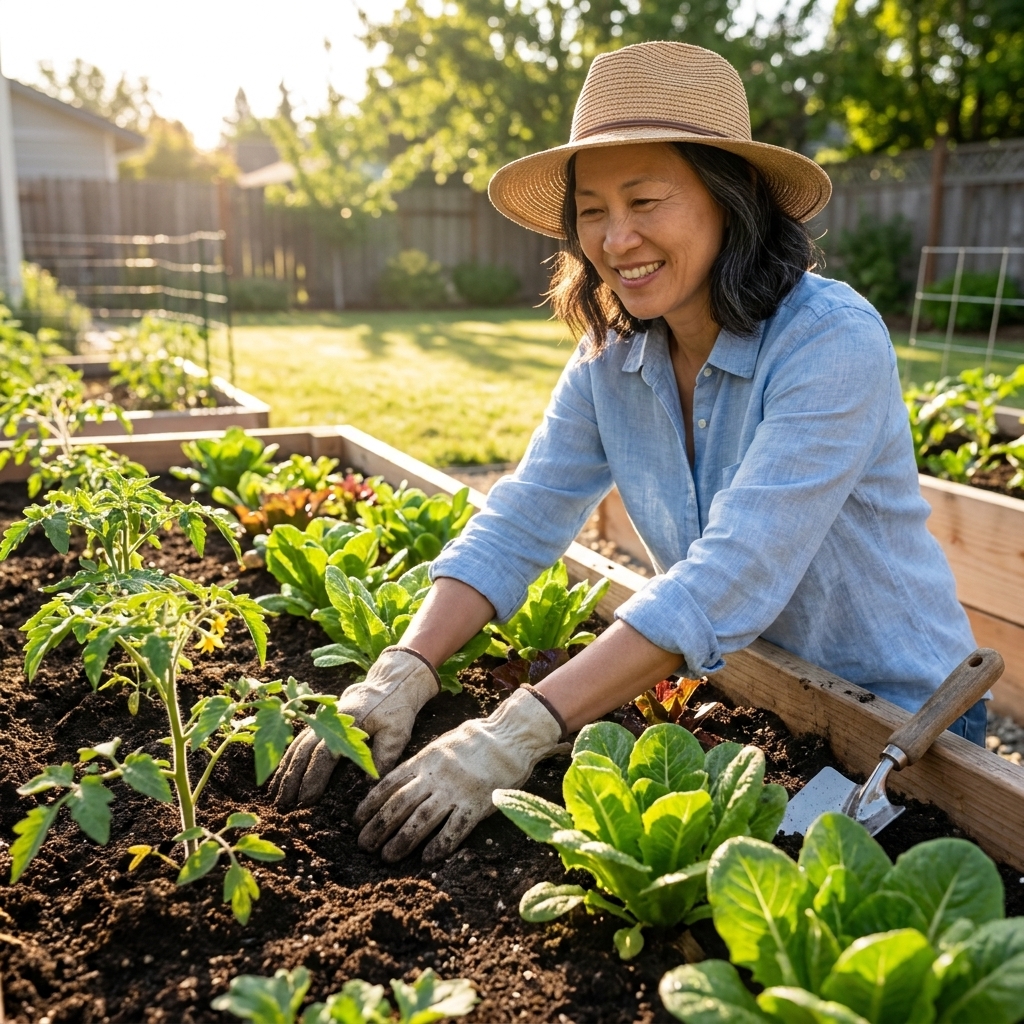
- Best default: Compost as an annual top-dress (about 1 to 2 inches), gently worked into the top few inches of soil.
- When manure shines: When a bed is clearly depleted or you are growing heavy feeders. Use well-aged or composted manure and apply early (fall or well ahead of planting) so nutrients mellow and integrate.
- For root crops: Compost is usually the steadier choice right before planting. Forking and misshapen roots are most associated with fresh manure, unfinished amendments, and soil obstacles (rocks, compaction), not a reasonable layer of finished compost.
Perennial beds and shrubs
- Compost wins for low-maintenance fertility and soil improvement without pushing overly soft growth.
- Aged manure can help when establishing new perennials, but keep it as a thin top-dress and avoid piling it against crowns and stems.
Lawns
- Compost is excellent for top-dressing thin lawns, improving soil biology and moisture retention.
- Manure is less common for lawns because of odor, uneven application, and higher burn risk.
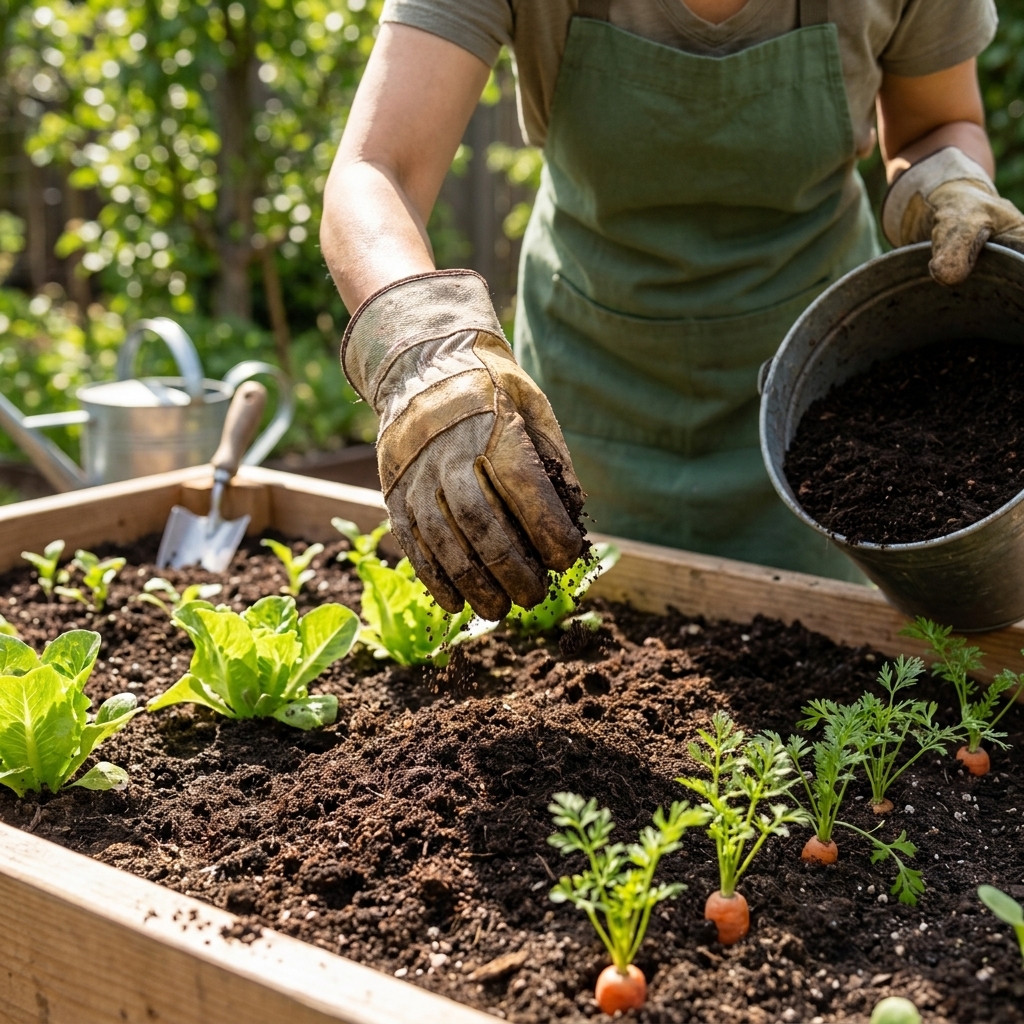
Containers and raised beds
Containers are where manure can misbehave because salts build up faster and roots have nowhere to escape.
- Use compost as an ingredient (in moderation) or as a thin top-dress.
- Avoid using straight manure in containers. If you use composted manure, keep it as a smaller fraction of the overall potting mix.
Which manure is best?
Manures are not all created equal. Here are the common ones gardeners run into:
- Chicken manure: very nitrogen-rich and can be quite “hot.” Best when fully composted and used thoughtfully.
- Cow manure: usually milder, often mixed with bedding. Can be great when aged or composted, but quality varies widely.
- Horse manure: commonly available, often full of weed seeds unless it has been thoroughly composted. Also more likely to bring persistent-herbicide issues if the horses were fed treated hay.
- Sheep and goat manure: often in small pellets, tends to be richer than cow and can be an excellent soil amendment when aged.
- Rabbit manure: relatively mild and often considered less likely to burn, but I still prefer it aged or composted for consistency.
How to apply compost
For established beds (my favorite low-stress method)
- Spread 1 to 2 inches of finished compost on top of the soil.
- Gently rake it in, or let worms do the mixing over time.
- Water well to settle it.
For new beds
- Incorporate 2 to 4 inches into the top 6 to 8 inches of soil if you are building from scratch.
- If you are no-dig, layer compost on top and plant into it, then mulch.
How to apply aged or composted manure
Timing matters
- Best: Apply in fall or well ahead of spring planting.
- Be careful: For edible gardens, follow the 90/120-day guidance above when using untreated manure.
- Avoid: Using manure that still smells sharply of ammonia or looks like fresh bedding and clumps.
How much to use
- As a top-dress, aim for about 1 inch for most beds.
- Mix lightly into the top few inches if you want faster integration, but avoid deep digging that disrupts soil layers.
Keep it off stems
Leave a little breathing room around plant crowns and stems to prevent rot and reduce pest hideouts.
Compost + manure: best together
If your soil is tired and you want a straightforward recipe, this is a balanced way to do it:
- Fall: Apply a thin layer of aged or composted manure (about 1 inch), then cover with shredded leaves or straw.
- Spring: Add 1 to 2 inches of finished compost as your planting-ready top layer.
This combo feeds soil life steadily while giving plants a more noticeable nutrient bump when they need it. It is also forgiving, which is my favorite feature in any garden plan.
Common mistakes
- Planting directly into fresh manure: It is the fastest route to burned seedlings and a very humbling replanting session.
- Assuming “aged” means “safe for edibles”: It might be, but properly composted and well-sourced is better. Untreated manure also has timing rules for a reason.
- Using too much of a good thing: More amendment is not always better. Build gradually and check in with a soil test every few years.
- Ignoring texture: Compost improves structure reliably. Manure can too, but compost is usually the steadier choice for fixing tight clay or overly sandy soil.
FAQ
Can I use compost instead of fertilizer?
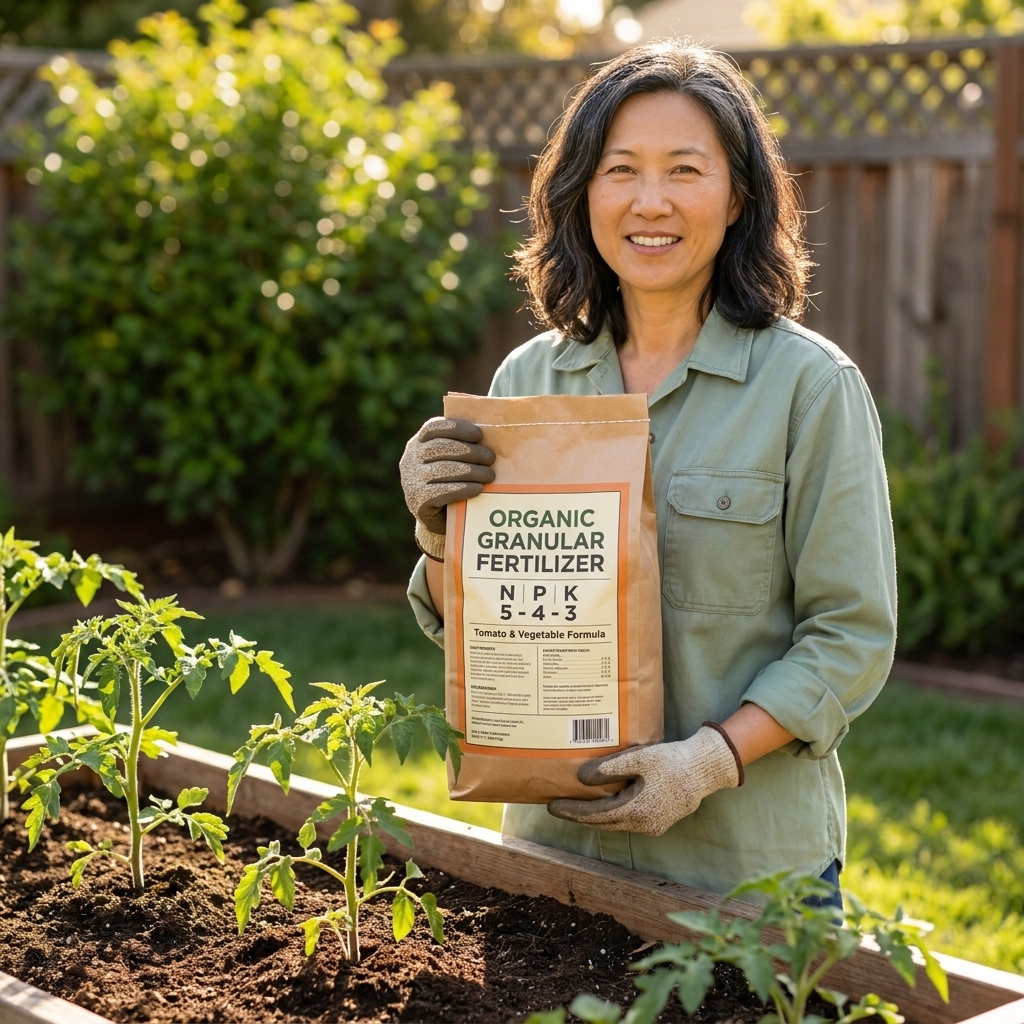
Often, yes for many gardens, especially ornamental beds and moderate-feeding vegetables. For heavy feeders, compost may need help from an additional organic fertilizer (like alfalfa meal, feather meal, or a balanced organic blend) depending on your soil test and crop demands.
Will manure attract pests?
It can, especially if it is not fully aged or if it includes a lot of bedding and moisture that rodents enjoy nesting in. Keeping layers thin, covered with mulch, and away from structures helps.
Does compost have enough nitrogen for leafy greens?
Compost supports steady growth, but leafy greens love readily available nitrogen. If your greens look pale or slow, a small boost from composted manure or a gentle organic nitrogen source can make a difference. Try not to overdo it, since excessive nitrogen can push soft growth and, in some crops, contribute to higher nitrate levels.
What should compost smell like?
Finished compost should smell like a forest floor, earthy and mild. Sour, rotten, or ammonia odors are signs it is not finished or has gone anaerobic.
My take for most home gardeners
If you want one simple, reliable habit: add compost every year. It is the least risky way to build the kind of soil that forgives missed waterings, supports beneficial insects, and grows sturdier plants.
Then, treat aged or composted manure like a targeted tool. Use it when you need extra fertility, when you trust the source, and when you can give it time to integrate. Your garden beds will thank you, and so will your future self in July when everything is still green and not mysteriously sulking.