Aphids are the tiny sap-suckers that can make a healthy plant look like it had a rough weekend. They cluster on tender new growth, distort leaves and buds, and leave behind sticky honeydew that attracts ants and sooty mold. The good news is you often do not need harsh chemicals to handle them, especially on flowers and shrubs. With a little patience and a few pantry-level tools, you can tip the balance back in your plant’s favor. If an infestation is severe, the plant is stressed, or your first steps do not make a dent after a week or two, it may be time to escalate carefully or ask your local extension service for region-specific guidance.
How to tell if you have aphids
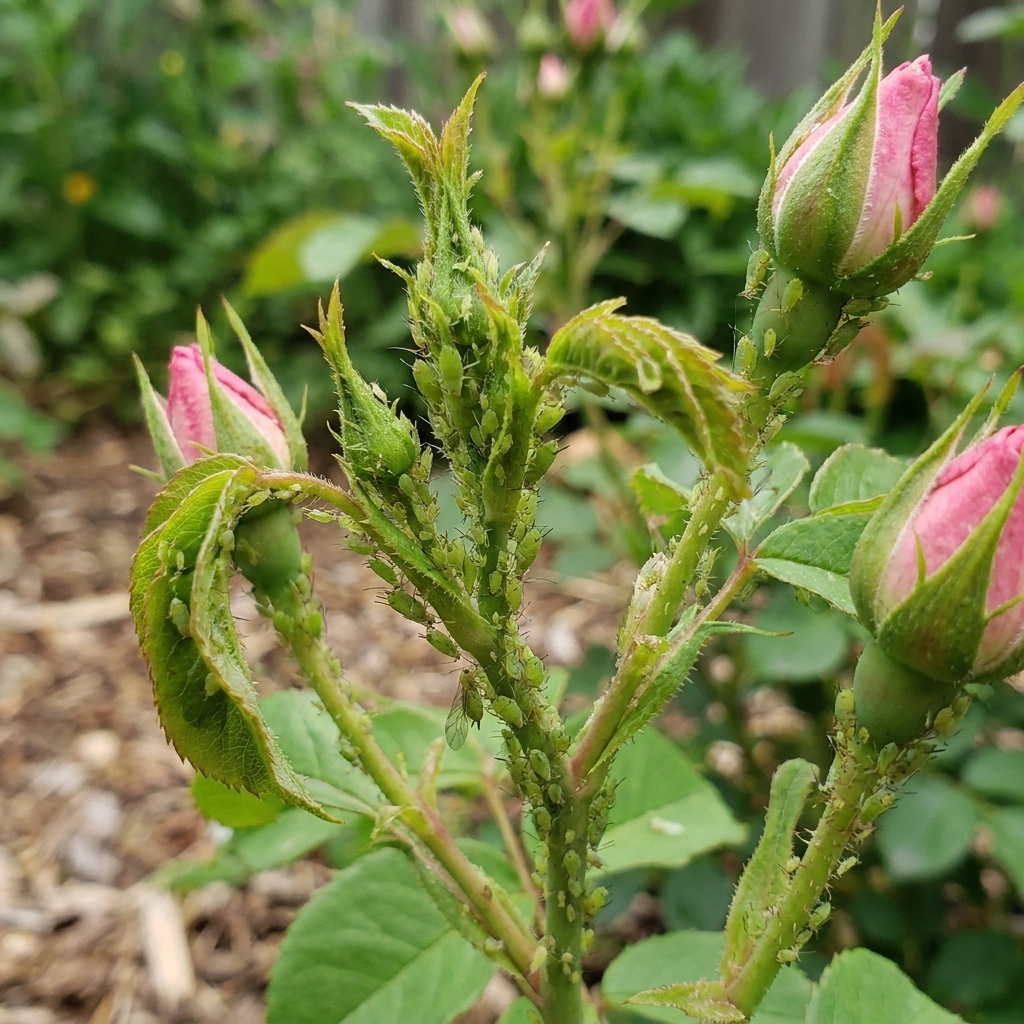
Aphids are small, soft-bodied insects that come in green, black, brown, red, yellow, and even pinkish tones depending on species and host plant. They love fresh, tender growth, which is why you often find them on the newest leaves, stem tips, and flower buds.
- Clusters of tiny insects on stems or the undersides of leaves
- Curled, puckered, or yellowing leaves and distorted buds
- Sticky honeydew on leaves, patio furniture, or cars parked nearby
- Ant traffic marching up stems (ants farm aphids for honeydew)
- Sooty mold, a black film growing on the honeydew
- Shed white skins (aphids molt as they grow)
Quick lookalike check: Aphids are pear-shaped and usually hang out in clusters. Whiteflies flutter up when you disturb the plant, spider mites leave fine webbing and tiny speckles, and scale looks like little bumps that do not move much. If you are unsure, flip leaves over and use a hand lens or your phone camera zoom to get a better look.
If you see lady beetles, lacewing larvae, hoverflies, or signs of tiny parasitic wasps active in the area, that is a sign your garden’s “good bugs” are already clocking in for work. Your goal is to reduce the infestation while keeping those helpers safe.
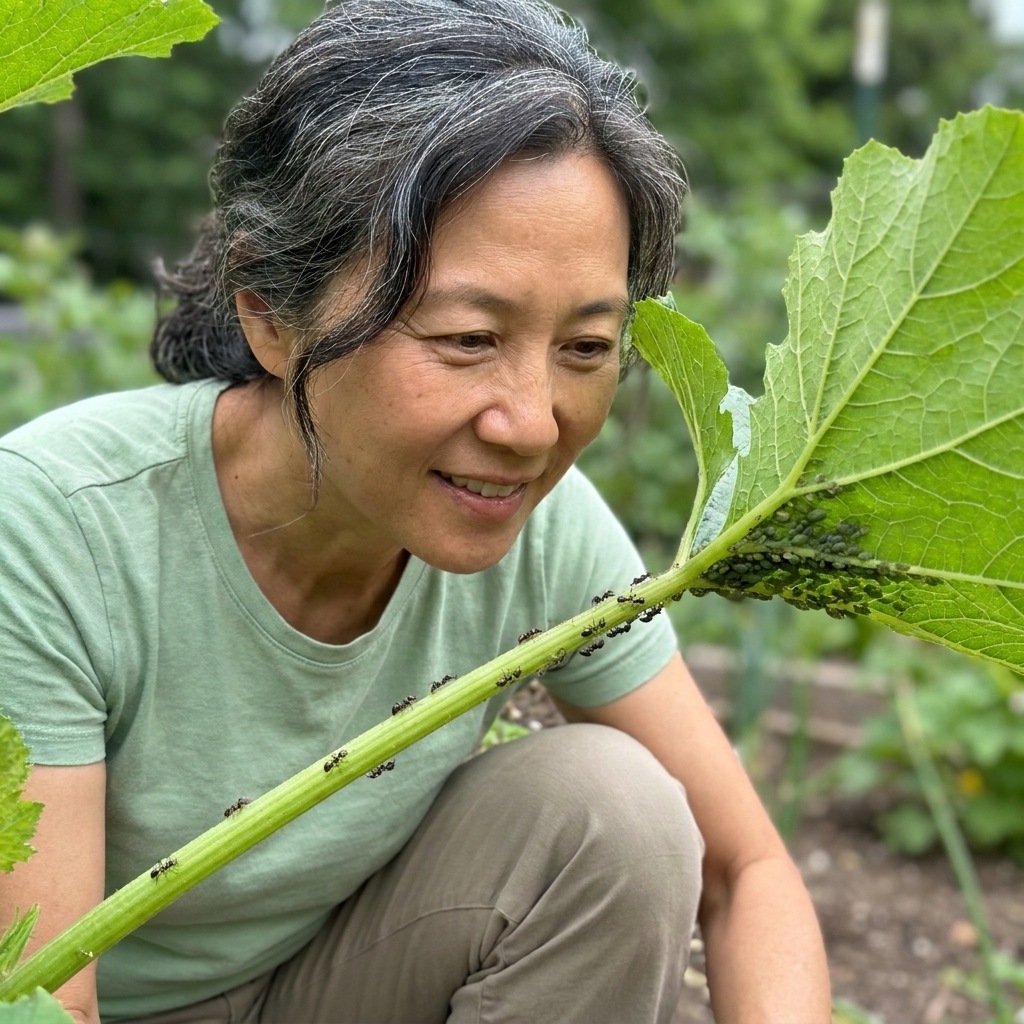
Before you treat
When I find aphids, I do three things before I reach for anything that smells like “solution.”
- Check the plant’s overall health. Drought stress and too much nitrogen fertilizer can invite aphids. Water deeply if the soil is dry and pause on high-nitrogen feeds.
- Inspect the worst spots first. New growth, buds, and leaf undersides are the hot zones.
- Decide how aggressive you need to be. A few aphids on a sturdy shrub is not an emergency. A thick coating on new rose buds is.
Timing note: Avoid spraying soaps or oils on drought-stressed plants, during midday heat, or right before a freeze. Stressed leaves burn more easily and recover more slowly.
7 natural home remedies for aphids
These are my go-to organic options. You do not need to use all seven. Pick one or two, monitor for a few days, and escalate only if needed.
1) Blast them off with water
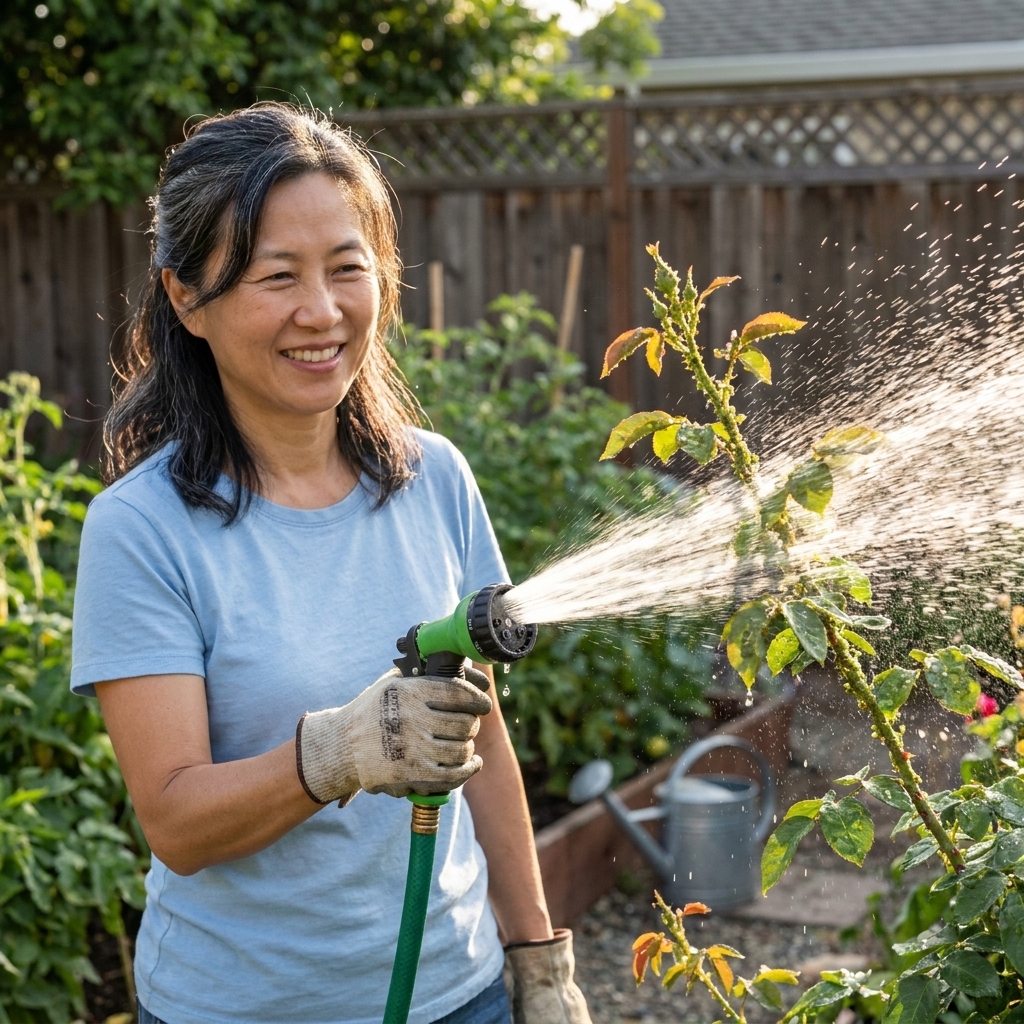
This is the simplest fix and it works surprisingly well, especially early in an infestation. Many aphids are wingless and not great at returning once knocked off. Winged aphids do exist and can disperse, which is why repeat blasts are sometimes needed.
- How: Use a hose with a firm spray and aim at colonies, focusing on undersides of leaves and stem tips.
- When: Morning is ideal so leaves dry quickly.
- How often: Repeat daily for 2 to 3 days, then reassess.
Tip: Support tender stems with your hand (a gloved hand for thorny roses) while spraying so you do not snap new growth.
2) Hand wipe or prune clusters
If you have a small infestation, you can remove a lot of aphids in seconds.
- How: Pinch off heavily infested tips or wipe aphids away with gloved fingers.
- Best for: Roses, milkweed, peppers, and any plant where aphids concentrate on a few shoots.
- Dispose: Drop prunings into a sealed bag or a bucket of soapy water.
Gentle reminder: A little cosmetic pruning now is often less stressful for the plant than weeks of sap loss.
3) Insecticidal soap (or careful DIY)
Soap works by disrupting the aphids’ outer surface and cell membranes, which leads to dehydration. True insecticidal soap is the safest option because it is formulated to be effective without being overly harsh on plants.
- Store-bought option: Follow the label exactly.
- DIY option: Mix 1 to 2 teaspoons of unscented liquid castile soap in 1 quart of water. Shake gently.
- How to apply: Spray to coat aphids thoroughly, especially on leaf undersides. Soap must contact the insect to work.
- Reapply: Every 4 to 7 days as needed.
Important cautions: Do not spray in hot sun. Leaf damage is more likely when temperatures climb, often above about 85°F, but it depends on the product and the plant, so check the label and test a few leaves first. Avoid soaps with degreasers, antibacterial additives, or strong fragrances.
Optional for sensitive plants: If you notice leaf spotting, some gardeners gently rinse treated foliage with plain water a few hours later. Do not do this if the label advises against it.
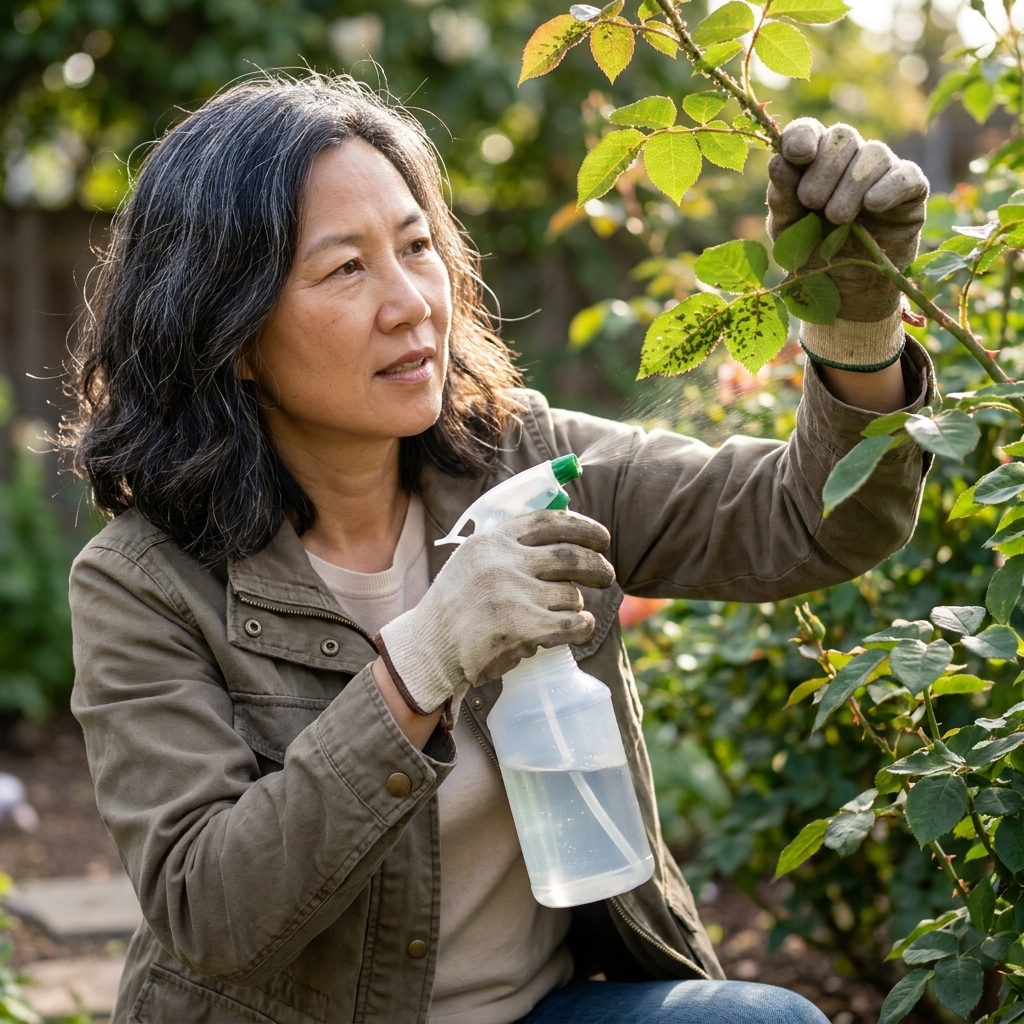
4) Neem oil for stubborn outbreaks
Neem can help reduce aphid numbers, but it is not always instant. Depending on the product, it can work by coating soft-bodied insects on contact and, for azadirachtin-containing formulas, by interfering with feeding and growth. Results are usually gradual and best with a repeat routine.
- How: Mix neem according to the product label. (Concentrations vary, so the label matters.)
- When: Spray at dusk or very early morning to reduce leaf burn and limit contact with active pollinators.
- Where: Focus on affected areas and undersides of leaves.
Pollinator note: Avoid spraying open blooms whenever possible. If you must treat a flowering shrub, target foliage and stems and spray when bees are not foraging.
5) Alcohol spot treatment (use sparingly)
For a small colony on a houseplant brought outside for summer, or a few stems on a shrub, a spot treatment can be handy. It can also scorch foliage if you get sloppy, so keep this one targeted.
- Mix: 1 part 70% isopropyl alcohol to 3 parts water.
- Apply: Dab or lightly mist the aphids only. Avoid full-plant spraying and avoid soaking the plant.
- Test first: Try one leaf and wait 24 hours.
- Avoid: Bright sun, heat, or drought-stressed plants. This is a scalpel, not a lawn sprinkler.
6) Encourage beneficial insects
If aphids show up every year, the most satisfying fix is building a garden that makes aphids a snack, not a takeover.
- Lady beetles and lacewings: Their larvae are aphid-eating machines.
- Hoverflies: Adults are pollinators, larvae hunt aphids.
- Tiny parasitic wasps: They lay eggs in aphids, creating “aphid mummies” (tan, puffed shells).
How to encourage them: Grow small-flowered nectar plants like sweet alyssum, dill, fennel, yarrow, and native wildflowers. This does not “guarantee” aphids vanish, but it does diversify habitat and keep predators nearby. Avoid broad-spectrum pesticides, even organic ones, unless you truly need them.
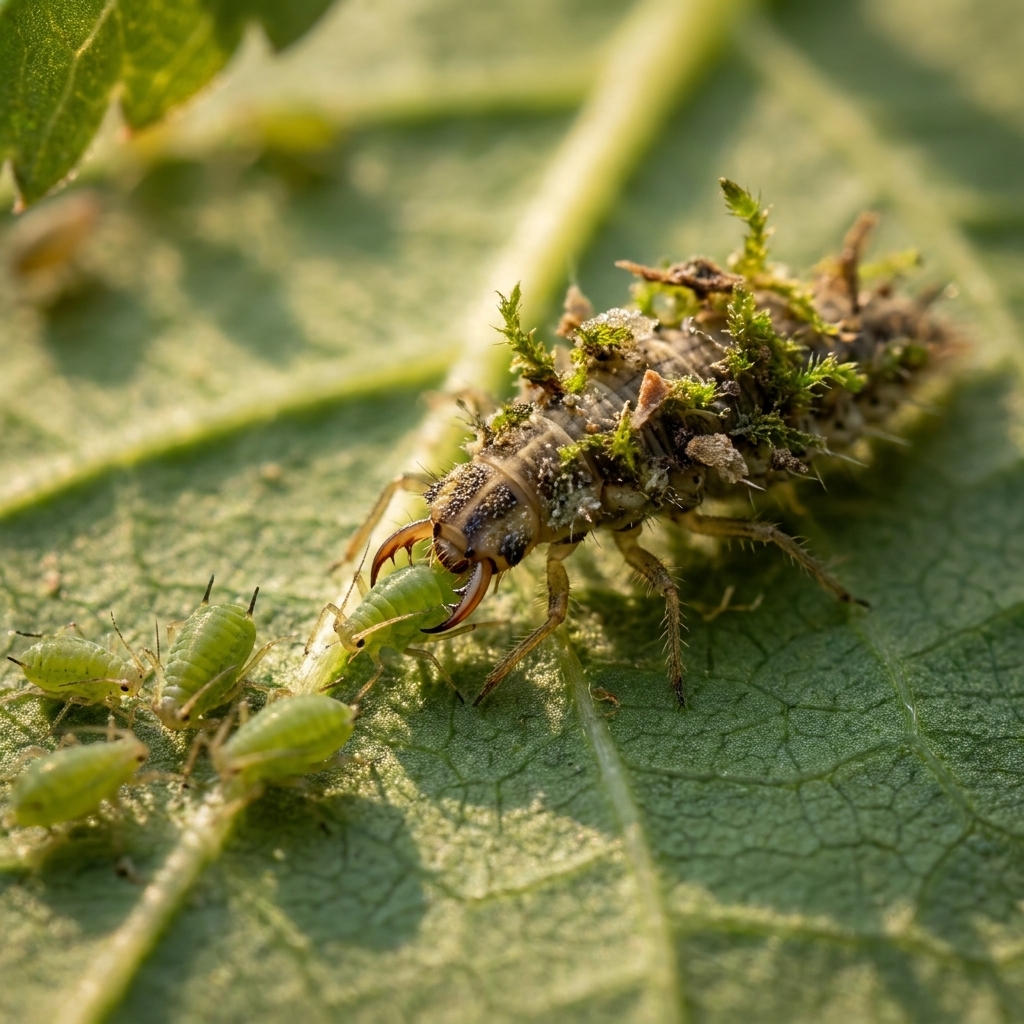
7) Stop ants
Ants protect aphids from predators in exchange for honeydew. If you handle the ants, you often see aphid pressure drop because lady beetles and lacewings can finally hunt in peace.
- Use sticky barriers: Apply a sticky band product around woody stems or place a wrap and apply sticky material to the wrap, not directly on bark.
- Address nearby nests: If ants are nesting in a pot or under a paver, relocating the pot or disturbing the nest can help.
- Reduce honeydew sources: Knocking down aphids with water first lowers the reward that attracts ants.
What not to do
- Do not over-fertilize. Excess nitrogen creates soft, juicy growth aphids adore.
- Do not spray in midday heat. Many natural products can burn foliage in hot sun.
- Do not default to strong, broad insect killers. You may wipe out the predators that prevent the next wave.
- Do not treat every bug like a villain. If you see aphid mummies or lots of predators, consider using only water sprays and patience for a week.
Prevent aphids from returning
Aphids are part of outdoor gardening life, but repeat infestations are usually a sign the plant is stressed, overfed, or isolated from beneficial insect habitat.
- Water deeply, not frequently. Strong plants tolerate minor feeding better and bounce back faster.
- Mulch and build soil. A 2 to 3 inch layer of mulch helps regulate moisture and supports soil life.
- Go easy on nitrogen. If you fertilize, choose a balanced, slow-release option and follow rates.
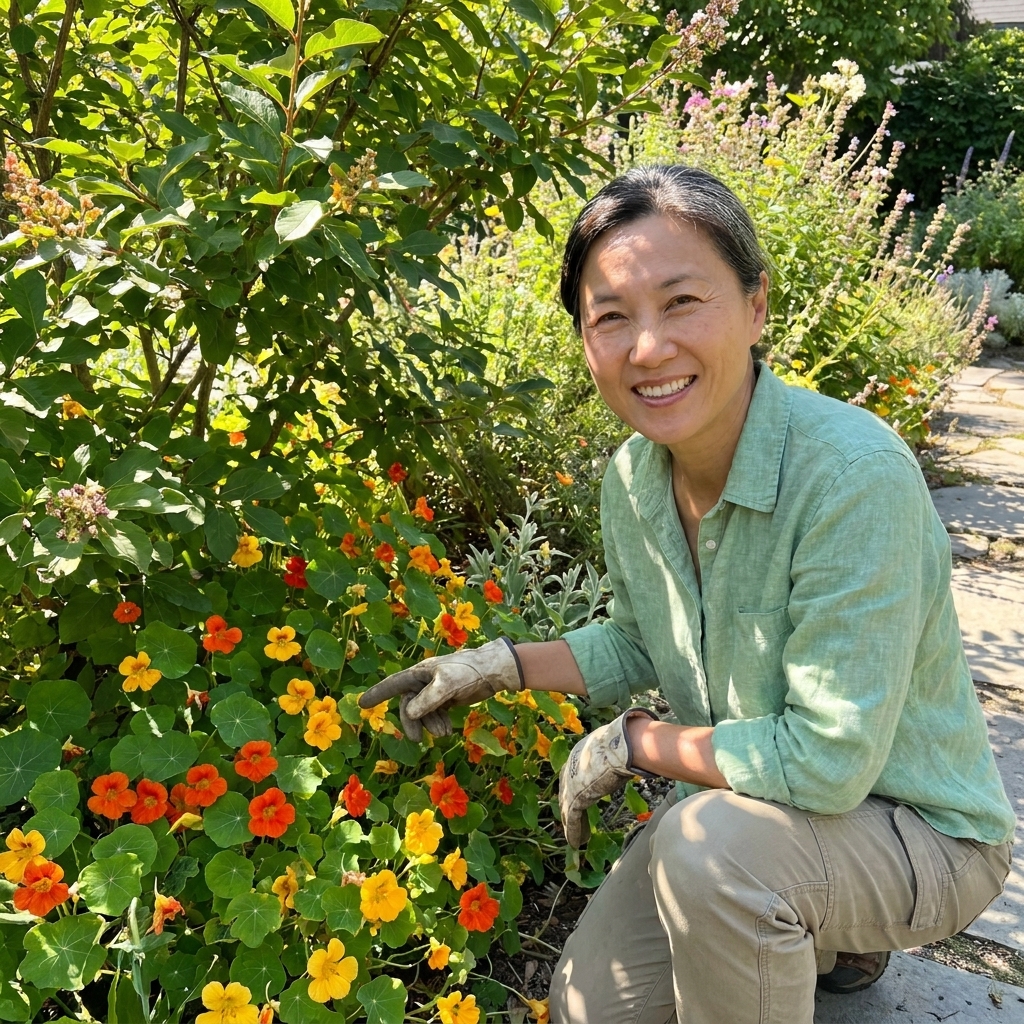
- Plant for beneficials. Interplant with alliums (chives, garlic), marigolds, nasturtiums, dill, and alyssum to add diversity and provide nectar and shelter for helpful insects.
- Inspect weekly in spring. Catching aphids early turns a battle into a quick rinse.
FAQ
Will dish soap kill aphids?
Sometimes, but it can also damage leaves because many dish soaps are designed as degreasers and contain additives. If you want the safest route, use a product labeled insecticidal soap. If you go DIY, keep it mild with unscented liquid castile soap and always test first.
Do I need to treat if I only see a few aphids?
Not always. On established shrubs, a few aphids might be handled naturally by predators within a week or two. I typically start with a water spray and monitoring before escalating.
Why do aphids keep coming back to my roses?
Roses push lots of tender new growth that aphids love, especially after high-nitrogen feeding. Try easing up on nitrogen, blasting early colonies off with water, and planting nectar-rich companions nearby to keep beneficial insects around.
Is neem oil safe for pollinators?
It can be used more safely when applied at dusk or dawn and kept off open blooms. Any spray can harm beneficial insects if they are directly hit, so timing and targeted application matter.
When should I escalate?
If you are still seeing heavy aphid pressure after 7 to 14 days of water sprays plus soap or neem, or the plant is visibly declining (stunting, repeated bud loss, severe leaf distortion), step up your approach. That can mean more consistent repeat treatments, removing badly infested growth, addressing ants, or contacting a local extension office for help choosing the least-disruptive option that works in your area.