Heavy clay has a reputation, and honestly, it earns it. It turns to brick in summer, feels like pottery slip in winter, and somehow manages to crack, crust, and puddle all in the same season.
But here is the encouraging part I wish someone had told me sooner: clay is not “bad” soil. It is just tight soil. Clay holds nutrients well and can grow gorgeous gardens once you give it air spaces and a crumbly structure for water and roots to move through.
1) Add organic matter early and often
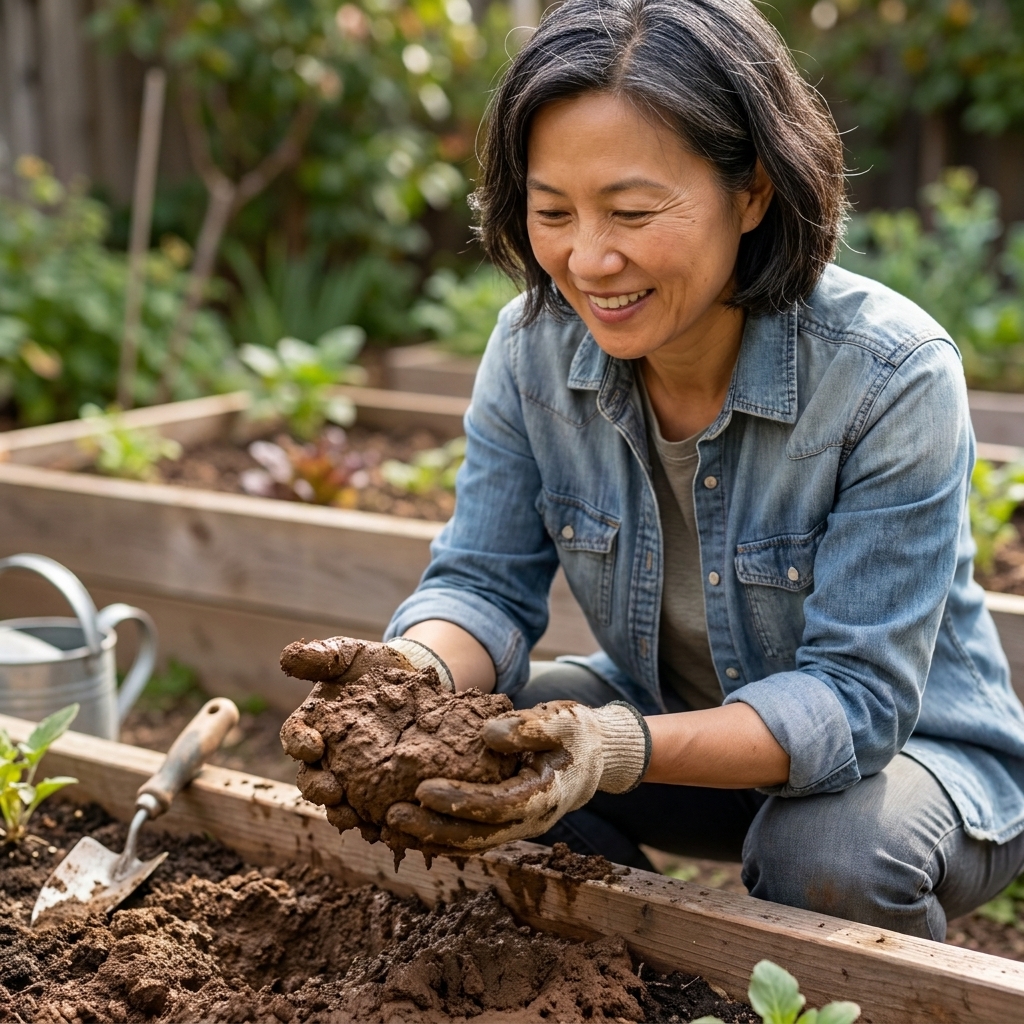
If you do only one thing for clay, make it this. Organic matter is the long game that pays off every season.
When you mix compost and other decayed materials into clay, you are not “lightening” it like cake batter. You are building soil structure so clay particles clump into aggregates, creating channels for water, air, and roots.
Best organic materials for clay
- Finished compost (the gold standard)
- Leaf mold (partially decomposed leaves, especially good at improving texture)
- Well-rotted manure (aged, not fresh)
- Worm castings (use as a booster, not bulk)
Manure note: Use manure that is truly composted or well-aged. Fresh manure can burn plants, and it is not something you want near edible crops close to harvest.
How much: Aim for 2 to 3 inches spread over the surface, then incorporate the top 6 to 8 inches if you are starting a new bed. For established beds, top-dress with 1 to 2 inches and let worms and weather do the mixing.
Timing tip: Work clay when it is moist like a wrung-out sponge. Too wet and you create hard clods. Too dry and you will feel like you are digging into sidewalk.
2) Stop digging when it is wet
This one is less glamorous than buying compost, but it is powerful. Clay remembers. If you dig, till, or even walk repeatedly on wet clay, you squeeze out the air and create compaction that can take seasons or even years to fully recover.
Easy habits that protect structure
- Stay out of beds and work from paths when possible.
- Create permanent walkways so foot traffic has a home.
- Use boards to distribute weight if you must step into a bed.
- Hold off after heavy rain until the soil passes the squeeze test (it crumbles instead of smearing).
Think of this as “do no harm” gardening. It is surprisingly effective.
3) Use raised beds or mounds
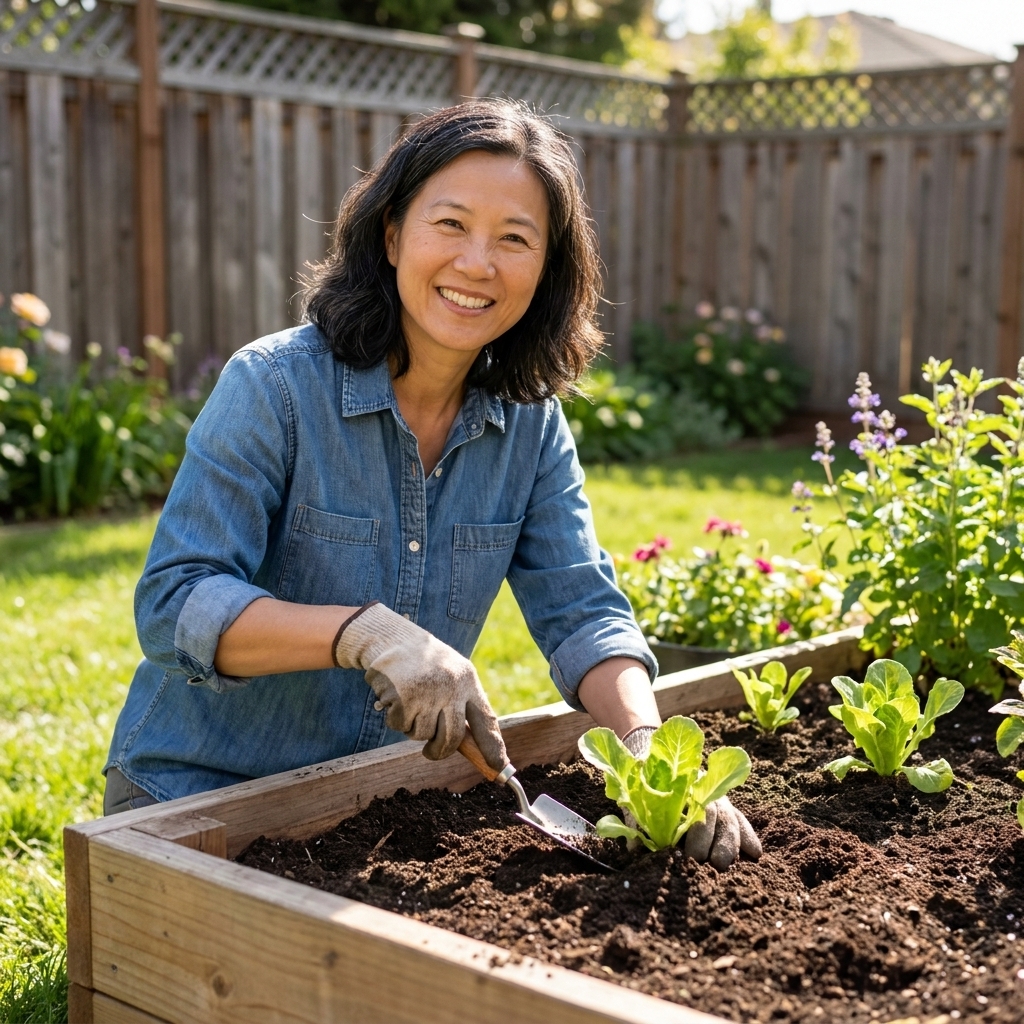
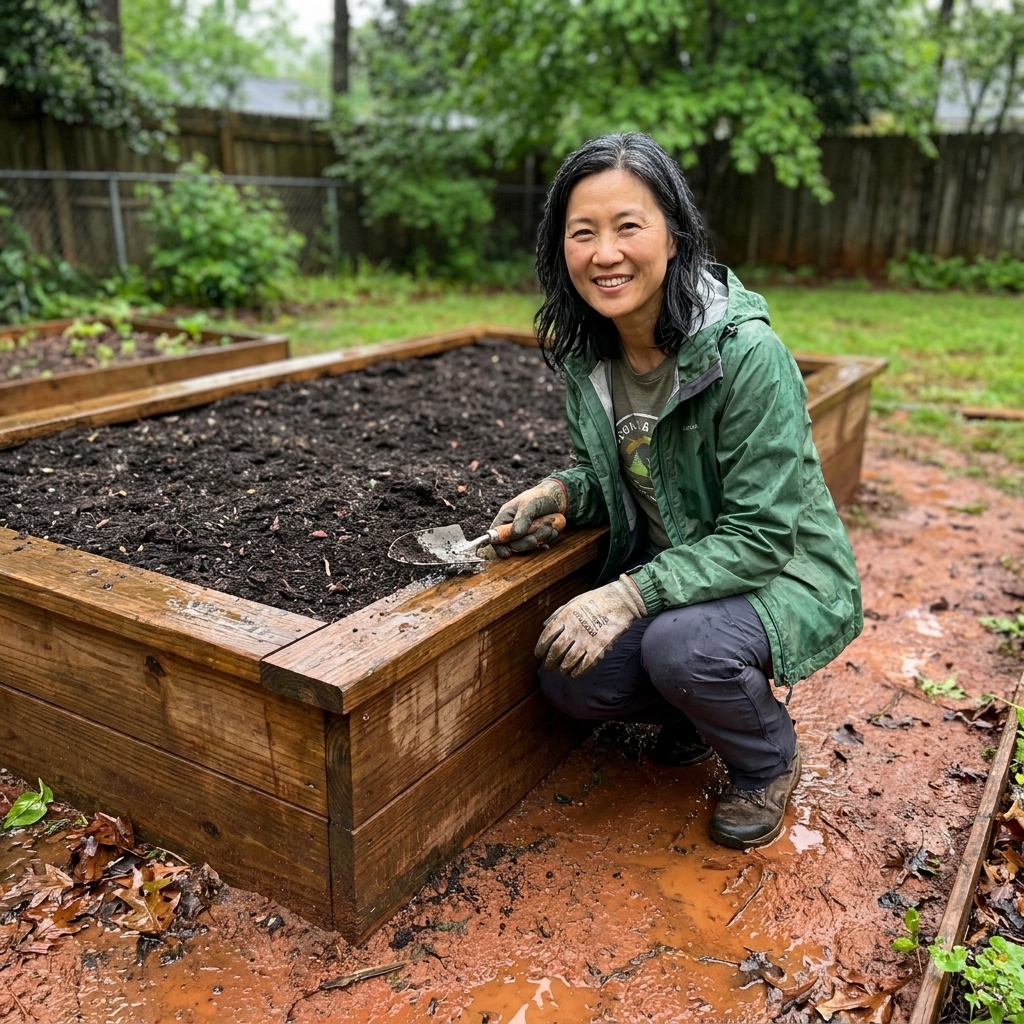
If your yard has that classic clay problem where water sits for hours, raised beds are a sanity saver. You can still improve native clay underneath over time, but raised beds let you plant successfully in the meantime.
You do not need a big construction project. Even 6 to 12 inches of raised soil makes a noticeable difference for drainage and root oxygen.
Two beginner-friendly options
- Framed raised beds: Fill with a reliable raised-bed mix, or a blend of quality topsoil and compost from a known source. Avoid mystery bargain “topsoil” if you can, because it can be heavy, weedy, or mostly fines. Before filling, lightly loosen the clay surface underneath with a fork so you do not create a hard interface layer.
- Mounded beds: Heap amended soil into broad, gently sloped rows. Great for vegetables and perennials and easy to reshape each season.
4) Loosen with the right tools
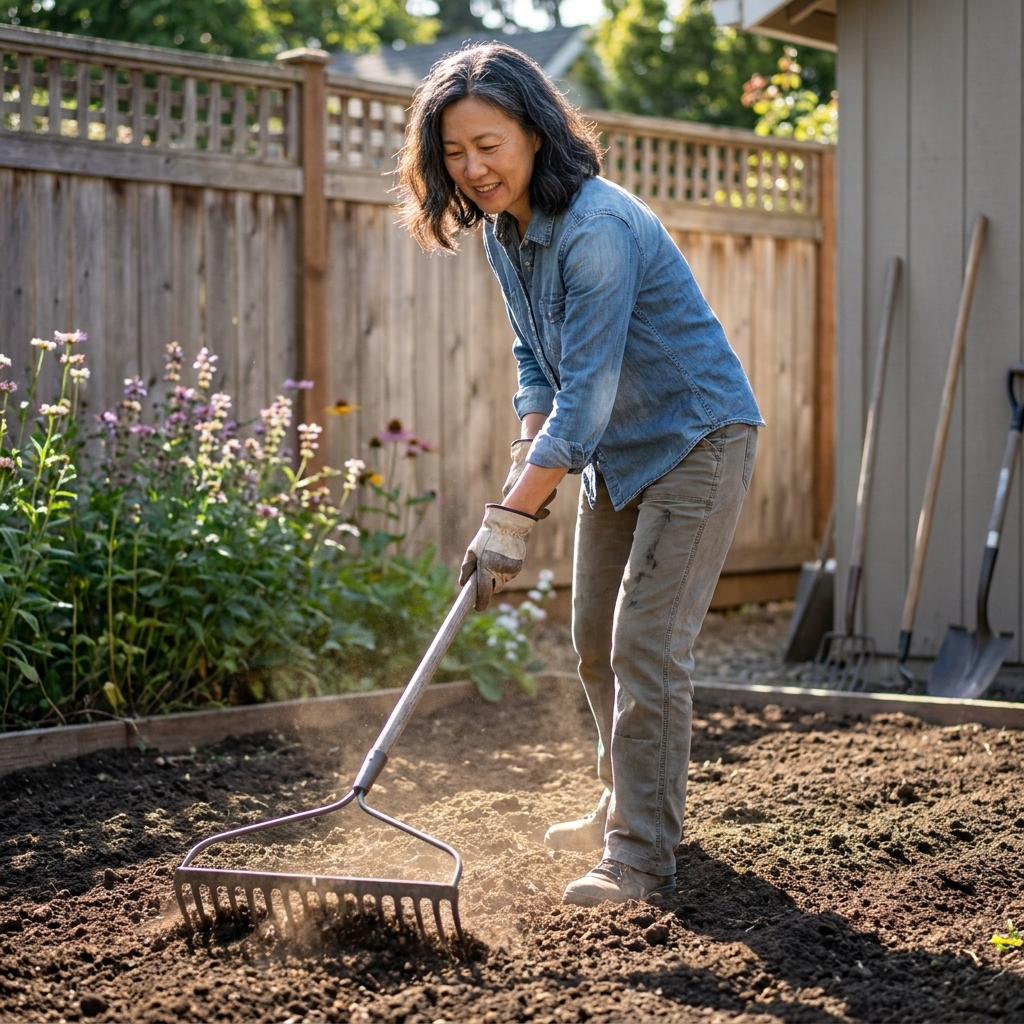
Clay needs air, but over-tilling can backfire by destroying developing soil structure and creating a compacted layer underneath called a plow pan.
Instead, think in terms of lifting and opening.
Tools that work well in clay
- Broadfork: A favorite for beds. Push in, rock back gently, and let the soil crack open without flipping layers.
- Garden fork: Slower than a broadfork but effective. Wiggle and lift instead of turning.
- Core aerator (for lawns): Pulls plugs, which improves infiltration and helps top-dressed compost move downward.
How often: Once or twice a year is plenty for most gardens, usually in early spring or fall when the soil is moist but not sticky.
5) Mulch like you mean it
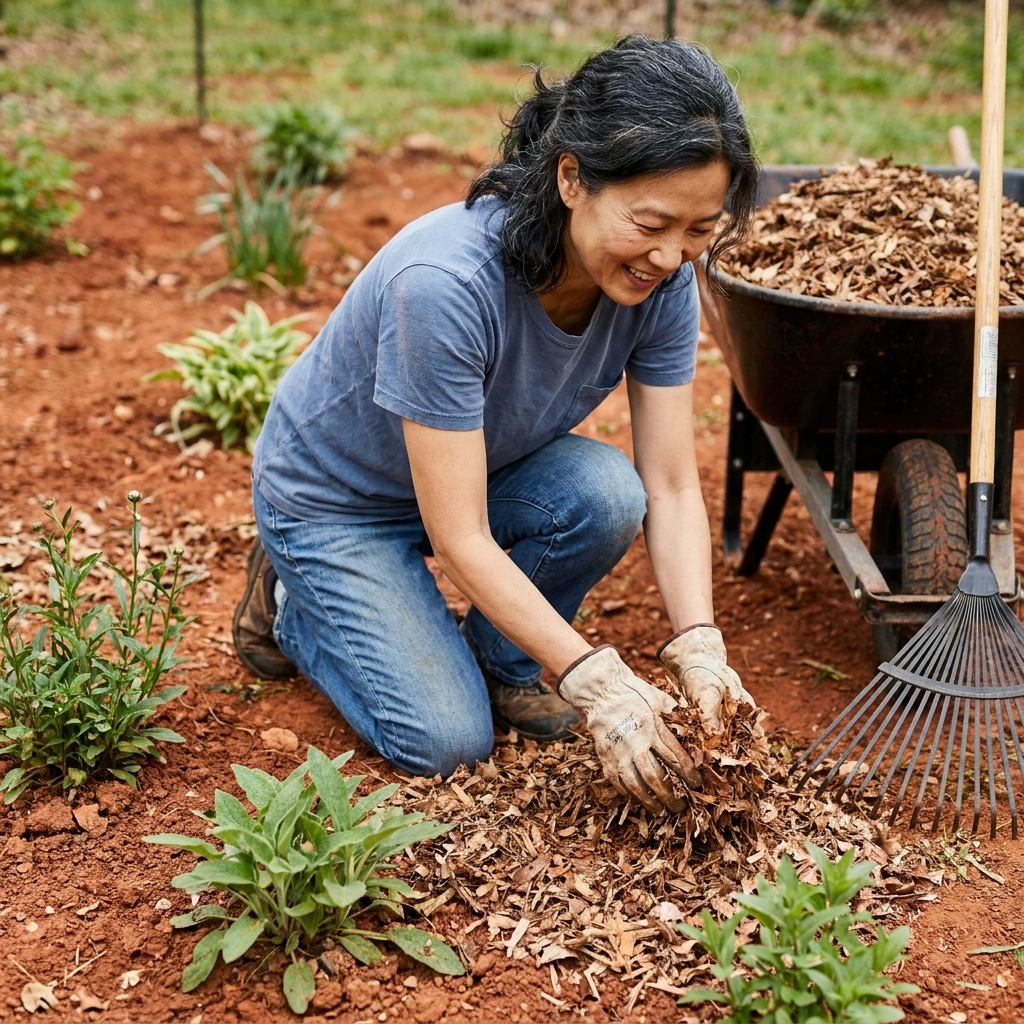
Mulch is the quiet hero for clay. It buffers temperature swings, reduces crusting, slows evaporation, and keeps rain from pounding the surface into a seal.
Most importantly, mulch turns into organic matter as it breaks down, which keeps improving structure without you having to wrestle a shovel.
Mulches that help clay soil
- Shredded leaves (top choice, and free)
- Straw (excellent in veggie beds, use seed-free straw if you can)
- Untreated grass clippings (thin layers only so they do not mat)
- Wood chips (best for paths, shrubs, and perennial areas)
How much: Keep 2 to 4 inches over bare soil. Pull mulch a few inches back from plant crowns and stems to prevent rot.
6) Plant your way to better soil
If clay is compacted, let plants do some of the heavy lifting. Deep, strong roots create channels that become pathways for water, air, worms, and future roots.
In other words, you can plant your way to better soil.
Great plant choices for opening clay
- Daikon radish (tillage radish): Fast, dramatic taproots. Let them winter-kill or chop and drop.
- Annual ryegrass: Dense roots improve aggregation and reduce erosion.
- Red clover: Adds organic matter and supports soil life.
- Comfrey (where appropriate): Deep roots mine nutrients. Best in permanent spots. It can spread and it is hard to remove once established.
- Native grasses (like switchgrass in many regions): Fibrous roots that build structure and resilience.
Beginner move: Sow daikon radish in late summer or early fall in empty veggie beds. You will be amazed what those roots can do by spring.
7) Fix drainage at the source
Sometimes clay is not the only culprit. If your yard has low spots, downspouts dumping water into beds, or a hardpan layer below the topsoil, you can add compost forever and still get puddles.
Quick checks that make a big difference
- Redirect roof runoff: Extend downspouts away from beds, or route them into a rain garden area designed to handle extra water.
- Regrade small low spots: Even subtle changes can prevent standing water.
- Do a simple infiltration test: Dig a hole about 12 inches deep, fill with water, let it drain once, then refill.
Rule of thumb: If that second fill drains slower than about 1 inch per hour, or water is still standing after several hours, your drainage is truly slow. That is when raised beds, mounding, or drainage work starts to make more sense than endless amending.
A common mistake: adding sand to clay
I know it is tempting. The problem is that small amounts of sand do not fix clay, and they can actually make it behave more like mortar. To truly change soil texture with sand, you would need very large volumes of coarse sand plus organic matter, and for most home gardens that is impractical.
If you already have sand on hand, save it for leveling pavers and building pathways. For planting beds, prioritize compost and mulch.
What about gypsum?
Gypsum gets suggested a lot, but it is not a universal clay cure. It mainly helps in specific sodic soil situations. If you are curious, a soil test can tell you whether it is worth considering.
What to expect over time
Clay soil changes in chapters, not overnight. The first season you might notice less crusting and better digging. By year two, roots go deeper and puddles drain faster. By year three and beyond, the soil starts to get that crumbly, dark, earthy feel that makes you want to scoop it up just to admire it.
If you want a simple rhythm, here is a clay-friendly routine I have used in my own beds:
- Spring: Broadfork if needed, top-dress compost, re-mulch.
- Summer: Keep soil covered (mulch or living plants). Avoid working wet beds.
- Fall: Add leaves, sow cover crops or daikon radish, top-dress compost again if you can.
Your soil is not judging you, and neither am I. It just wants air, food, and time.
Clay soil FAQ
Is clay soil good for anything?
Absolutely. Clay holds nutrients and moisture better than sandy soil. Once you improve structure and drainage, many plants thrive because the soil has a naturally rich “pantry.”
How can I tell if my soil is clay?
Clay feels sticky when wet and forms a ribbon if you roll it between your fingers. When dry, it gets hard and can crack. A soil test can confirm texture, but your shovel usually tells the story quickly.
Should I test my soil?
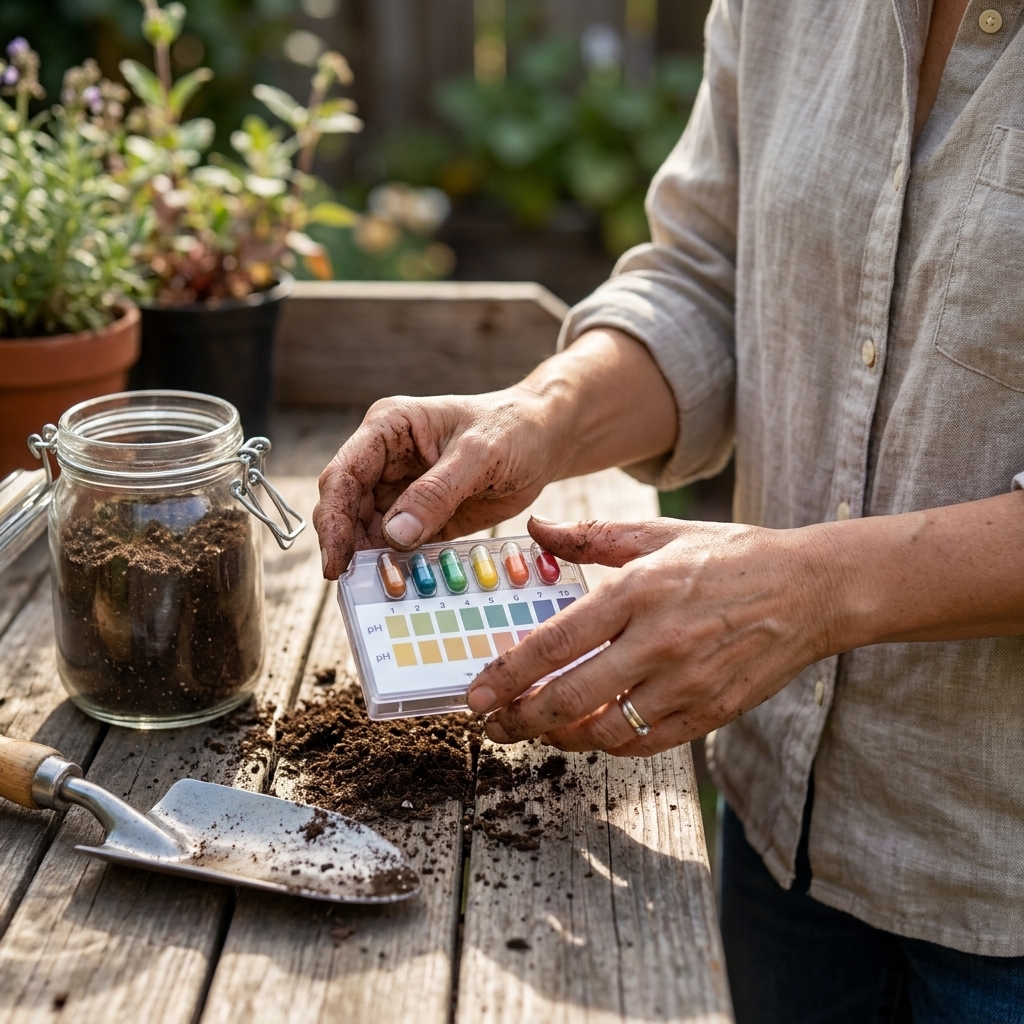
Yes, especially if you are struggling with repeated plant problems. A basic soil test can help you understand pH, nutrient levels, and whether amendments like lime (or gypsum in rare cases) make sense. Local extension offices and many garden centers offer testing resources.
What is the fastest fix for planting this season?
Raised beds or mounding soil are the quickest ways to give roots oxygen and keep plants out of soggy ground. Pair that with compost top-dressing and mulch, and you will be in a much better place this season.