Some gardeners collect fancy tools. I collect little “plant friendships” that make the whole yard run smoother. Companion planting is one of my favorite low-stress ways to reduce pest pressure because it works with nature instead of trying to overpower it. You are not aiming for a pest-free garden. You are aiming for a garden where pests do not get the upper hand.
Below are 10 of the best companion plants for discouraging common insects, plus the practical details that actually matter: where to plant them, what they pair best with, and what to watch out for.
How companions deter pests
Companion plants help in a few different ways, and the best results usually come from stacking those benefits.
- Scent masking: Aromatic herbs can make it harder for pests to “smell” their favorite host plants.
- Repellent compounds: Some plants produce natural chemicals that can deter specific insects.
- Trap cropping: A few companions work by being more attractive than your main crop, drawing pests away.
- Beneficial insect support: Umbel-shaped flowers and long-blooming plants feed lacewings, hoverflies, parasitic wasps, and lady beetles, which do the real cleanup.
A quick reality check: Companion planting is not a force field. It shines most when you also keep plants healthy, avoid over-fertilizing with nitrogen, and check leaves regularly so you can act early.
Also worth remembering: Results are local. What works beautifully in one yard can be “meh” in another, depending on climate, nearby landscapes, and what pests are common in your area. Treat this as a toolbox, not a promise.
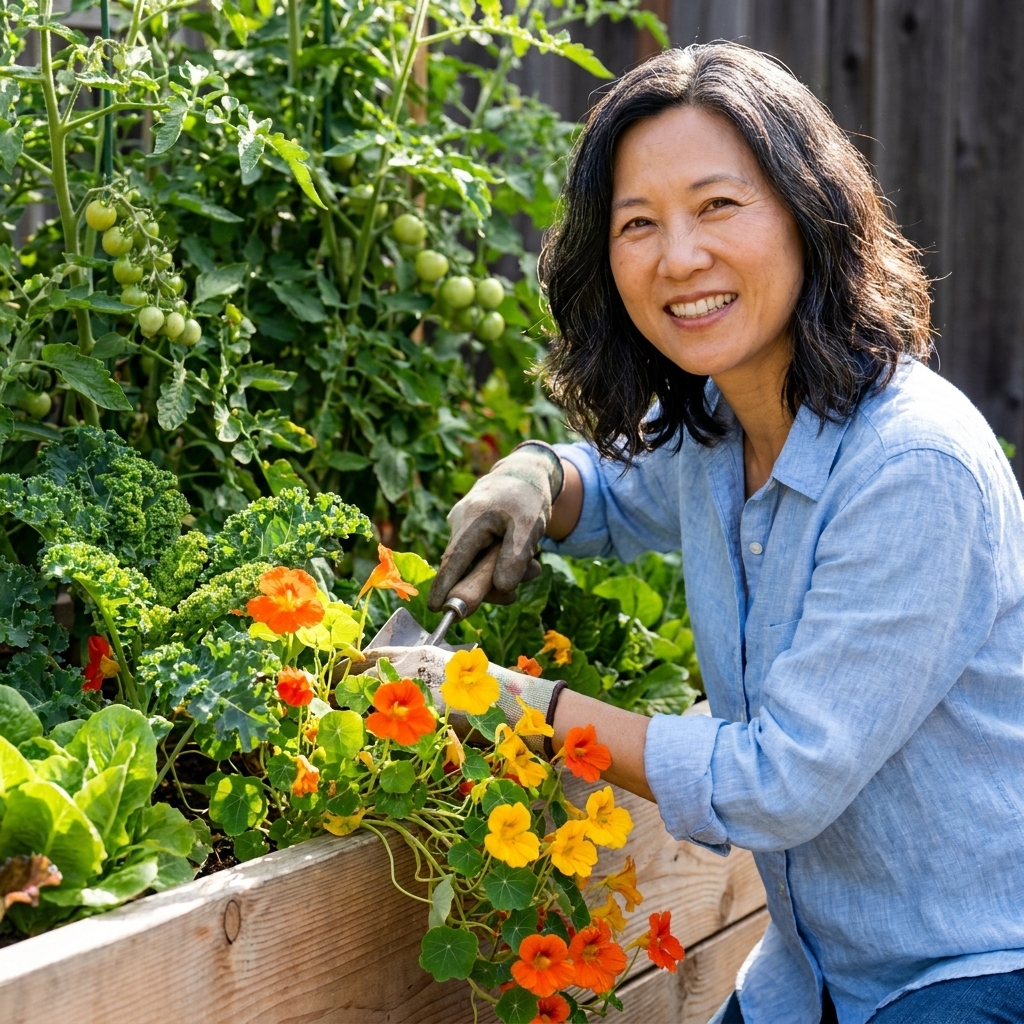
1) Nasturtium
Best for: aphids and whiteflies (as a trap crop); sometimes helps distract squash bugs and cabbage pests
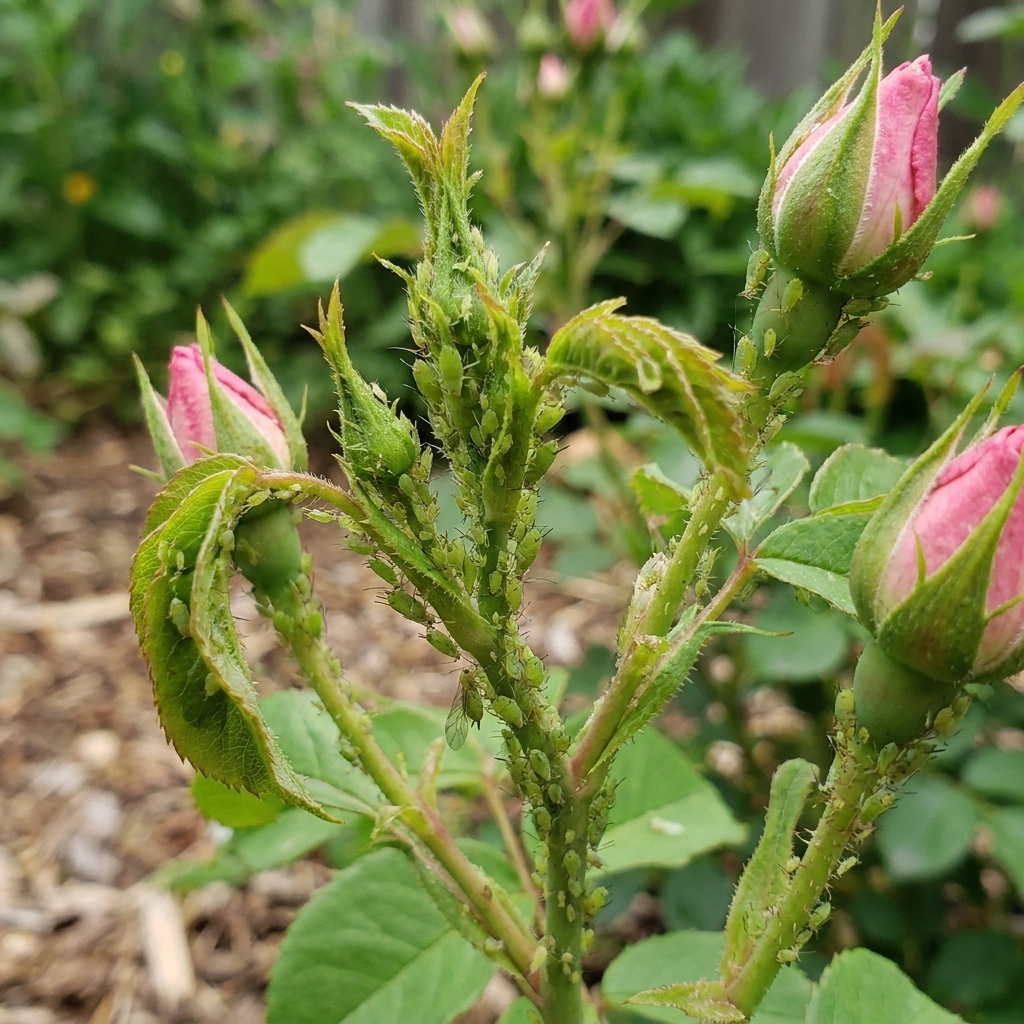
Nasturtiums are the classic “decoy friend.” Aphids adore them, which can be a good thing if it keeps aphids off your roses, peppers, or kale. I like to plant nasturtiums as a living welcome mat around beds and then monitor them like a hawk.
Where to plant
- Along bed edges, in hanging baskets near brassicas, or under trellised crops.
- Keep them close enough to intercept pests, but not tangled into delicate seedlings.
Pairs well with
- Brassicas (cabbage, kale, broccoli)
- Tomatoes and peppers
- Roses and other ornamentals prone to aphids
Clara’s tip
If nasturtiums get heavily infested, prune and discard the worst stems, or blast them with a firm spray of water. Leaving a huge aphid colony in place is like hosting an all-you-can-eat buffet.
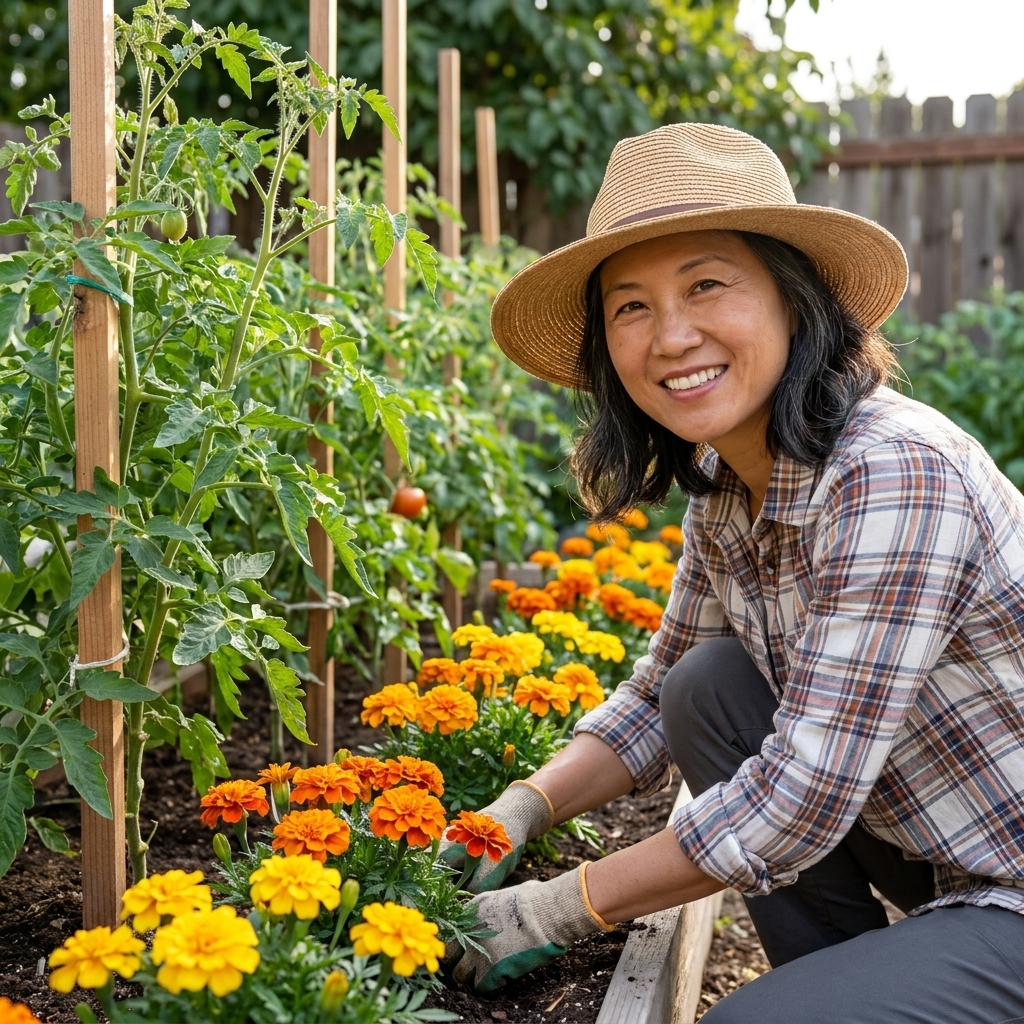
2) Marigold (Tagetes)
Best for: general pest pressure (aphids, whiteflies, thrips), plus beneficial insect support; in some situations, certain types can help reduce specific nematodes
Marigolds are cheerful, tough, and do a lot of behind-the-scenes work. Their scent can be mildly confusing to pests, and their flowers bring in beneficial insects. Some types, especially Tagetes patula (French marigold), are also used to suppress certain plant-parasitic nematodes, but it is species- and nematode-specific and tends to work best when marigolds are grown as a dense planting for a period of time.
Where to plant
- Interplant around tomatoes, peppers, beans, and in mixed flower borders.
- Use clusters rather than single lonely plants for more noticeable impact.
Pairs well with
- Tomatoes and peppers
- Beans
- Roses and annual flower beds
Clara’s tip
Choose single-flowered marigolds if you can. They are generally easier for beneficial insects to access than very double, pom-pom blooms.
3) Sweet alyssum
Best for: aphids and small soft-bodied pests indirectly, by attracting hoverflies and other beneficials
Sweet alyssum is one of those “quiet heroes” that does not look like pest control, but absolutely is. It blooms for a long time, stays low, and feeds hoverflies whose larvae are tiny aphid-eating machines.
Where to plant
- As a living mulch at the front of beds or between widely spaced crops.
- Near lettuce, brassicas, and roses that often attract aphids.
Pairs well with
- Leafy greens
- Brassicas
- Rose beds and mixed perennials
4) Chives
Best for: aphids (pressure reduction in some gardens); excellent for pollinators when in bloom
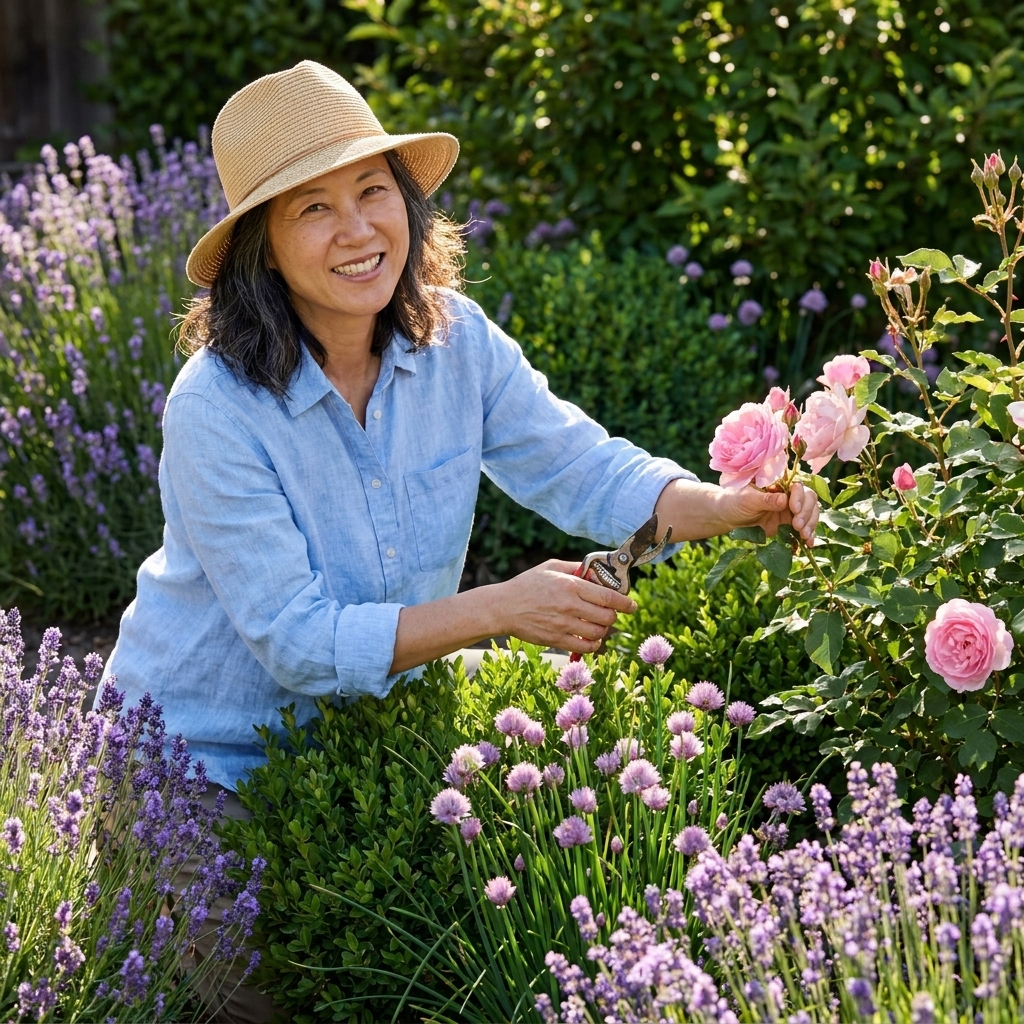
Chives earn their keep in almost any garden. Their oniony scent can confuse pests, and the purple pom-pom flowers are beloved by pollinators. I especially like chives near roses, where aphids tend to throw their spring parties.
Where to plant
- In clumps along bed edges or dotted through a perennial border.
- In containers near patio pots that get aphids.
Pairs well with
- Roses
- Carrots
- Strawberries
Clara’s tip
Good airflow is mostly about spacing and not letting plants smother each other. Chives are handy because they stay fairly upright and do not create a damp, crowded mat at a plant’s base. Let a few plants bloom, then deadhead the rest if you want them to focus on leafy growth.
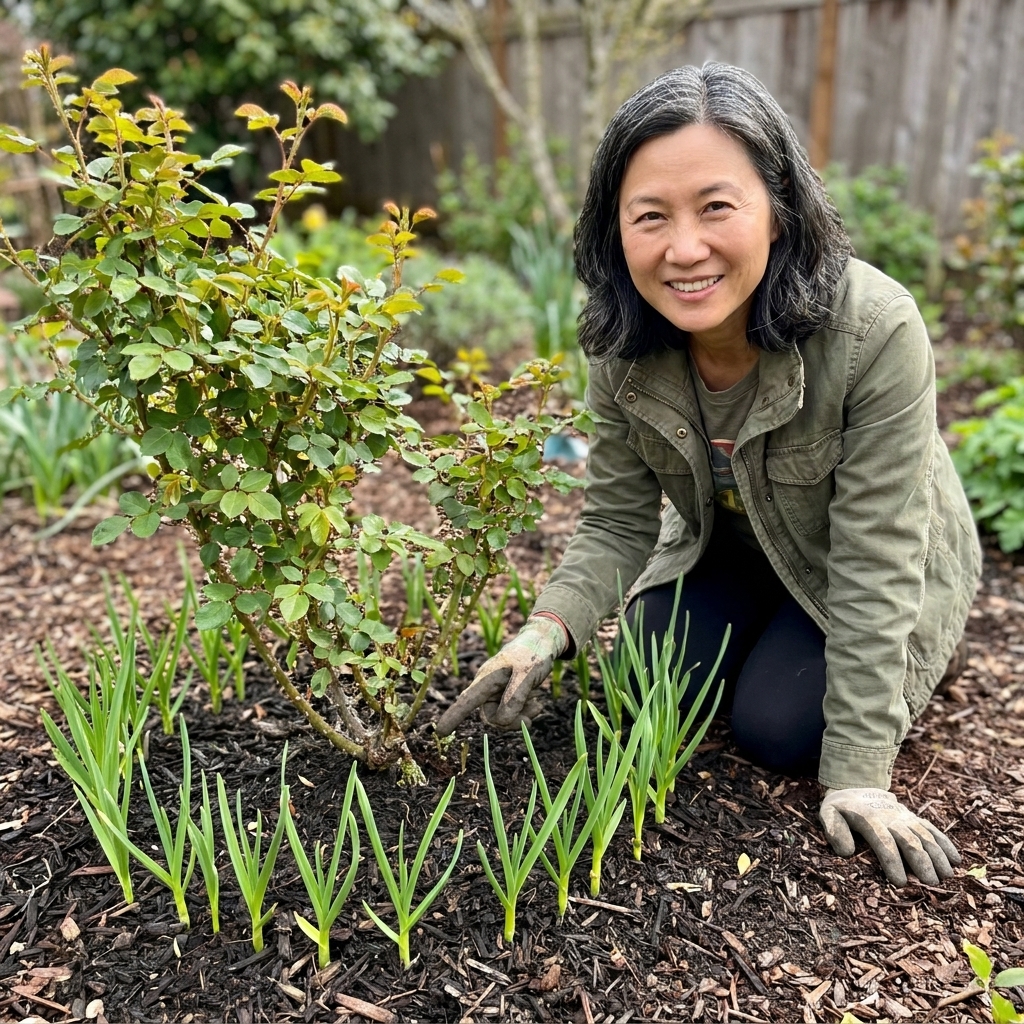
5) Garlic
Best for: general deterrence around vulnerable plants; may reduce aphid or mite pressure in some gardens
Garlic is like that friend with a bold personality who makes everyone else behave a little better. Tucking garlic around vulnerable plants can make the area less appealing to certain pests, and it takes up very little space if you plant it as a border. Just keep your expectations realistic: it is a pressure reducer, not a guaranteed fix.
Where to plant
- As a perimeter around rose beds and mixed borders.
- Between strawberries or near fruiting shrubs where you want a little extra “hands off” energy.
Pairs well with
- Roses
- Strawberries
- Raspberries and other brambles
Clara’s tip
If you cannot plant garlic in fall, you can still use it as a companion in spring with grocery-store bulbs, but expect smaller heads. The scent and the habit still earn it a spot near problem plants.
6) Basil
Best for: mild deterrence in the immediate area; helpful near tomatoes mainly as a scent companion and harvest buddy
Basil is the companion plant everyone knows, and it has earned the hype. It is not magic, but planting basil near tomatoes can make the area a little less inviting to certain pests in some gardens. As for mosquitoes and flies, the effect is usually subtle unless you are brushing past it or rubbing a leaf and releasing the oils.
Where to plant
- At the sunny base of tomato plants or in a nearby container.
- Near doors and patios if you want a little aromatic “bonus” where you sit, especially if it is in reach.
Pairs well with
- Tomatoes
- Peppers
- Patio containers
Clara’s tip
Pinch basil regularly so it stays bushy. A stressed, leggy basil plant is not nearly as helpful, and it is a lot less tasty.
7) Dill
Best for: aphids and caterpillars indirectly, by attracting lacewings, parasitic wasps, and hoverflies
Dill is basically a neon sign for beneficial insects once it starts to flower. Those tiny yellow umbels are the perfect landing pad for many of the insects you want on patrol.
Where to plant
- Near brassicas, cucumbers, and roses.
- Give dill a little space since it can get tall and airy.
Pairs well with
- Cabbage family crops
- Cucumbers
- Pollinator borders
Clara’s tip
Let a few dill plants bolt on purpose. It feels wrong the first time, but your beneficial insect crew will thank you.
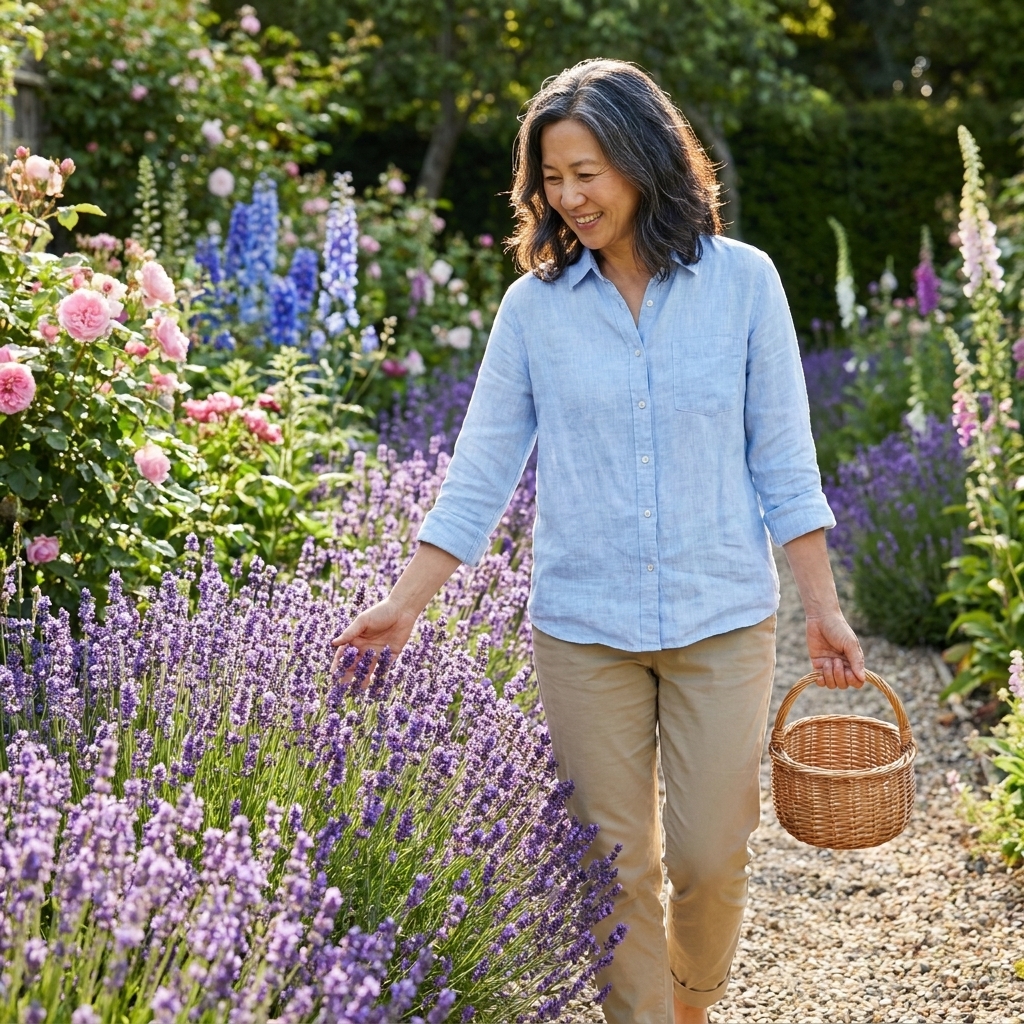
8) Lavender
Best for: supporting pollinators and adding a strongly scented border that may discourage some browsing and nuisance insects
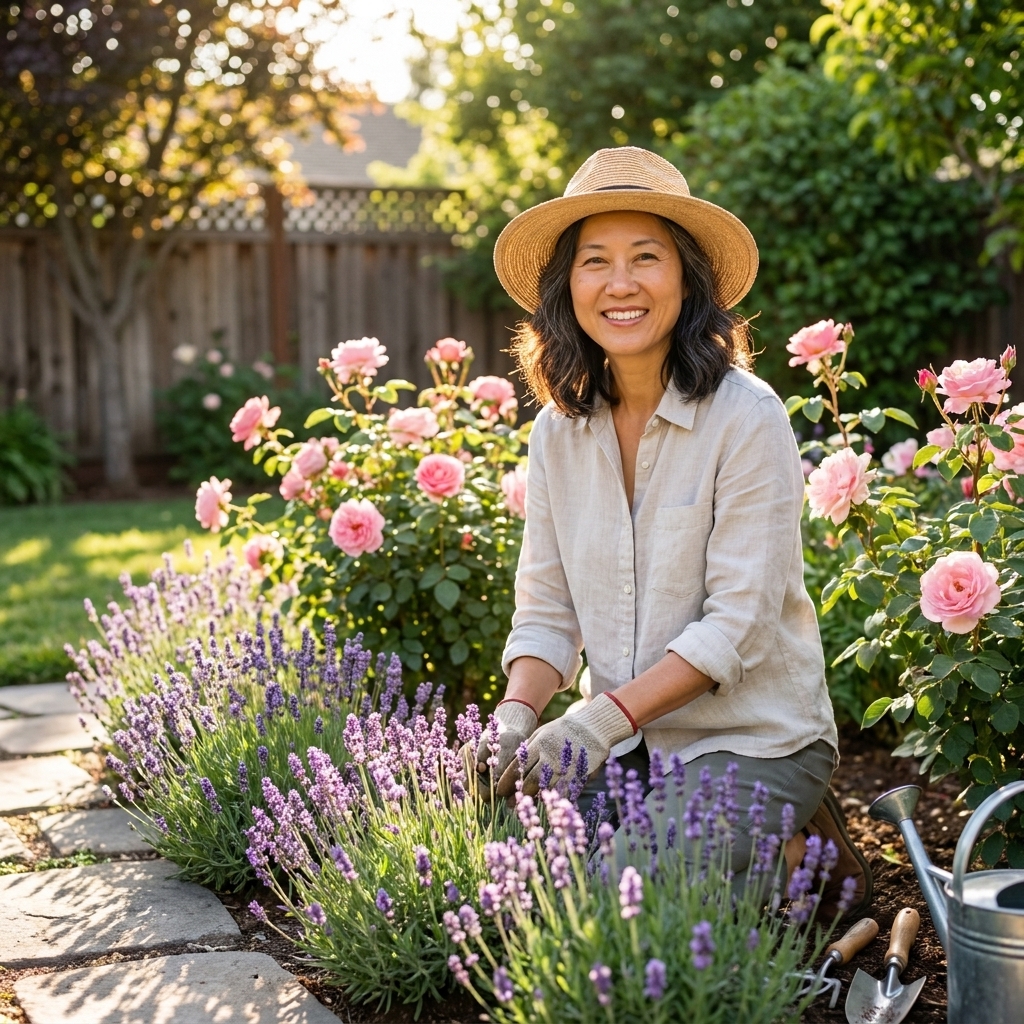
Lavender is a pest-management plant that also happens to be a mood-lifter. Its fragrance can discourage certain pests in some gardens, and it supports pollinators, which indirectly supports healthier fruit set in nearby plants. It is also often deer- and rabbit-resistant, but even that varies depending on local wildlife pressure and what else is on the menu.
Where to plant
- In full sun with sharp drainage, often as a border or along pathways.
- Near roses, where improved airflow from good spacing and pollinator traffic are a bonus.
Pairs well with
- Roses
- Mediterranean herbs (thyme, oregano, sage)
- Front-yard ornamental beds
Clara’s tip
Lavender hates wet feet. If your soil is heavy, plant it on a slight mound or in a raised bed rather than trying to “fix” the whole yard at once.
9) Catnip or catmint (Nepeta)
Best for: beneficial insect support, and general “make the bed smell less delicious” energy
Members of the Nepeta family have aromatic oils that can be off-putting to certain insects, but the day-to-day results can vary a lot. In practical terms, catmint is often the better-behaved landscape plant, while catnip is the one your neighborhood cats may schedule meetings around.
Where to plant
- Near susceptible vegetables, or as a border plant in ornamental beds.
- Keep it a little away from seedlings if your cats like to flop dramatically.
Pairs well with
- Squash and cucumbers
- Brassicas
- Perennial borders
10) Borage
Best for: pollinators and beneficial insects; may help reduce caterpillar pressure indirectly by supporting parasitoids and predators
Borage is a magnet for pollinators and beneficial insects, and its starry blue flowers are genuinely stunning up close. It can also improve the “busy ecosystem” feel of a bed, which helps keep pest outbreaks from becoming a one-note problem. In some gardens, that extra beneficial insect activity can translate to fewer issues from caterpillars like cabbage worms and tomato hornworms, but it is not a guarantee.
Where to plant
- Near tomatoes, squash, and strawberries, where pollination matters.
- Give it space. It can get large and a bit floppy.
Pairs well with
- Tomatoes
- Squash
- Strawberries
Clara’s tip
Borage self-seeds readily. If you want it again next year, let a couple of plants set seed. If you do not, deadhead before seeds mature.
Best placement
You do not need perfect geometry, but placement matters. Here are a few patterns that work in real backyards.
- Border ring: Plant aromatic companions like chives, garlic, lavender, or marigolds around the edge of a bed.
- Interplanting pockets: Tuck in small clusters of basil, dill, or alyssum every few feet.
- Trap crop edge: Place nasturtiums at the outer edge, then inspect them weekly and manage infestations there.
- Perennial “beneficial stations”: Use lavender and catmint as long-term anchors that support pollinators season after season.
Common mistakes
- Planting companions once pests are already out of control: Start companions early so they are established when pests arrive.
- Using one plant and expecting miracles: Repeat companions in clusters and mix types, especially bloomers that feed beneficials.
- Overcrowding: Dense, humid foliage invites problems like mildew and mites. Give plants breathing room.
- Letting trap crops become pest factories: Trap crops require follow-through. Prune, hose off, or remove heavily infested growth.
My backyard rule: If I am not willing to check a plant weekly, I do not assign it a “trap crop job.” That is how tiny issues become big ones.
Quick pairings
If your main concern is ornamentals rather than vegetables, try these simple combinations.
- Roses: chives + garlic + lavender
- Hydrangeas: sweet alyssum at the base for beneficial insects, plus a nearby herb pot (basil or dill) to keep the area diverse
- Perennial beds: catmint + marigolds tucked into sunny gaps, with dill or alyssum as seasonal fillers
FAQ
Do companion plants really repel pests, or do they just attract beneficial insects?
Both. Aromatic plants can confuse or deter certain pests, but the most reliable benefit is often that flowers like alyssum, dill, borage, and marigolds feed beneficial insects that hunt pests for you.
How close do companions need to be?
Close enough that their scent and flowers are part of the same “plant neighborhood.” In most gardens, that means in the same bed, bordering the bed, or in containers within a few feet.
Will companion planting replace spraying entirely?
Sometimes, but not always. Think of companion planting as prevention and pressure reduction. If an outbreak happens, targeted interventions like hand-picking, strong water sprays, insecticidal soap, or pruning can still be part of an organic plan.
If you do use insecticidal soap, aim for dusk or early morning, avoid spraying open blooms, and follow the label. Your pollinators are part of your pest plan too.
What is the easiest companion plant for beginners?
Marigolds and sweet alyssum are wonderfully forgiving. Nasturtiums are also easy, as long as you are comfortable treating them as a monitored decoy rather than a set-it-and-forget-it solution.
Any climate or timing gotchas?
Yes, a few. Basil hates cold nights, so do not rush it. Lavender and catmint are perennials in many regions but not all, and they demand sun and drainage. Borage is an enthusiastic self-seeder, so decide whether you want “surprise borage” next spring.
A simple start
If you do nothing else this season, try this low-effort trio: marigolds for general support, sweet alyssum for beneficial insects, and chives or garlic near your most aphid-prone plants. Then watch what changes. The garden will teach you the rest, and it is very forgiving of beginners who show up consistently.
If you want to stack the odds even more, add one non-plant habit: a two-minute weekly scout. Flip a few leaves, check new growth, and look for tiny problems before they get big. That is the calm version of IPM, and it pairs beautifully with companion planting.
That is the part I always come back to, usually with Barnaby nosing around my kneeling pad: the goal is not perfection. The goal is a living, resilient backyard that gets easier every year.