Companion planting is basically the garden version of good neighbors: the right plants make life easier for each other. Some attract pollinators, some make it harder for certain pests to locate their favorite plants, some shade roots, and others feed the soil. When you design beds with those relationships in mind, you end up with shrubs and flowers that look better with less fuss.
Below are several ready-to-use garden layouts you can copy into your own yard, plus the simple rules I use when I am sketching a bed on the back of an envelope while Barnaby supervises from a sunny patch of lawn.
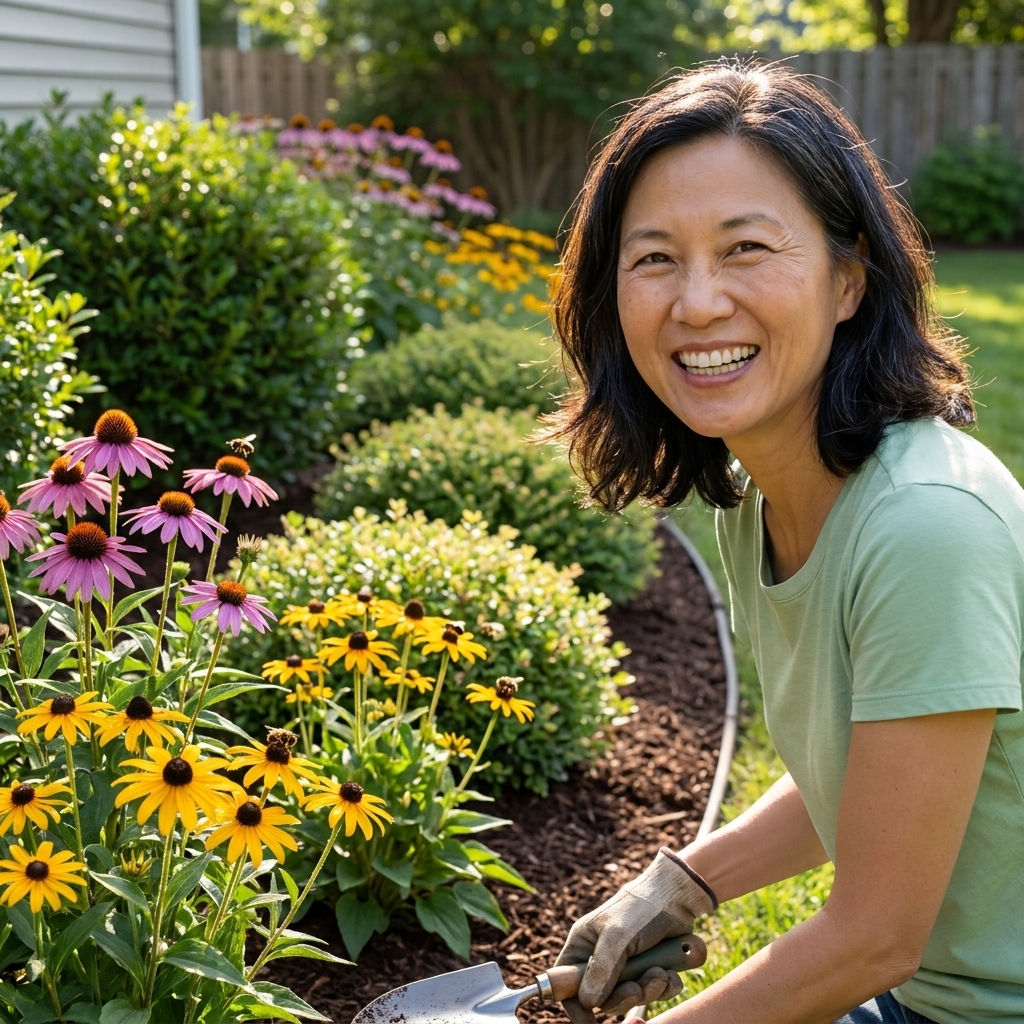
Companion planting for shrubs and flowers
Most companion planting advice is aimed at vegetables, but ornamental beds benefit just as much. In shrub and flower borders, companions usually help in four practical ways:
- Pest pressure can drop because aromatic plants and diverse blooms can make it harder for some pests to locate host plants and can bring in predators.
- Soil can improve through living roots, leaf litter, and less bare ground. If you include nitrogen-fixers (like baptisia, lupine, or other legumes suited to your region), you can add that benefit too.
- Plant stress is lower thanks to shade at the soil surface, steadier moisture, and less competition from weeds.
- Bloom time stretches because you intentionally mix early, mid, and late season flowers around structural shrubs.
Think of your shrubs as the furniture and your companion plants as the lighting, rugs, and cozy throw blankets. Everything looks more intentional, and it feels nicer to live with.
Before you pick a layout: 5 rules
1) Match sun and water first
No companion trick will make a shade lover happy in full sun. Group plants by light needs and similar watering habits, then fine-tune with companions.
2) Layer by height
A simple, reliable structure is shrubs in back (or center), mid-height perennials in front, then low edging plants. This reduces shading battles and makes weeding less annoying.
Quick note on “back”: These layouts assume a single-sided bed (fence, hedge, or house behind it). If you are planting an island bed you walk around, put the “back row” shrubs in the center instead.
3) Aim for always-blooming pockets
In each 4 to 6 foot stretch, try to include at least two bloom seasons. A spring bloomer plus a summer bloomer can carry a bed surprisingly far.
4) Include an insectary strip
Beneficial insects need tiny flowers, not just big showy ones. Tuck in plants like sweet alyssum, yarrow, or dill (ornamental beds can handle a little whimsy) where you have room.
5) Leave breathing room for shrubs
Most shrubs fail slowly because we crowd their root zone with thirsty plants. As a starting point, keep a 12 to 24 inch low-competition ring around young shrubs. Fill it with mulch or shallow-rooted groundcovers once the shrub is established.
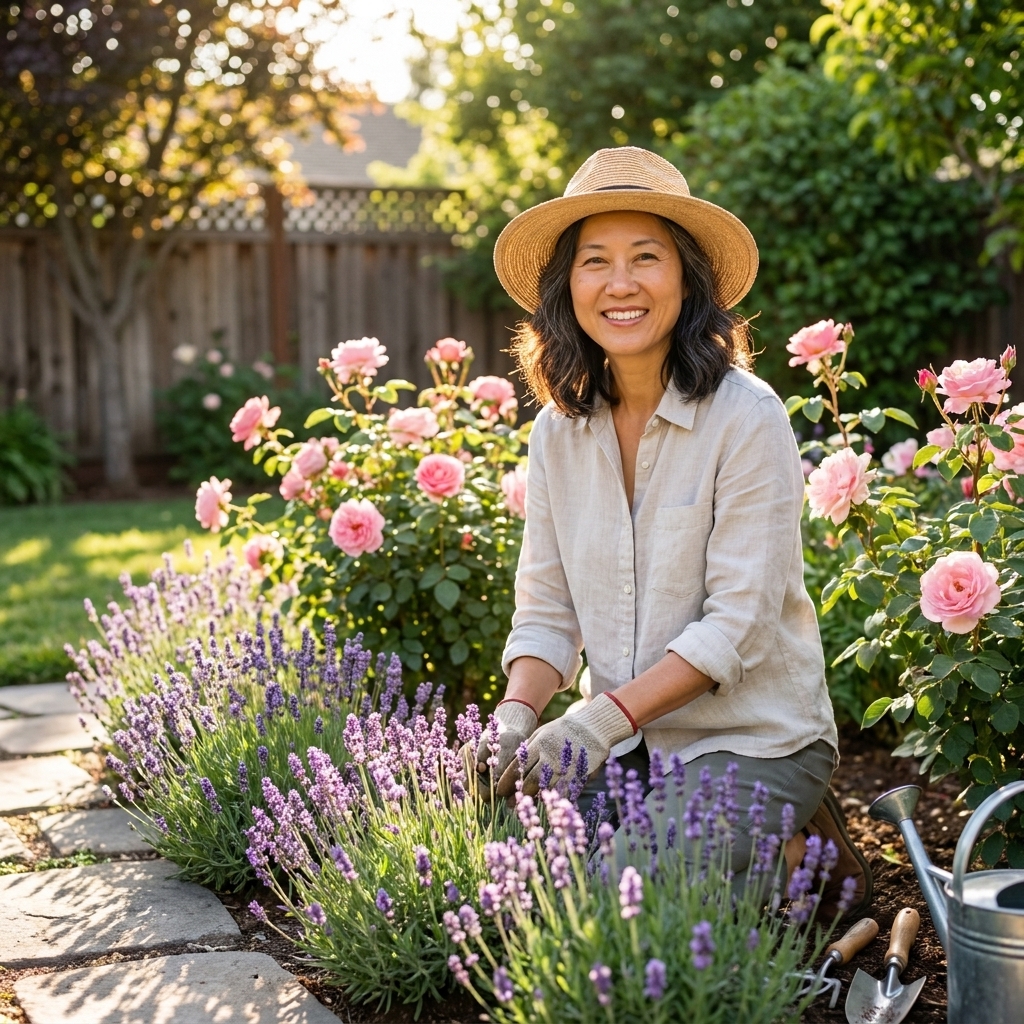
Layout 1: Rose health bed
Best for: sunny beds, 6+ hours of sun, moderate fertility, good airflow
The idea: Pair roses with companions that attract ladybugs and lacewings, discourage aphids, and keep soil splash (a big driver of black spot spread) down. It will not make roses invincible, but it can help reduce the usual headaches.
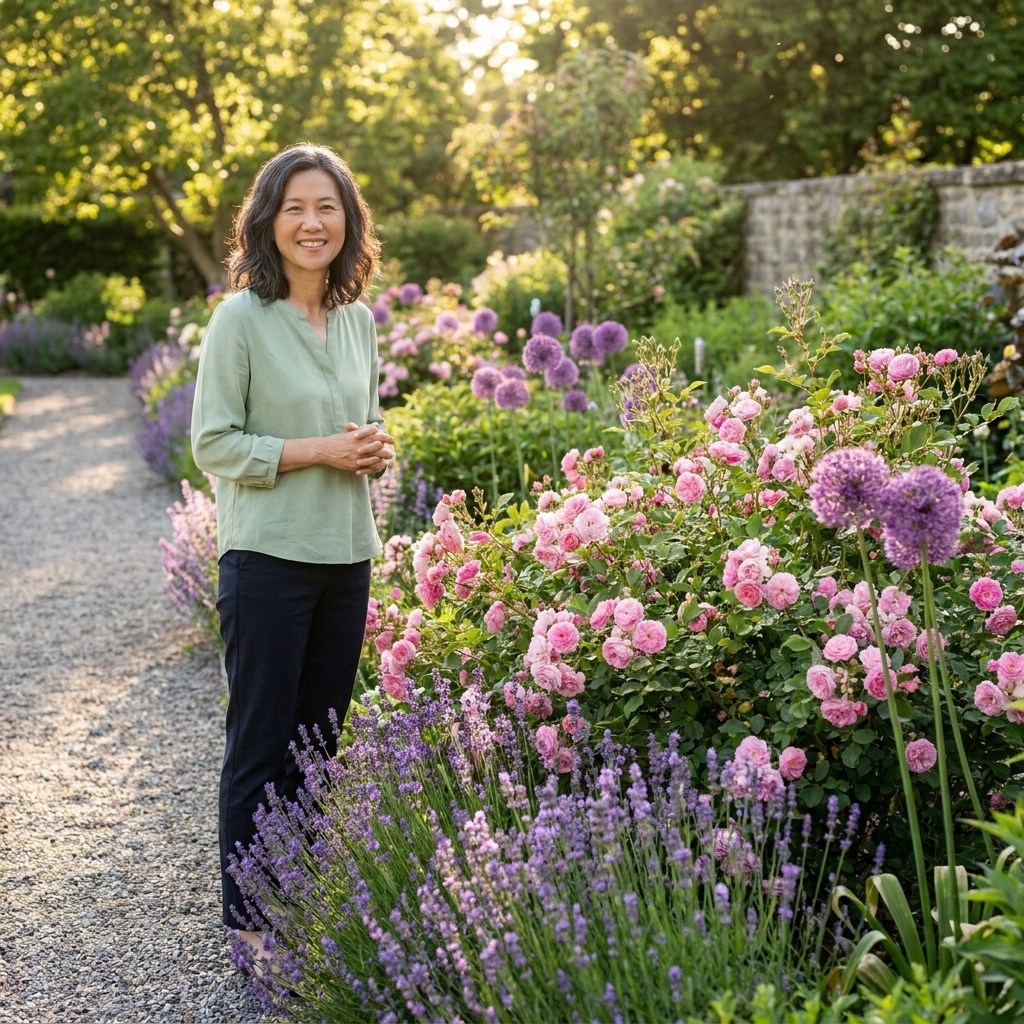
Plant list
- Anchor shrub: Shrub rose or floribunda rose (choose disease-resistant varieties whenever possible)
- Pest-confusing aromatic companions: Lavender, catmint (Nepeta), chives
- Beneficial insect magnets: Sweet alyssum, yarrow
- Vertical accents: Alliums (ornamental onions)
- Living mulch: Creeping thyme (in drier edges) or low sedum
How to place it (a 6 ft x 8 ft bed)
- Back row: 2 to 3 roses spaced for airflow. Check mature width, but many shrub roses land around 3 to 5 feet apart.
- Mid layer: A drift of lavender or catmint in front of roses (think soft mounds that hide bare rose ankles).
- Front edge: A ribbon of sweet alyssum and creeping thyme to reduce soil splash and invite hoverflies.
- Punctuation: Cluster alliums in groups of 3 to 5 for that “designed” look.
Note from the compost bin of past mistakes: Skip overhead watering if you can. A soaker hose plus a mulch layer does more for rose health than most sprays.
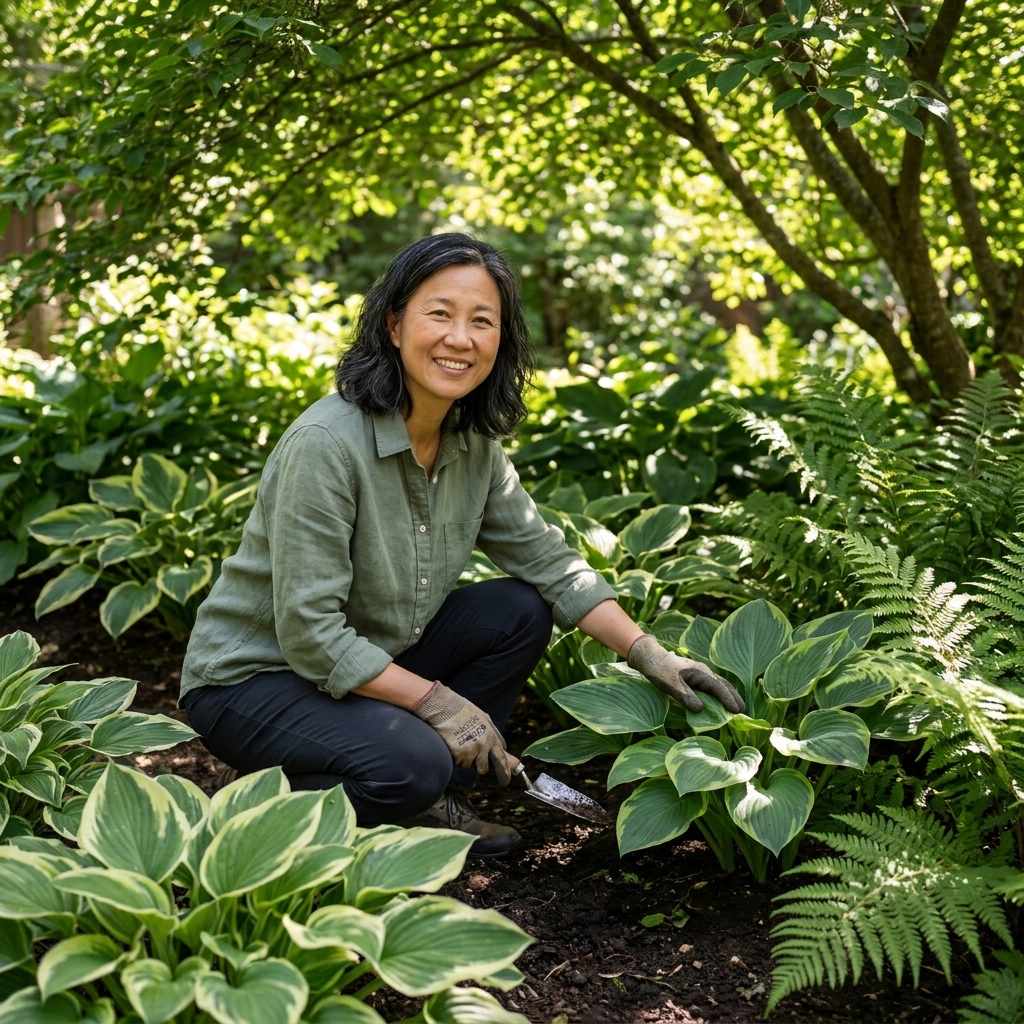
Layout 2: Hydrangea shade border
Best for: part shade to bright shade, evenly moist soil
The idea: Hydrangeas love consistent moisture. Pair them with shade-tolerant companions that protect soil, support pollinators, and make the bed less appealing to common nibblers like slugs.
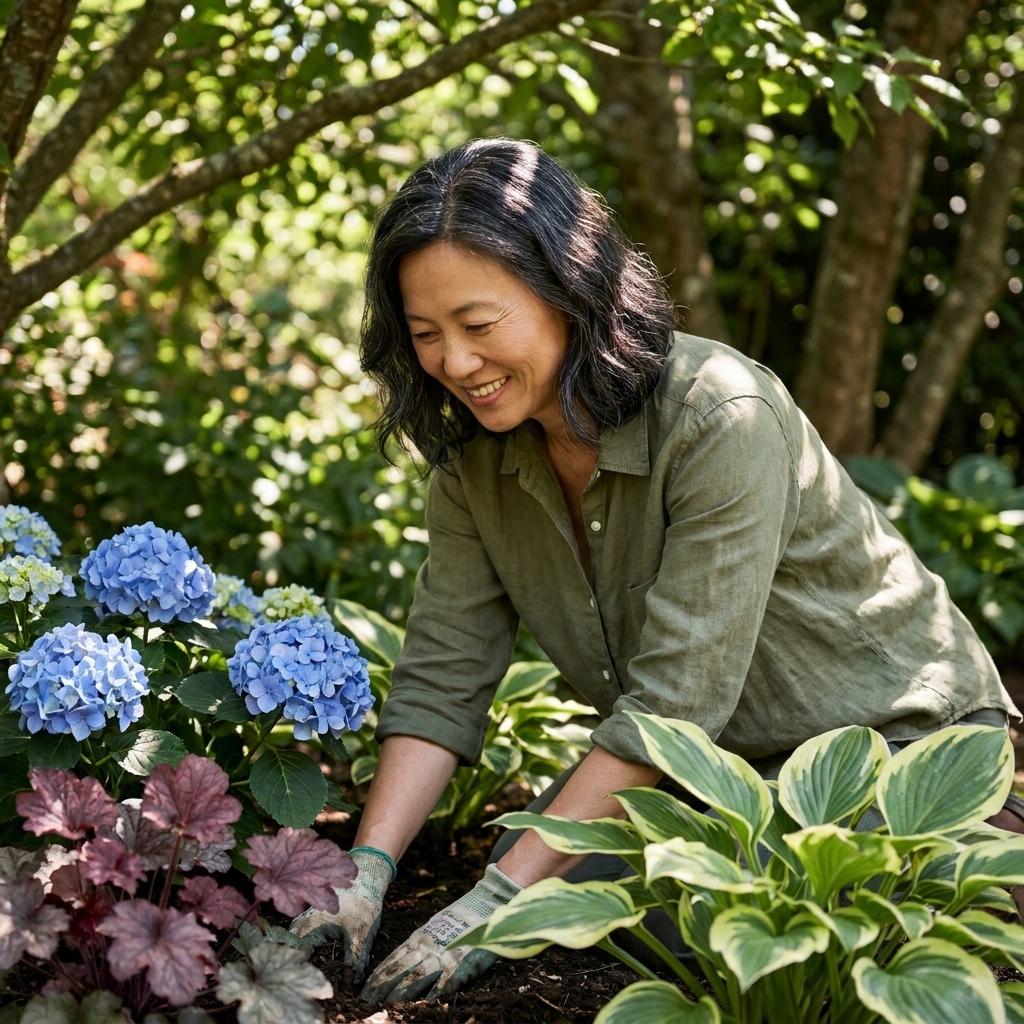
Plant list
- Anchor shrub: Bigleaf hydrangea (Hydrangea macrophylla) or smooth hydrangea (H. arborescens) depending on winter cold
- Less slug-prone picks for many gardens: Ferns (Japanese painted fern, lady fern)
- Moisture-loving fillers: Astilbe (beautiful, but still a possible snack in some slug-heavy yards)
- Color and foliage contrast: Heuchera (coral bells), brunnera
- Pollinator support in shade: Foamflower (Tiarella), woodland phlox
- Groundcover living mulch: Sweet woodruff or wild ginger (only where appropriate and non-invasive in your region)
How to place it (a 4 ft x 12 ft border)
- Back layer: Hydrangeas spaced so mature plants barely touch. Always double-check the mature width on the tag, because hydrangeas have big opinions about personal space.
- Middle: Alternate heuchera and ferns for a “woven” look, then tuck astilbe in small clumps where you want extra bloom.
- Front edge: A groundcover strip to keep soil cool and reduce watering swings.
Slug strategy that actually helps: Keep mulch pulled back an inch or two from the crowns of slug-prone plants, water in the morning, and use iron phosphate bait if damage is consistent. Companion planting helps, but slugs are stubborn little librarians who always find the buffet.
Layout 3: Lavender pollinator bed
Best for: full sun, well-drained soil, hot spots along driveways or sidewalks
The idea: Build a Mediterranean-style community. The companions here thrive on lean soil, discourage many soft-bodied pests through aromatic foliage, and keep pollinators working your yard all season.
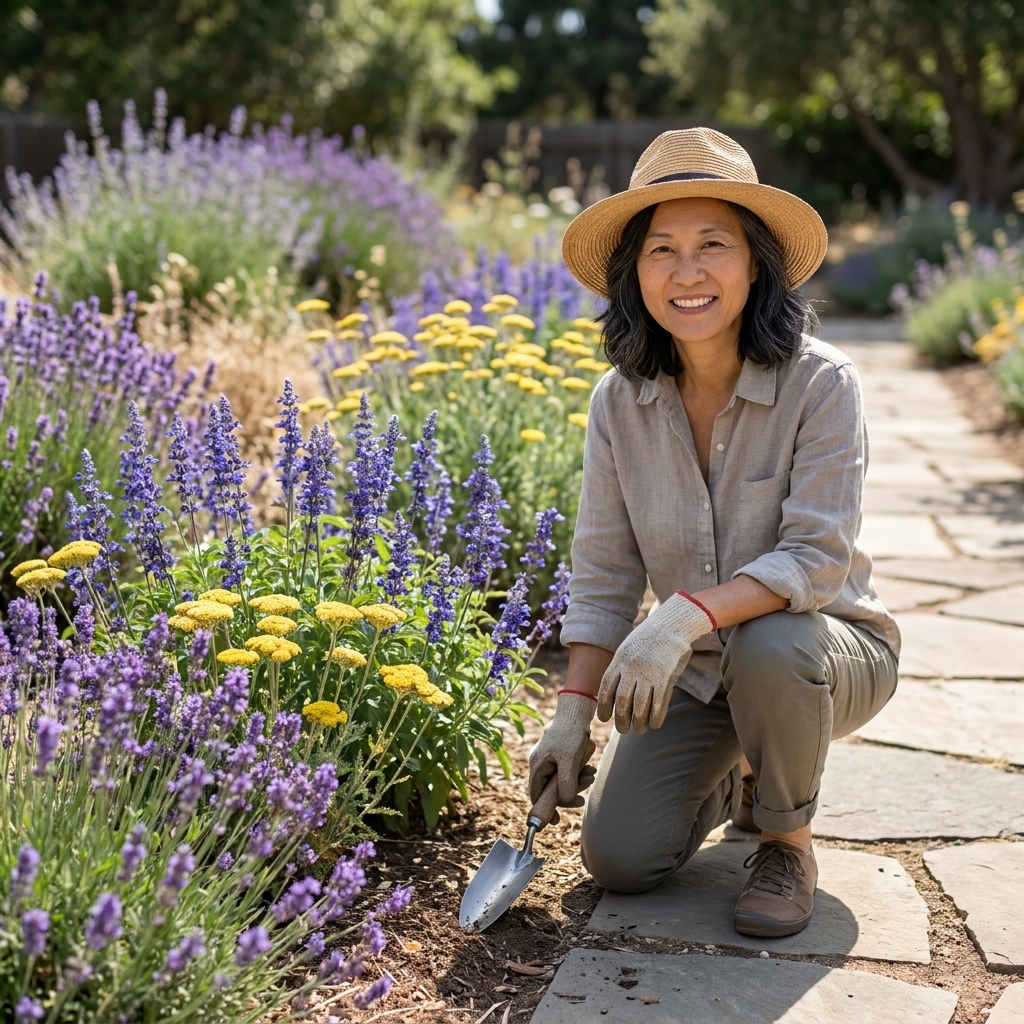
Plant list
- Anchor options: Lavender (Lavandula) or a compact rosemary where hardy. Lavender is usually treated as a perennial or subshrub, and rosemary is only reliably hardy in milder zones, so pick cultivars suited to your climate.
- Bee and beneficial favorites: Salvia (perennial), yarrow, oregano (flowering oregano is a pollinator party)
- Long bloom support: Gaura, coreopsis
- Weed-suppressing edge: Creeping thyme or low sedum
How to place it (a 5 ft x 10 ft bed)
- Center/back: Lavender in repeating clusters for rhythm (odd numbers look natural).
- Mid layer: Salvia and yarrow alternating for long bloom and predator insects.
- Edge: Creeping thyme to spill slightly over the border and shade soil.
Important: Lavender hates wet feet. If your soil stays soggy, choose different anchors (like inkberry holly in moisture, or dwarf ninebark in average soil) instead of trying to force lavender to tolerate a bathtub.
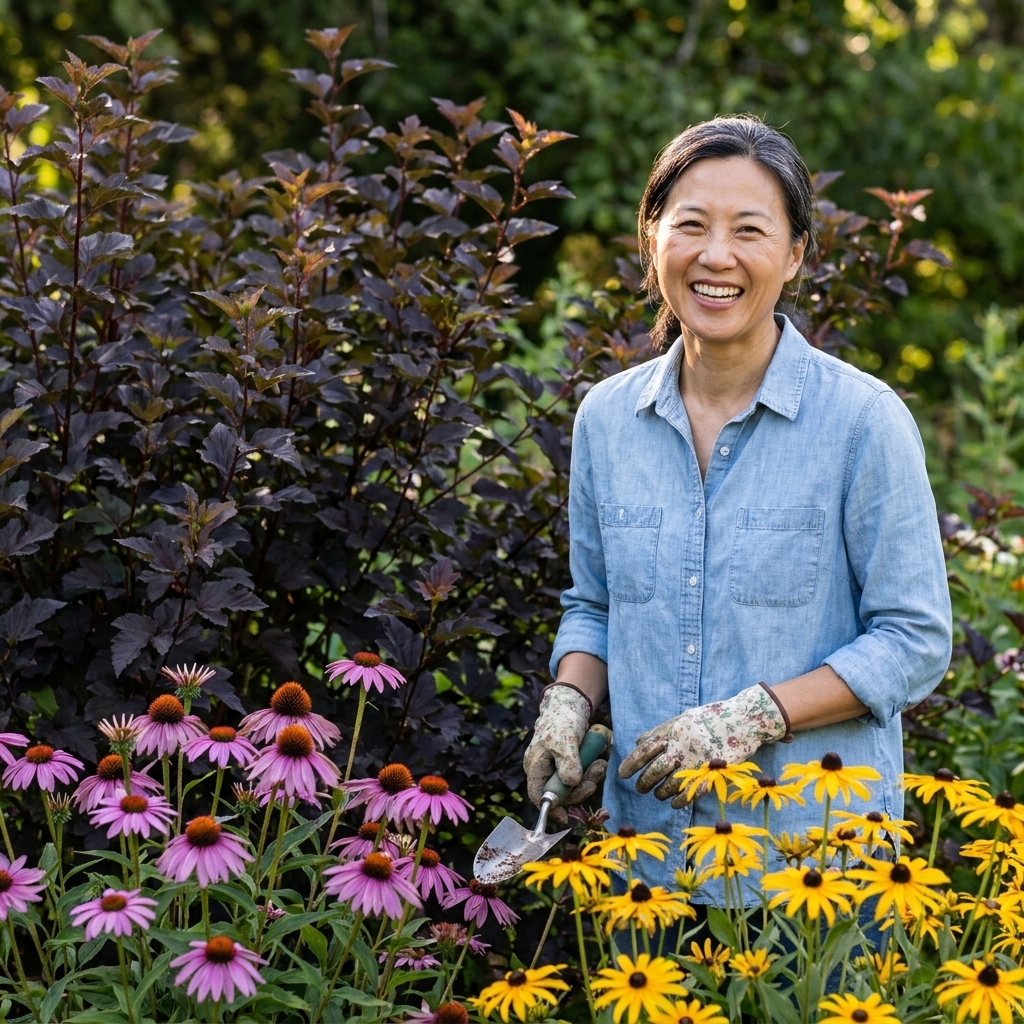
Layout 4: Ninebark pest patrol border
Best for: full sun to part sun, average soil, homeowners who want low-maintenance structure
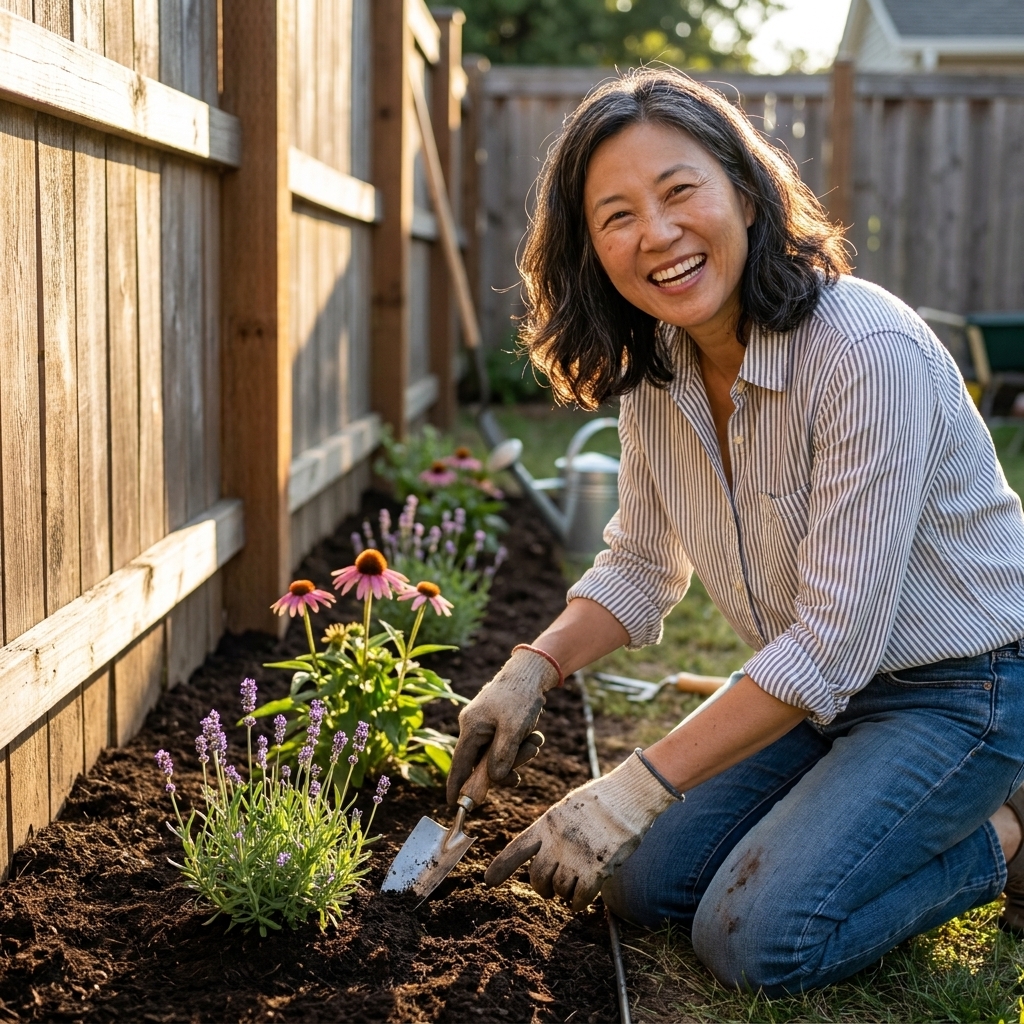
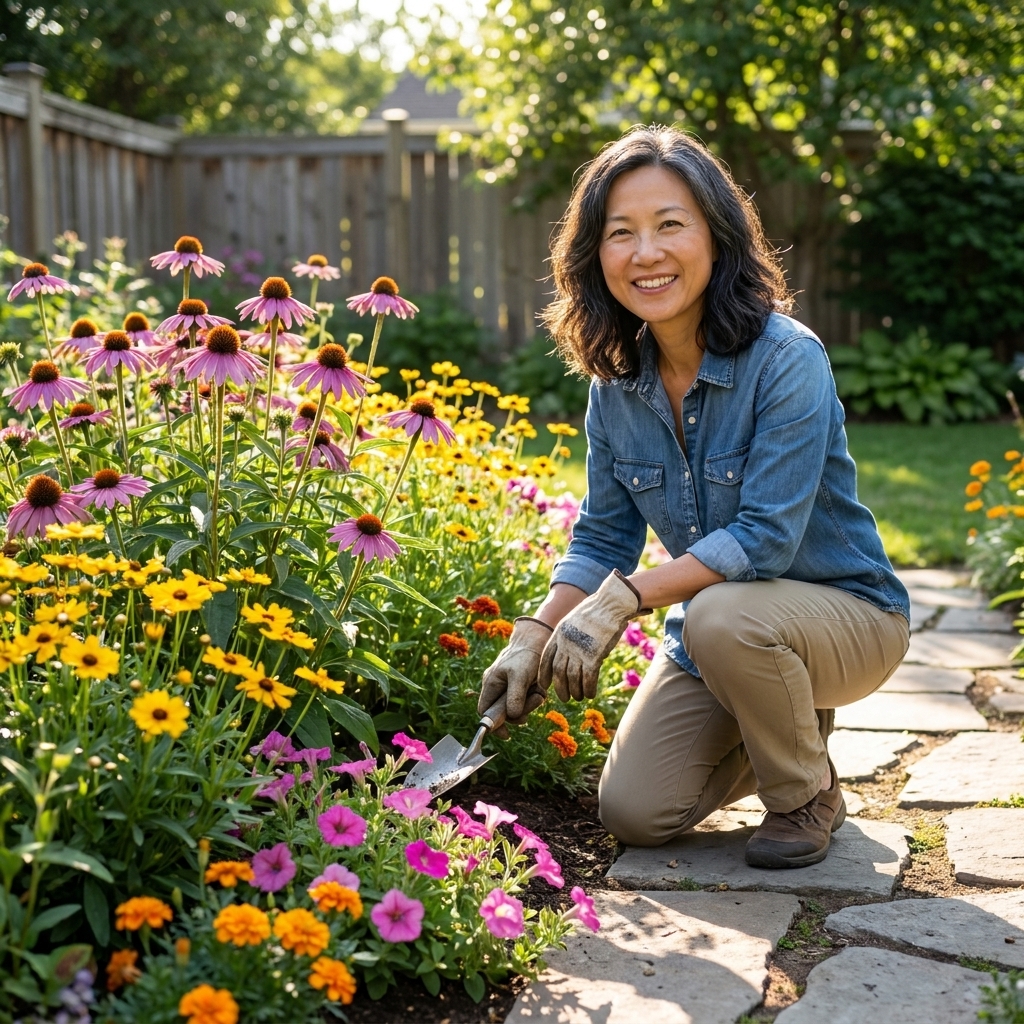
The idea: Choose a resilient flowering shrub, then surround it with natives and near-natives that feed beneficial insects. This is one of my favorite styles for beginners because it forgives missed waterings and still looks intentional.
Plant list
- Anchor shrub: Ninebark (Physocarpus opulifolius)
- Summer bloom workhorses: Coneflower (Echinacea), black-eyed Susan (Rudbeckia)
- Beneficial insect boosters: Mountain mint (Pycnanthemum), yarrow
- Fall finish: Asters (choose regionally appropriate varieties)
- Early season support: Penstemon or columbine, depending on sun and region
How to place it (a 6 ft x 12 ft bed)
- Back layer: 2 ninebarks as the backbone.
- Mid layer: Drifts of coneflower and rudbeckia in front, repeated twice for cohesion.
- Pockets: Mountain mint tucked in clumps. It can spread by rhizomes, so give it room, edge it, or treat it like the friendly guest who still needs a boundary.
- Front/edge: Low yarrow or a shorter aster to keep the border tidy.
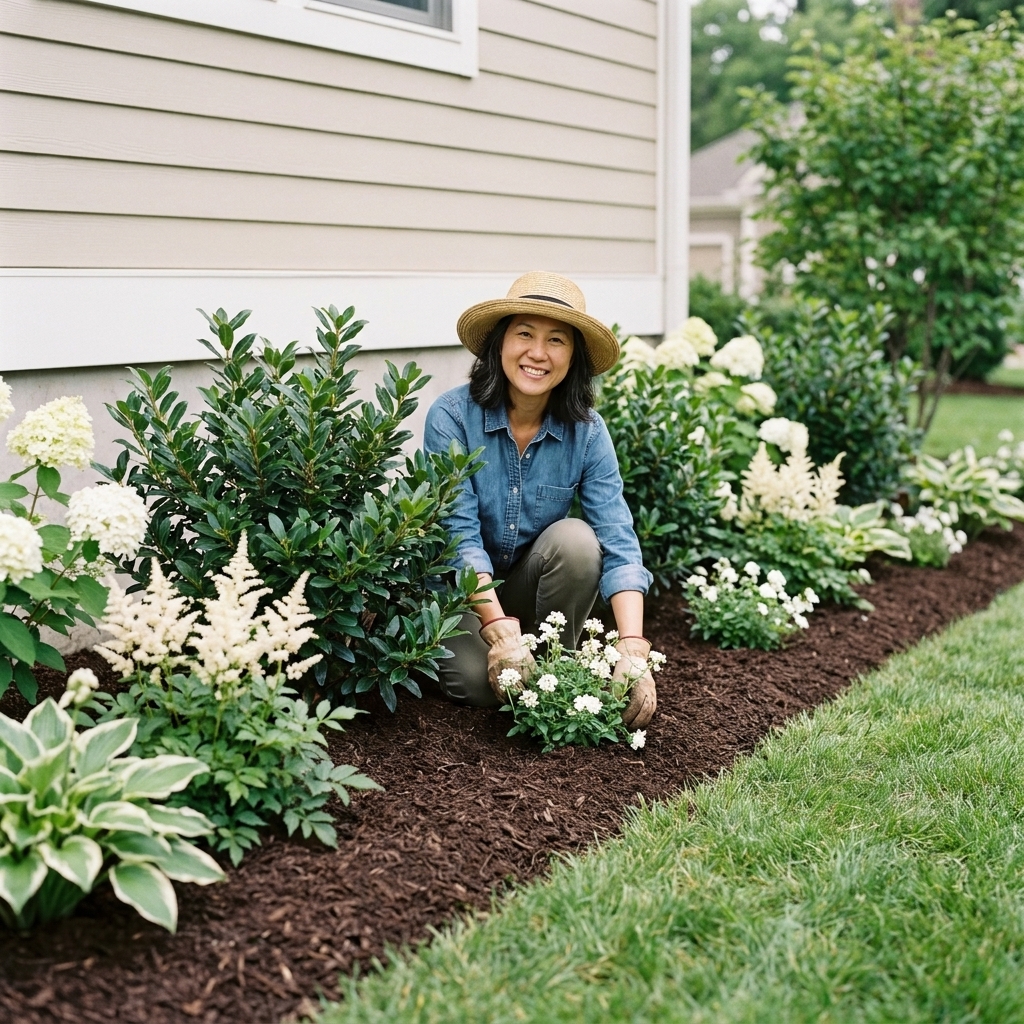
Layout 5: Boxwood alternative bed
Best for: foundation beds, walkways, spots where you want evergreen structure but also want flowers and beneficial insects
The idea: Traditional boxwoods can be high-maintenance in some regions due to pests and blight. If you use hardy alternatives, companions can fill in seasonal color while keeping the bed biologically active.
Plant list
- Anchor shrub options: Inkberry holly (Ilex glabra), dwarf yaupon holly (Ilex vomitoria) where appropriate, or compact arborvitae in colder zones
- Softening perennials: Catmint, salvia, hardy geranium
- Beneficial insect strip: Sweet alyssum or yarrow
- Spring bulbs: Crocus and daffodils (daffs resist rodents better than many bulbs, though nothing is 100 percent)
How to place it (a 3 ft x 15 ft foundation strip)
- Evergreen rhythm: Place shrubs evenly for repetition.
- Seasonal fill: Plant perennials between shrubs, leaving a small open ring at the base of shrubs for airflow.
- Front edge: Low alyssum or geranium to reduce weeds and add bloom.
Foundation bed tip: Avoid piling mulch against shrub stems. A mulch volcano is basically an invitation for rot and pests.
Quick pairings for common shrubs
If you already have shrubs in place and just want smart underplanting, start here.
- Roses: lavender, catmint (Nepeta), chives, sweet alyssum, allium
- Hydrangeas: heuchera, ferns, brunnera, foamflower (Tiarella), woodland phlox
- Lilacs: salvia, nepeta, yarrow, spring bulbs (for early color before lilac leaf-out)
- Spirea: coneflower, coreopsis, asters, oregano
- Ninebark: rudbeckia, echinacea, mountain mint (Pycnanthemum), asters
- Evergreen hollies: hardy geranium, sweet alyssum, spring bulbs, low sedum (sun-dependent)
How to scale these layouts
If you have a small bed
Use one anchor shrub and 3 to 5 companion species. Repetition is what makes small spaces look calm, not busy. A tidy, repeated drift of catmint is more convincing than twelve one-of-everything plants.
If you have a large border
Repeat the same layout modules like tiles. For example, repeat “rose + lavender + alyssum” every 6 to 8 feet. Your eye reads repetition as design, even if you planted it in sneakers with a shovel at dusk.
If you garden in containers
Companion planting still works, just on a smaller scale. Pair a compact shrub or perennial with an aromatic spiller and a pollinator-friendly filler. Keep container combos simple because roots compete faster in pots.
Common mistakes (and fixes)
- Mistake: Picking companions that outcompete the shrub.
Fix: Keep aggressive spreaders in check, and leave a breathing ring around young shrubs. - Mistake: Mixing plants with opposite water needs.
Fix: Group by moisture first, then choose companions from that group. - Mistake: Planting for flowers but forgetting foliage.
Fix: Use at least one foliage plant (heuchera, ferns, grasses) per bed section for a “full” look even when blooms pause. - Mistake: Relying on companions instead of plant health basics.
Fix: Mulch, water correctly, and choose disease-resistant varieties. Companions support, they do not perform miracles.
Regional notes
A quick, practical caution before you fall in love with a plant list: a few classic companions can act differently depending on where you garden.
- Check invasiveness by region: sweet woodruff, some oreganos, and any mint-family plant can get pushy in the wrong spot. Choose well-behaved cultivars or contain them.
- Expect self-seeding: dill and sweet alyssum often reseed. If you love a tidy look, deadhead. If you love free plants, look the other way.
- Go native when you can: swapping in regionally native alternatives usually boosts resilience and pollinator value.
Simple maintenance timing
- Deadheading: Deadhead for longer bloom and a tidier bed, especially on things like salvia and coreopsis.
- Seedheads: Consider leaving coneflower and rudbeckia seedheads into fall for birds, then cut back in late winter or early spring.
- Spreader control: For enthusiastic plants (mountain mint, oregano, some groundcovers), edge once or twice a season or lift and share clumps before they take over the conversation.
FAQ
Does companion planting really deter pests in ornamental beds?
It can reduce pest pressure, especially for soft-bodied pests like aphids, by attracting predators and making it harder for pests to zero in on host plants. Results vary, and it works best as part of a bigger approach: diverse plantings, healthy soil, and good watering habits.
How close should I plant companions to shrubs?
Close enough to shade soil and fill gaps, but not so close that the shrub crown stays damp. For most shrubs, start with 12 to 24 inches of open space around the base while the shrub establishes. You can gradually underplant more as it matures.
What companions help with mosquitoes?
No plant reliably repels mosquitoes across a yard, despite what plant tags suggest. The better approach is habitat management: remove standing water, encourage predators like dragonflies, and use fans in seating areas. That said, pollinator-rich beds do support a healthier food web overall.
Can I use herbs as companions in flower beds?
Absolutely. Chives, oregano, thyme, and sage can be excellent companions if your bed has the right sun and drainage. Just be mindful that some herbs spread, and many prefer leaner soil than lush ornamental perennials.
A gentle way to start
If you feel overwhelmed, pick one anchor shrub you already have and add just three companions: one aromatic plant (like lavender or catmint), one small-flowered beneficial insect plant (like sweet alyssum or yarrow), and one groundcover to shade soil. That tiny trio can noticeably change how your bed behaves over the season.
And if something flops, congratulations. You are officially gardening. The compost bin has room for all of us.