One of my favorite gardening skills is also the least glamorous: standing in the yard squinting at leaves like they are trying to tell me a secret. The good news is, they usually are. Leaf color, patterning, and new growth habits can offer strong clues about what a plant is missing or what it cannot access. Just keep in mind that spots and blotches are often caused by pests, disease, or weather stress, not a clean nutrient “signature.”
This guide focuses on three of the most common nutrient-related culprits behind yellowing and stressed new growth: nitrogen, iron, and calcium. I will show you what to look for, how to confirm it, and the quickest ways to help your plants recover without turning your garden into a chemistry experiment.
First, diagnose like a calm detective
Before you add anything to the soil, take 60 seconds to narrow the problem. This prevents the classic beginner move of treating the wrong issue and making it worse.
Ask these three questions
- Which leaves are affected? Older leaves first often indicates a mobile nutrient issue like nitrogen. New leaves first often points to immobile nutrients like calcium or to iron availability problems.
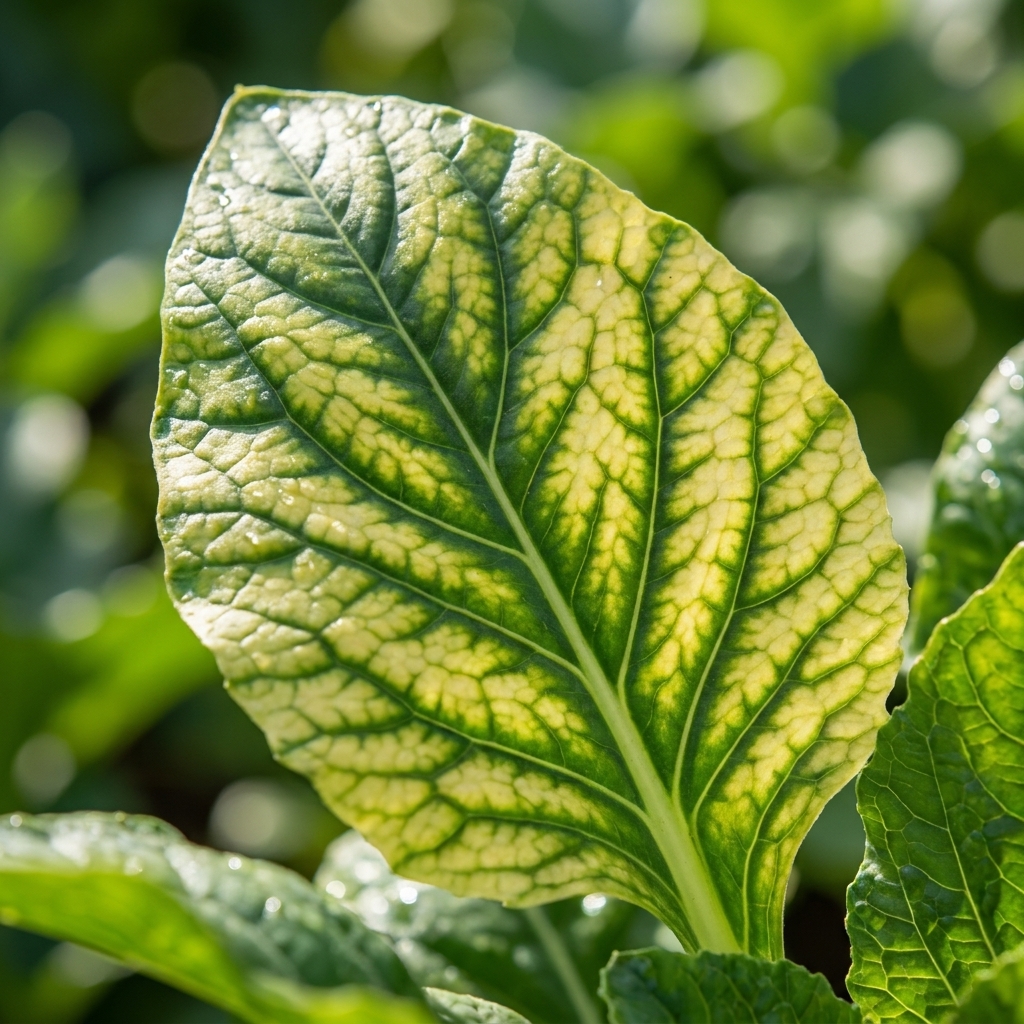
- Is it the whole leaf or between the veins? Uniform yellowing suggests nitrogen. Yellowing between veins with green veins often suggests iron chlorosis.
- Any distortion or dead tips? Misshapen new leaves, blossom end rot, or crispy margins can indicate calcium problems.
Rule out the look-alikes
- Overwatering: Can cause general yellowing and limp growth. Soil stays wet, and roots can smell sour.
- Underwatering: Often shows as dull color plus crispy edges and droop that improves after watering.
- Pests: Mites and thrips can cause stippling that mimics spotting. Flip leaves over and look for tiny moving specks.
- Leaf spot diseases: If spots spread quickly, show halos or concentric rings, or you see lesions on stems, think disease management first (sanitation, airflow, splash control) rather than fertilizer.
- Cold nights or heat spikes: Can temporarily pale leaves, especially on tomatoes and peppers.
Nitrogen deficiency
Nitrogen is the engine behind leafy growth. When a plant is short on it, it starts “stealing” nitrogen from older leaves to feed newer growth. That is why the earliest symptoms usually show up low on the plant.
What it looks like
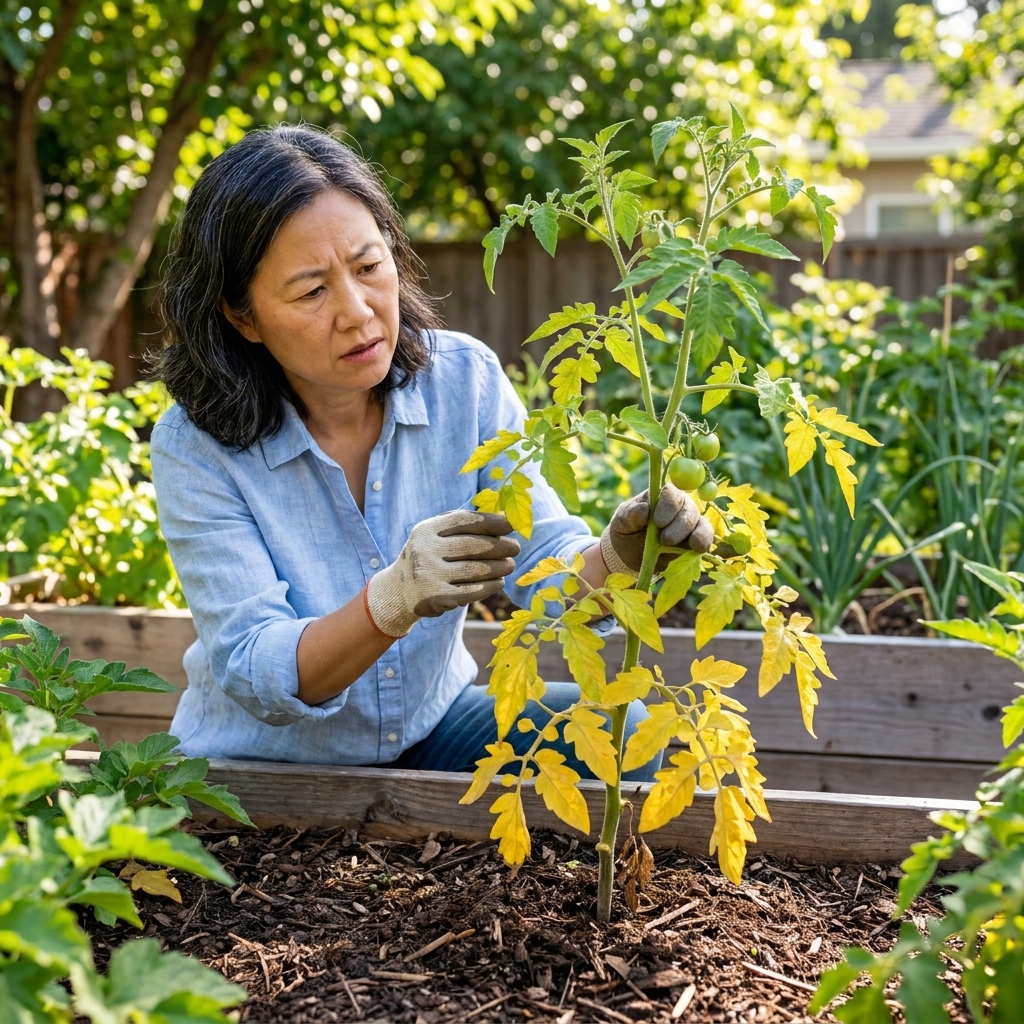
- Older, lower leaves turn pale green, then yellow, often fairly uniform across the whole leaf.
- Overall slow growth and smaller leaves.
- Early leaf drop on stressed plants.
Common in: container plants, heavy feeders (corn, leafy greens, tomatoes), beds with fresh wood chips mixed into soil, and gardens after lots of rain (nitrogen leaches).
Quick solutions for nitrogen
1) Water in a gentle, fast-acting feed
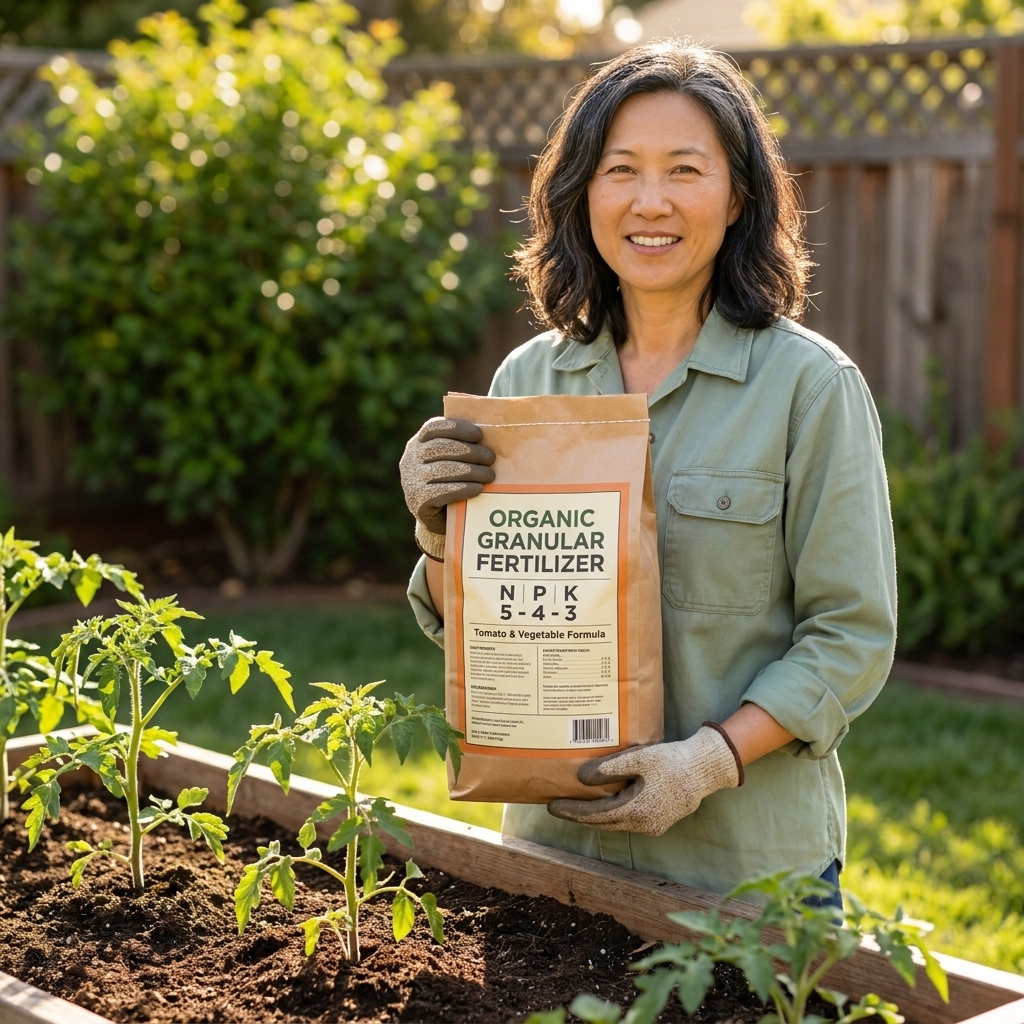
- Fish emulsion (diluted per label) works quickly and has a lower risk of overapplication when used correctly.
- Compost tea or worm casting tea can provide a mild nutrient boost. Results vary a lot by how it is made and applied, so I treat it as a gentle feed, not a guaranteed microbial miracle.
Timing tip: In warm weather and active growth, you will often see greener new growth in about a week or two after a quick feed. Yellow leaves rarely turn fully green again, so watch the new leaves for improvement.
2) Add a slow-release nitrogen source
- Compost: top-dress 1 to 2 inches around plants.
- Alfalfa meal or soybean meal: good organic options for steady feeding.
- Blood meal: works fast but can be too strong if you are heavy-handed, and it can attract critters in some areas.
3) Adjust your habits to prevent repeats
- Mulch with finished compost under straw or leaf mulch rather than mixing raw woody material into soil.
- For containers, plan on regular feeding. Potting mixes hold fewer nutrients long-term.
- Do not over-fertilize. Excess nitrogen can mean gorgeous leaves and disappointing flowers or fruit.
Iron deficiency (iron chlorosis)
Iron deficiency is sneaky because the soil can contain iron, but the plant still cannot use it. The most common reason is high soil pH (alkaline conditions) or weak root function from cool, waterlogged, or compacted soil. Bicarbonates in irrigation water and excess phosphorus can also make iron harder for plants to access.
What it looks like
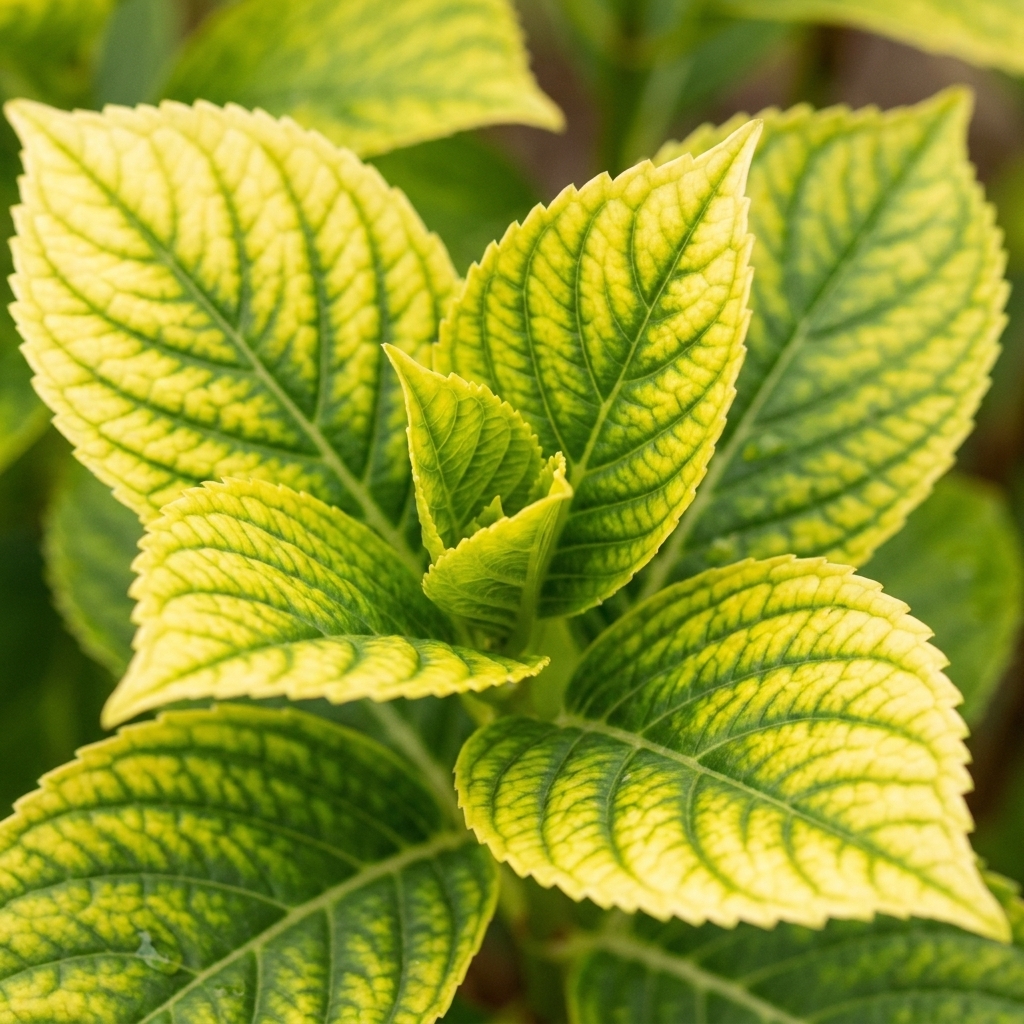
- New leaves turn yellow between the veins while the veins stay green (interveinal chlorosis).
- In worse cases, leaves can look almost creamy-white, and edges may scorch.
- Symptoms show at the top of the plant first because iron is not easily moved from old leaves to new ones.
Common in: blueberries grown in the wrong soil, hydrangeas, citrus, roses, gardenias, and many plants in regions with alkaline water or calcareous soils.
Quick look-alike check: If you see interveinal yellowing mostly on older leaves first, magnesium deficiency is a common suspect. Iron usually hits the newest growth first.
Quick solutions for iron
1) Check pH before you chase iron
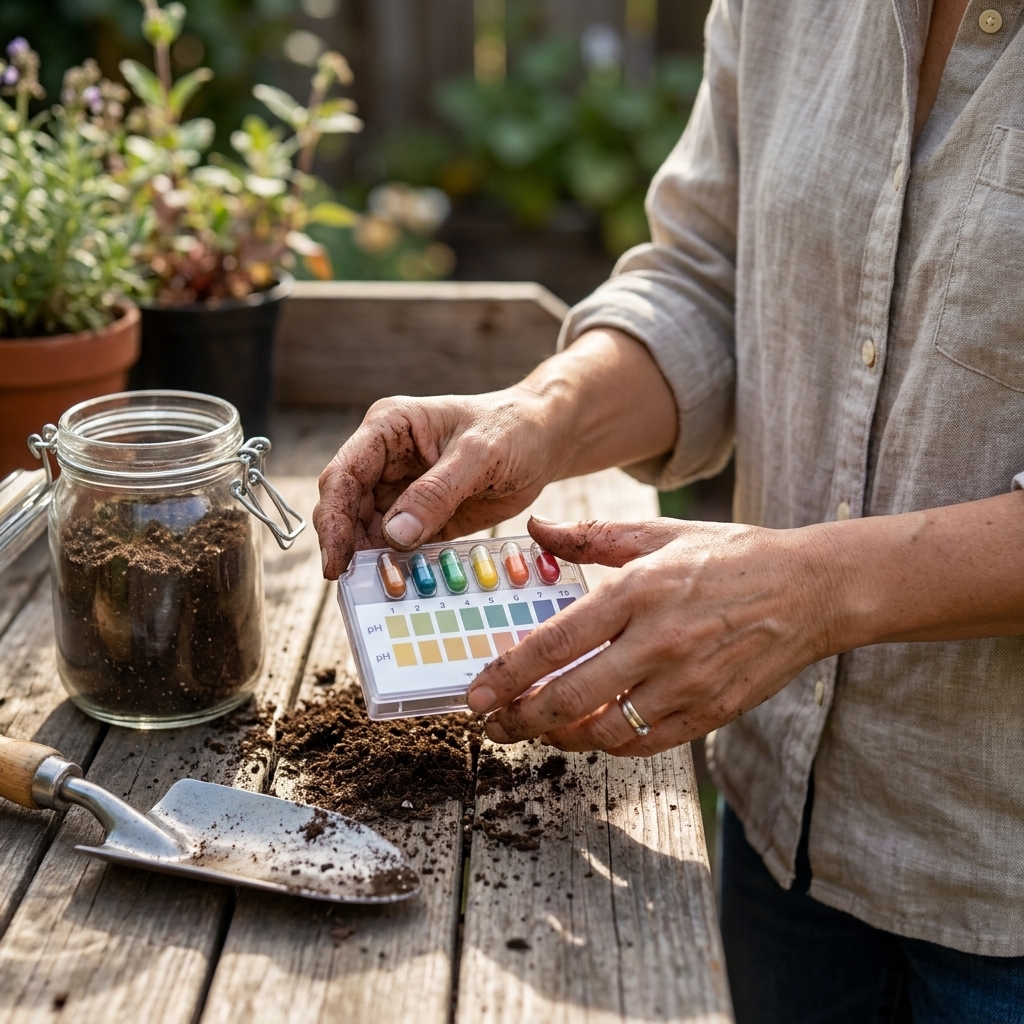
If you can, do a simple soil test or use a pH meter. Iron issues often improve only when you address the underlying pH and root conditions. If you are sending a sample to a lab, ask for basic pH plus a standard nutrient panel (macros and micros). Nitrogen in particular can be tricky because soil nitrate shifts quickly with weather and watering.
- Most garden plants: often do best somewhere around pH 6.0 to 7.0, with plenty of exceptions.
- Acid lovers (blueberries, many azaleas): generally prefer more acidic soil, roughly pH 4.5 to 5.5 for blueberries and often around 5.0 to 6.0 for azaleas depending on the type.
2) Use chelated iron for a quick fix
For a fast response, use chelated iron as a soil drench (and sometimes as a foliar spray if the product allows). Chelated forms stay available longer, especially in higher pH soils.
- In alkaline or calcareous soil, EDDHA chelated iron typically performs better than EDTA or DTPA.
- Follow label rates carefully.
- Apply to moist soil, then water in.
- Expect new growth to come in greener. Existing pale leaves may not fully recover.
3) Improve availability long-term
- Lower high pH gradually with elemental sulfur (best done based on soil test recommendations). Sudden big swings stress plants.
- Switch to acid-forming fertilizers for acid-loving shrubs if your water is alkaline.
- Fix drainage and compaction. Iron chlorosis is common when roots are stressed.
- Mulch with pine needles or leaf mold around acid lovers to support a friendlier root zone.
Calcium deficiency
Calcium problems are often misunderstood. Most soils contain plenty of calcium, but plants can still show deficiency when calcium cannot move properly into fast-growing tissues. Calcium travels with water through the plant, so irregular watering and root stress are common triggers.
What it looks like
- New leaves are distorted, crinkled, or stuck together.
- Leaf tips and edges turn brown (tip burn), especially on young leaves.
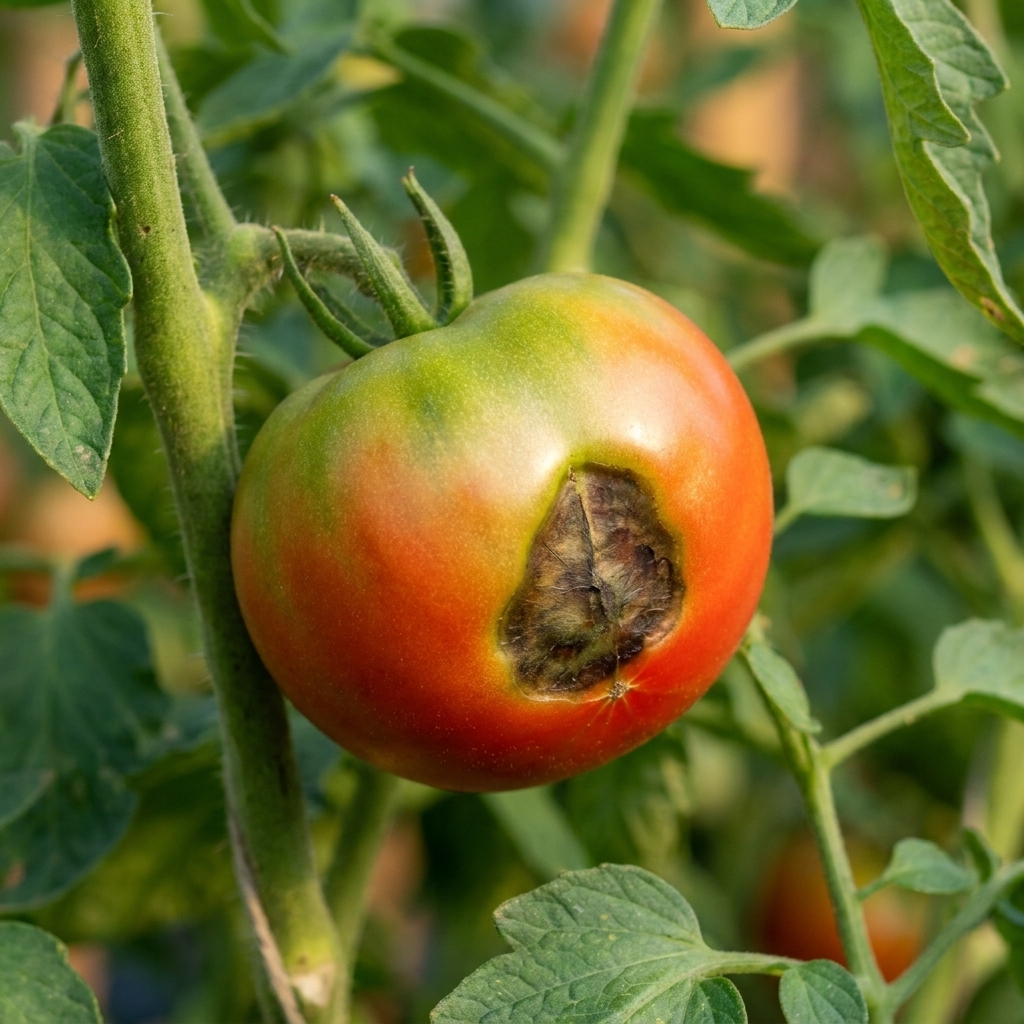
- Blossom end rot on tomatoes, peppers, and squash: a dark, sunken spot on the blossom end of developing fruit.
Common in: tomatoes and peppers in containers, plants in very dry or inconsistently watered beds, and gardens where roots are stressed by cold soil, compaction, or over-fertilizing with ammonium-heavy nitrogen.
Quick solutions for calcium
1) Stabilize moisture first
If you do only one thing, make it this. Inconsistent watering is the most common reason calcium does not reach growing tips and fruit.
- Water deeply, then let the top inch of soil dry slightly before watering again.
- Mulch 2 to 3 inches with straw, shredded leaves, or fine bark (keep mulch a couple inches away from stems).
- In containers, check daily during heat. Pots can swing from wet to bone-dry in a hurry.
2) Add calcium if your soil is truly low (or your mix is depleted)
- Gypsum (calcium sulfate): adds calcium and is generally pH-neutral. Good choice if your pH is already neutral to high.
- Garden lime (calcium carbonate): adds calcium and raises pH. Use only if a soil test suggests low pH.
- Crushed eggshells: helpful long-term, but slow. Think of them as a soil-building habit, not an emergency treatment.
Important: Calcium sprays can help certain crops under certain conditions, but they are not a magic fix for blossom end rot if watering is erratic. Fruit issues usually improve when the plant is consistently hydrated and roots are healthy.
3) Avoid nutrient traffic jams
- Do not overdo nitrogen, especially fast-release forms. Rapid leafy growth can outpace calcium delivery.
- Prevent root stress by loosening compacted soil and avoiding waterlogged conditions.
Leaf symptom cheat sheet
If you only remember one thing, remember this: older leaves first often means nitrogen, while new leaves first often means iron or calcium.
- Older leaves yellow evenly: likely nitrogen.
- New leaves yellow between green veins: likely iron (often pH-related).
- New leaves distorted, tips burn, blossom end rot: likely calcium (often watering-related).
Other common suspects: magnesium and potassium deficiencies can mimic parts of this. Magnesium often shows interveinal yellowing on older leaves first. Potassium often shows scorched edges on older leaves and weak flowering or fruiting. If your symptoms do not match cleanly, pause before you pile on products.
When to fertilize and when to step back
It is tempting to throw fertilizer at any yellow leaf, but more is not always better. In fact, a lot of “deficiency” problems are really uptake problems.
Check the growing conditions
- Soil too wet: roots cannot breathe, nutrients sit unused.
- Soil too dry: nutrient movement stalls.
- pH off: nutrients can be present but locked away.
- Cold soil: slows root activity, especially in spring.
If your plant is struggling and you are unsure, a basic soil test and a glance at your watering routine can save weeks of frustration and a shelf full of half-used amendments.
FAQ
Do yellow leaves turn green again after you fix the deficiency?
Sometimes, but often not fully. I usually treat old yellow leaves as “evidence” and focus on whether new growth comes in healthier. That is the real sign you are back on track.
How fast should I expect results?
- Nitrogen: often about 7 to 14 days for greener new growth after a quick feed, especially in warm weather and active growth.
- Iron (chelated): often 7 to 14 days for improved new growth, faster in mild cases.
- Calcium: distortion and blossom end rot improve as growth continues, once moisture is stable. Damaged fruit will not heal, but future fruit often improves.
Can I treat multiple deficiencies at once?
You can, but I prefer a measured approach. Correct obvious watering problems first, then address pH if iron chlorosis is likely, then add targeted nutrients. Stacking amendments without a plan is how gardens end up overcorrected.
Is Epsom salt good for yellow leaves?
Epsom salt is magnesium sulfate, which can help magnesium deficiency, but it will not fix nitrogen, iron, or calcium issues and can throw off nutrient balance if used routinely. I only use it when I have strong evidence magnesium is the problem.
A gentle final reminder
If your garden is anything like mine, you will misdiagnose a leaf now and then. That is not failure, that is gardening. Start with the basics, make one change at a time when possible, and watch the new growth. Plants are wonderfully forgiving when we get them back to steady water, decent soil, and a little patience.